
The 370Z is the faster, more modern Z. The 350Z can be the smarter value. Here’s how engines, running costs, reliability, and condition should shape your used-car decision.
The Nissan 350Z vs 370Z question is not simply old versus new. Both are rear-drive, naturally aspirated V6 sports cars with deep aftermarket support, but they sit at different points in the ownership curve. The 350Z is older, generally cheaper, and often more raw. The 370Z is quicker, tighter, and more refined, but it can cost more to buy, insure, and maintain.
350Z vs 370Z: the quick verdict
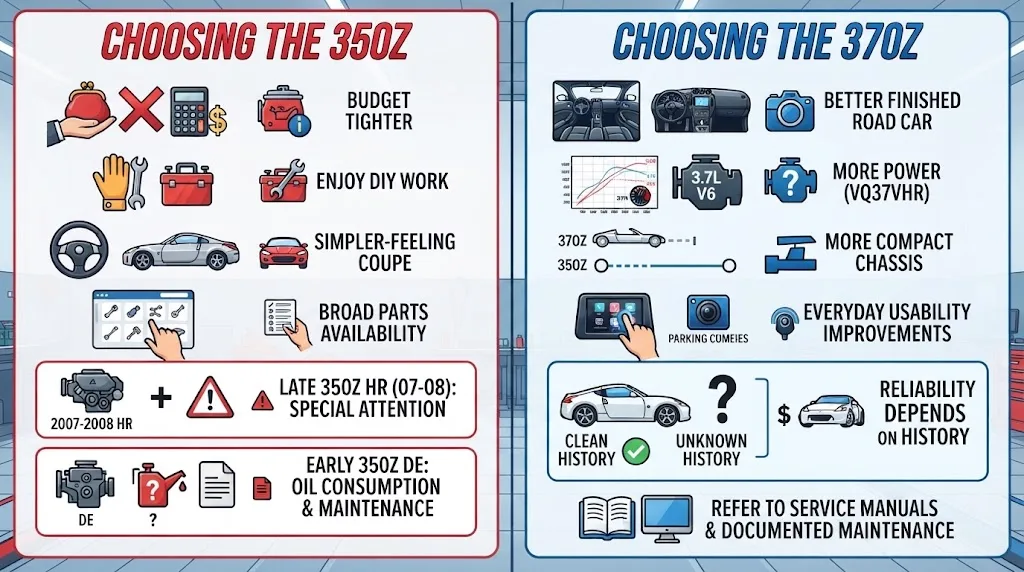
For most buyers who want the better finished road car, the 370Z is the stronger choice. Its 3.7-liter VQ37VHR makes more power than any standard 350Z, the chassis is more compact, and later cars bring useful improvements in everyday usability. It is not automatically the more reliable purchase, though: a neglected 370Z is still an expensive sports car with unknown history.
Choose the 350Z when your budget is tighter, you enjoy DIY work, or you specifically want a simpler-feeling early-2000s coupe with broad parts availability. Late 2007–2008 350Z HR cars deserve special attention, while early DE cars should be assessed carefully for oil consumption and documented maintenance.
Buy the better example, not just the newer model
Choose a 350Z if…
Lower entry cost, a more old-school experience, and project-car potential matter more than newer tech or outright pace.
Choose a 370Z if…
You want stronger performance, a newer cabin, more standard equipment, and a Z that feels more complete as a daily driver.
350Z vs 370Z specs at a glance
The table below uses representative late-production U.S.-market coupe figures. Exact outputs and equipment differ by year, trim, transmission, and market, so verify the specification sheet for the car you are viewing.
| Specification | 350Z (late HR coupe) | 370Z (standard coupe) |
|---|---|---|
| Engine | 3.5L VQ35HR V6 | 3.7L VQ37VHR V6 |
| Factory horsepower | 306 hp (U.S. 2007–08 manual rating) | Typically 332 hp; NISMO ratings vary by year |
| Factory torque | 268 lb-ft | 270 lb-ft on many U.S. standard models |
| Transmission choices | 6-speed manual or 5-speed automatic, depending on year | 6-speed manual or 7-speed automatic, depending on trim |
| Wheelbase | 104.3 in | 100.4 in |
VQ35DE, VQ35HR, and VQ37VHR: what actually changed?
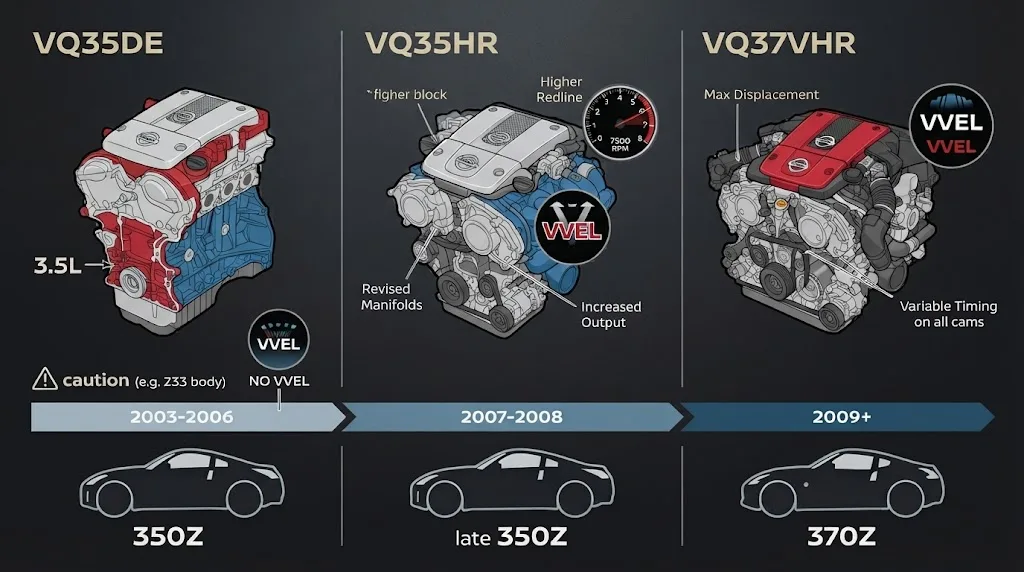
The 350Z did not use one engine throughout its life. Early cars used the VQ35DE, while later 2007–2008 cars used the revised VQ35HR. The 370Z introduced the larger VQ37VHR with Variable Valve Event and Lift. This distinction matters more than a simple model-year comparison when shopping used.
The VQ37VHR’s extra displacement and freer-revving character make the 370Z feel stronger across the rev range. That does not mean every 370Z is a better buy: maintenance quality, oil-change records, cooling condition, and how the car has been modified still decide whether an individual example is healthy.
VQ35DE — early 350Z
The original 3.5-liter engine. Well supported and characterful, but inspect carefully for reported oil use, service gaps, and signs of hard track or drift use.
VQ35HR — late 350Z
A substantial late-model revision with higher output and a higher redline. Many enthusiasts seek HR cars, though condition and documentation remain essential.
VQ37VHR — 370Z
The 3.7-liter 370Z engine delivers the biggest factory performance step. Check clutch and concentric slave cylinder history on manual cars.
Performance, handling, and daily-driving feel
The 350Z feels wider, more mechanical, and slightly more forgiving at normal road speeds. It has a classic front-engine, rear-drive balance and can be a very rewarding car when its suspension, tires, bushings, and alignment are in good order. A tired example can feel nervous or loose, so do not confuse worn components with the intended chassis character.
The 370Z feels more urgent. Its shorter wheelbase, wider track, and stronger engine make it more responsive, but also more intense over rough roads. Manual Sport and NISMO variants may include features such as SynchroRev Match or upgraded hardware depending on year and market. Drive the exact car: gearbox effort, clutch action, road noise, and ride comfort vary greatly with tires and modifications.
350Z vs 370Z reliability and common problems
Neither model is universally more reliable. The 350Z is now old enough that age-related wear, prior repairs, and modifications dominate the conversation. The 370Z is newer, but it has its own known ownership concerns. A pre-purchase inspection by a Nissan-aware independent shop is money well spent.
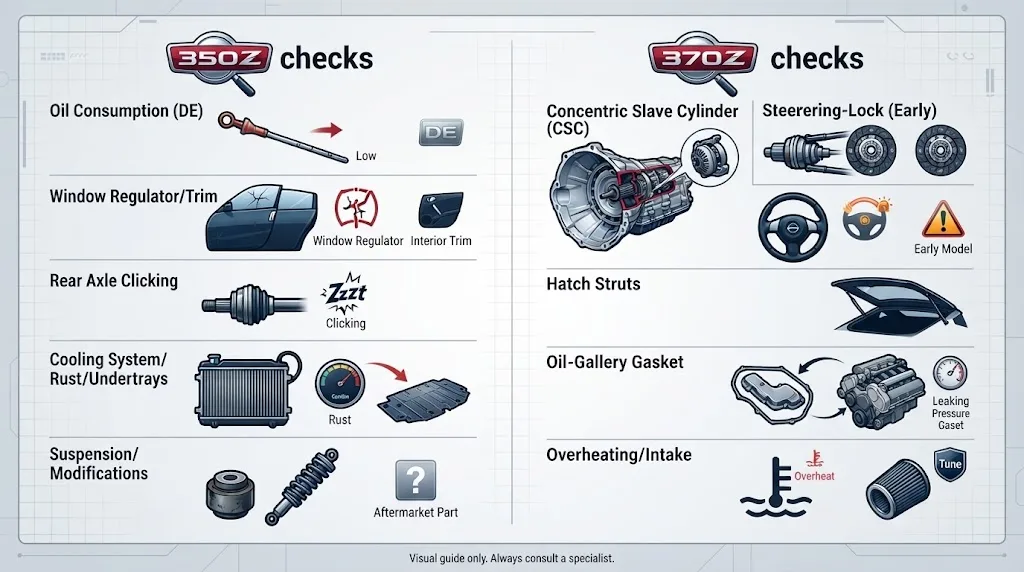
350Z checks
Ask about oil consumption on DE cars, inspect window regulators and interior trim, check for rear axle clicking, cooling-system condition, rust, damaged undertrays, worn suspension bushings, and evidence of unrecorded modifications.
370Z checks
On manual cars, ask specifically about the concentric slave cylinder and clutch history. Also inspect steering-lock history on affected early cars, hatch struts, oil-gallery gasket discussions, overheating signs, and aftermarket intake or tune quality.
Fuel, maintenance costs, and 370Z price reality
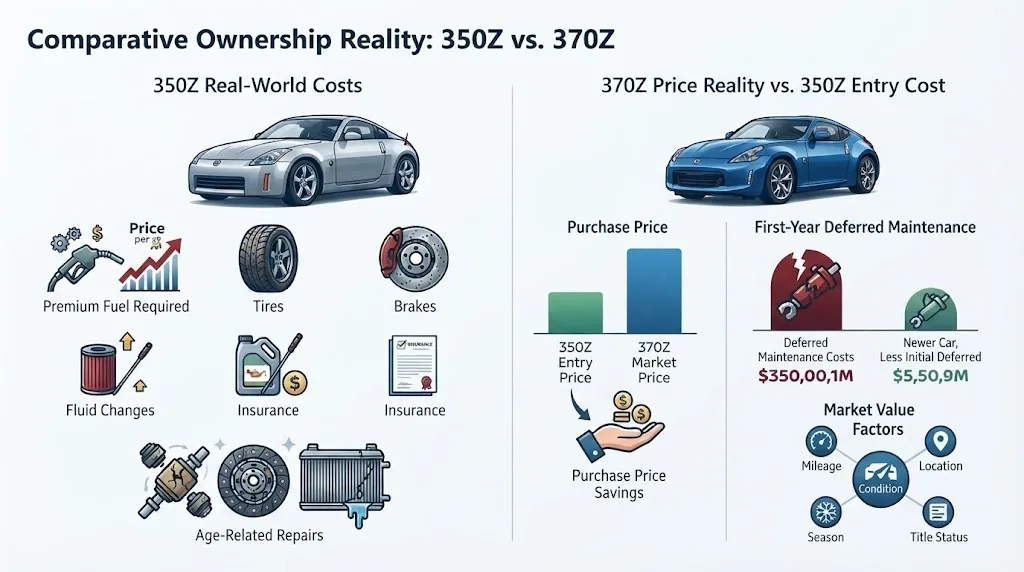
Neither Z is a low-cost commuter once consumables are included. Budget for premium fuel where required, performance tires, brakes, fluid changes, insurance, and the occasional age- or mileage-related repair. The 370Z is usually thirstier than an economy car, while the 350Z’s age can turn deferred maintenance into a larger first-year bill.
A 350Z can be cheaper to enter, but a low advertised price may leave no room for tires, brakes, clutch work, suspension refreshes, or cooling-system repairs. A 370Z commonly commands more because it is newer and generally more powerful, but condition, mileage, trim, location, season, title status, and local supply all move the market.
Is the 2020 Nissan 370Z NISMO worth considering?
The 2020 Nissan 370Z NISMO is a specific trim, not simply a standard 370Z with cosmetic add-ons. In the U.S. market, it paired NISMO styling and chassis-focused equipment with the 3.7-liter V6, and it was offered with manual or automatic transmission depending on configuration. Verify the original window sticker or Nissan documentation before paying a NISMO premium.
A NISMO is worth considering if you value the factory suspension, brakes, wheels, aero, seats, and visual treatment as a complete package. It is less compelling if your plan is to change suspension, wheels, exhaust, seats, and bodywork immediately—where a clean standard or Sport 370Z may offer better value.
Which Nissan Z should you buy?
The best Nissan 350Z vs 370Z decision starts with an honest total budget. Include tax, insurance, inspection, transport if needed, and a repair reserve. The right car should have a believable story supported by paperwork—not merely clean photos or a loud exhaust.
Used Nissan Z buying checklist
- Review the VIN history, title status, maintenance invoices, and modification receipts before travelling to see the car.
- Inspect it cold and warm: check for smoke, leaks, warning lights, uneven idle, cooling issues, and gearbox or clutch problems.
- Examine tires, brakes, suspension, panel gaps, underbody condition, and signs of previous crash repair or track damage.
- Arrange an independent pre-purchase inspection, especially for a modified, imported, rebuilt-title, or high-mileage example.
Buy the 350Z for value and character
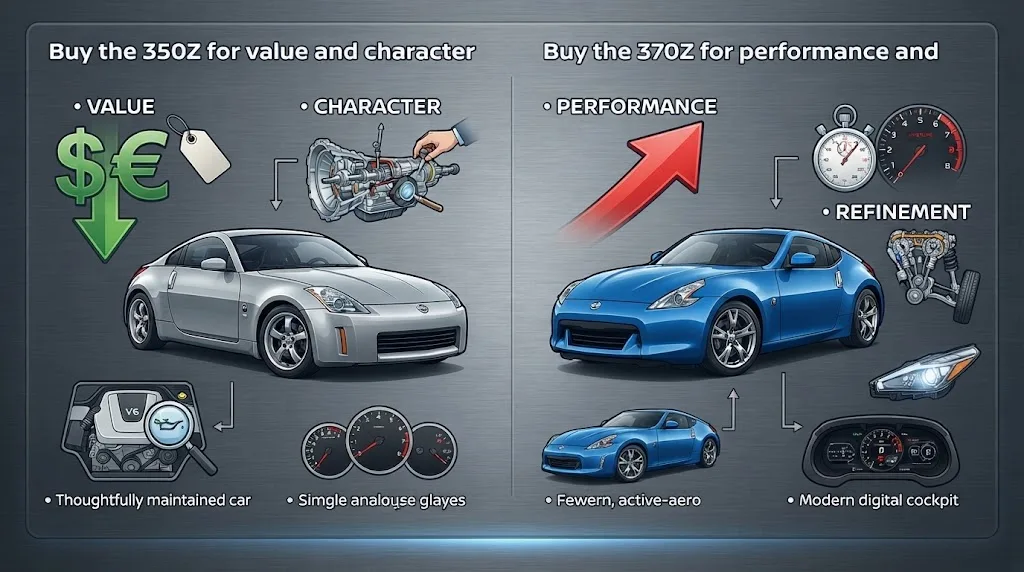
It is the better fit for a buyer who wants a lower-cost entry into Z ownership, enjoys mechanical involvement, and can find an unmodified or thoughtfully maintained car.
Buy the 370Z for performance and refinement
It is the better fit for a buyer who wants the stronger factory engine, more modern feel, and a Z that needs fewer compromises for regular road use.
350Z vs 370Z FAQs
Is the 370Z faster than the 350Z?
In standard factory form, the 370Z is generally faster because its VQ37VHR has more displacement and more horsepower than the 350Z’s VQ35 engines. Real-world results depend on transmission, tires, weather, driver skill, and the condition of each used example.
Which is better for drifting or modifying?
Both have huge aftermarket support. The 350Z is often the cheaper platform for a project or drift build, while the 370Z starts with more factory performance. For either, prioritize a healthy engine, cooling system, chassis, and differential before power modifications.
Are 350Zs still worth buying?
Yes, if the car is priced fairly and has convincing maintenance history. A stock or lightly modified 350Z with a sound body, clean title, strong compression, and service records can be a more satisfying purchase than a cheaper, heavily modified example.
What is the best year 350Z or 370Z to buy?
There is no single best year for every buyer. Late 350Z HR models are popular with enthusiasts, while later 370Zs offer newer age and equipment. The better answer is the best-maintained example within your budget, verified by a pre-purchase inspection.