Oil on a spark plug can point to a simple external seal leak or to oil entering the combustion chamber. The first step is not guessing the part—it is identifying exactly where the oil is.
Oil location changes the likely cause
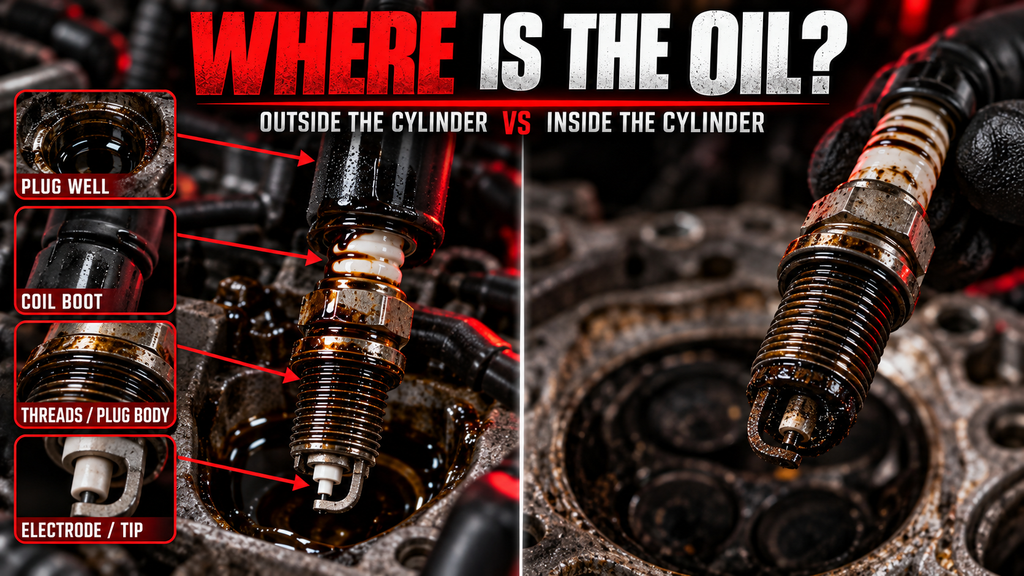
A plug removed from an oil-filled tube can look oily even when the firing end is not burning oil. Before interpreting the plug, note whether the oil was pooled around it, on the threads, inside the ignition-coil boot, or on the electrode at the bottom.
Oil in the spark plug well
Usually points toward an external leak above the combustion chamber: commonly a valve-cover gasket, spark-plug tube seal, or hardened sealing surface.
Oil on the firing tip or electrode
Can suggest that oil is reaching the combustion chamber. Oil control, valve sealing, cylinder condition, and crankcase ventilation may need further investigation.
| Where oil is found | What it usually points you toward |
| Inside the plug well | Valve-cover gasket, plug-tube seal, or another leak from the top of the cylinder head. |
| Inside the coil boot | Oil has likely filled or splashed inside the well and may be affecting insulation around the plug. |
| On threads or plug body | Could be external contamination or oil migration during removal; inspect the well and firing end separately. |
| On the electrode or insulator tip | Possible combustion-chamber oil entry, especially with blue exhaust smoke, oil loss, or repeat fouling. |
What oil in a spark plug well usually means
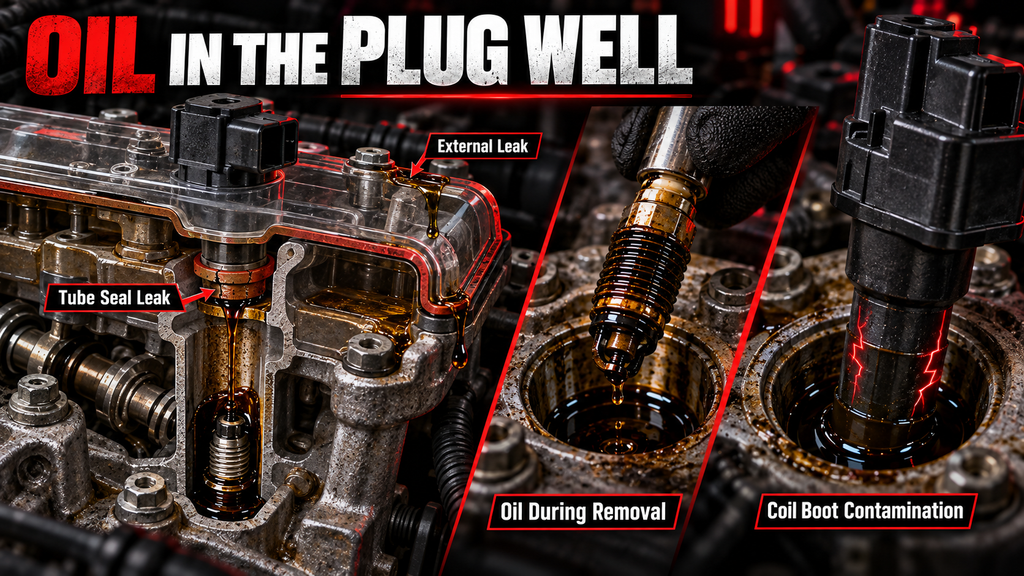
Oil in a spark plug well is often less alarming than oil on the firing tip, because it is usually outside the cylinder. It still deserves repair: oil can soften coil boots, attract dirt, create a spark-leak path, and contaminate the plug during service.
Valve-cover gasket or tube-seal leakage
Many engines use seals around each plug tube as part of the valve-cover gasket system. Heat and age can harden these seals, letting oil seep down the outside of the plug. The exact design varies, so use vehicle-specific service information before ordering parts or removing the cover.
Oil entered from above, then spread during service
A wet well can coat the threads and plug body when the plug is removed. That does not automatically mean the engine was burning oil. If possible, inspect the well before loosening the plug and remove pooled oil carefully so debris and oil are less likely to fall toward the cylinder.
Oil can contribute to a misfire without ruining the coil
Oil inside a coil-on-plug boot can interfere with insulation and encourage spark tracking, especially if the boot is cracked or already worn. Clean and dry the area, inspect the boot for damage, and correct the source of the leak. Replace a plug or boot only when its condition supports replacement—not simply because oil was present.
Oil on the firing tip needs a different investigation
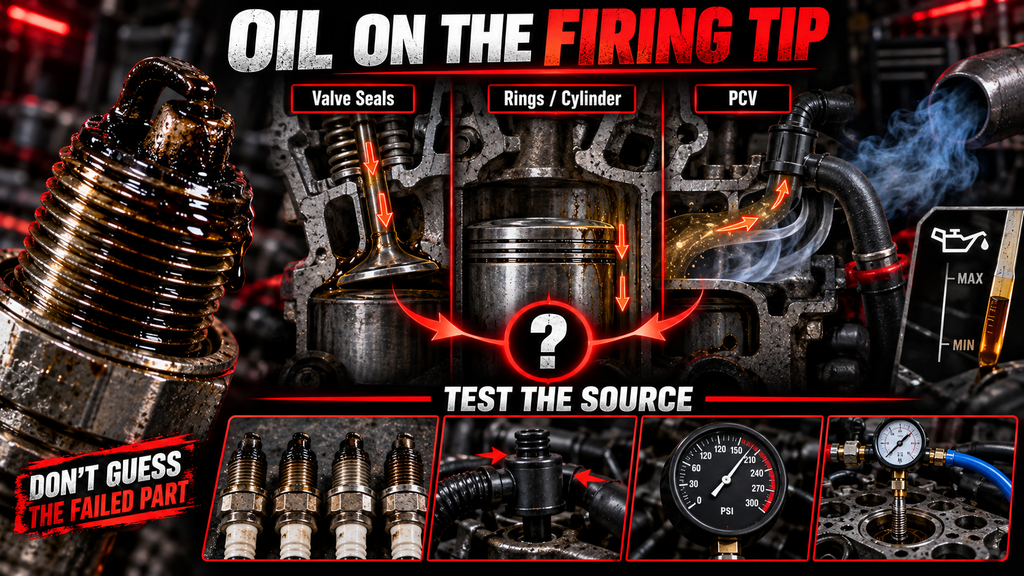
A wet, oily electrode or insulator can mean oil is entering the cylinder and being exposed to combustion. Look for supporting evidence rather than jumping straight to piston rings: repeat fouling, oil consumption, exhaust smoke, plug condition across cylinders, and the results of engine tests all matter.
An oily plug tip does not automatically prove worn piston rings
Internal oil entry can come from worn or stuck oil-control rings, valve-stem seals, valve-guide wear, or a crankcase ventilation problem. The pattern can differ by engine and driving condition. One oily plug is useful evidence, but it is not enough to confirm the failed component.
Valve-stem seal or guide-related oil entry
Oil can reach the combustion chamber through the valve area, sometimes producing smoke after idling or during certain deceleration conditions. A technician considers the engine design, smoke pattern, and plug evidence before attributing the issue to valve seals.
Oil-control, cylinder, or PCV-related issues
Excessive oil consumption can also be related to piston-ring and cylinder wear, ring condition, or abnormal crankcase pressure. A blocked or malfunctioning PCV system may worsen oil movement in some engines. These are diagnosis paths, not conclusions based on appearance alone.
Tests that help confirm the source
When internal oil entry is suspected, a qualified technician may compare plugs across cylinders, inspect the PCV system, check oil consumption history, and use compression or leak-down testing when appropriate. These tests help separate a general engine condition from a single-cylinder fault. Follow manufacturer procedures for testing and plug installation torque.
Can you keep driving with oil on a spark plug?

The answer depends on the source, the amount of oil, and whether ignition or engine performance is affected. A mild external seep found during routine maintenance is different from an oily firing tip that keeps causing a misfire.
Plan a repair soon
Minor seep, normal running
A small amount of oil in a plug well with no misfire, smoke, smell, or falling oil level is usually not an emergency. Still identify and repair the leak before it worsens or damages a boot, plug, or nearby wiring.
Book service promptly
Misfire, rough idle, or repeat plug fouling
Arrange diagnosis soon when a cylinder is misfiring, the check-engine light is on steadily, the coil boot is oil-soaked, or a replacement plug quickly becomes oily again. Continuing to drive with a persistent misfire can stress the catalytic converter.
Stop safely and seek help
Flashing warning light, heavy smoke, or severe running problems
Avoid continued driving if the check-engine light flashes, the engine is running very rough, power drops significantly, oil loss is rapid, exhaust smoke is heavy, or there is a strong burning-oil smell or smoke from the engine bay. Stop in a safe place and arrange professional advice.
Four useful checks for a clearer diagnosis
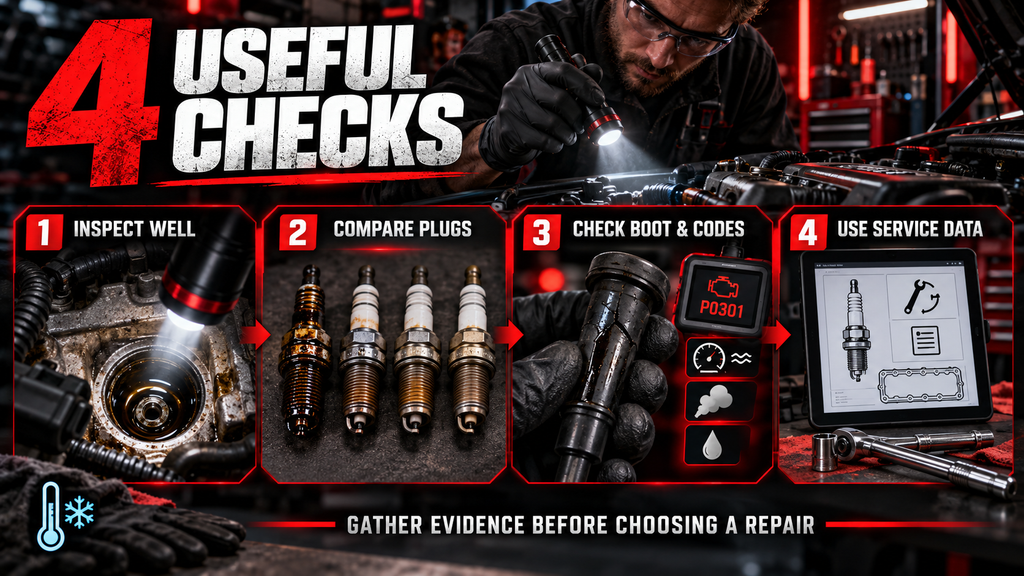
You can gather useful observations without guessing at a repair. Work only on a cool engine, use the correct tools, and avoid removing plugs if you are unsure of the procedure or if access is obstructed.
- Before removing a plug, inspect whether oil is pooled in the well or only appears after the plug starts coming out.
- Compare all accessible plugs. One cylinder that looks different can be more informative than a single oily plug viewed in isolation.
- Look for cracked, swollen, or oil-soaked coil boots and note any misfire codes, rough idle, smoke, or unusual oil consumption.
- Use the owner’s manual and vehicle-specific repair information for plug type, gap guidance, tightening procedure, and any valve-cover service steps.
Oil on spark plug FAQ
Can oil in a spark plug well cause a misfire?
It can contribute. Oil can contaminate the plug, coil boot, and insulating surfaces around the plug, which may encourage spark leakage or worsen an existing ignition weakness. The underlying leak should be repaired and the plug and boot inspected rather than simply wiping away the oil.
Should I replace the spark plug if it has oil on it?
A heavily fouled plug often needs replacement, but replacing it alone may not solve the problem. If the oil came from a plug-well leak, clean the area and repair the seal source. If oil is on the firing tip, the cause of internal oil entry needs investigation or the replacement plug may foul again.
Does oil on a spark plug always mean bad piston rings?
No. Oil in the plug well is commonly an external sealing issue, while oil on the firing end can have several internal causes including valve-stem seals, PCV-related problems, or oil-control ring and cylinder concerns. Diagnosis should be based on oil location, symptoms, plug patterns, and appropriate testing.
Can I clean the oil out and keep driving?
Cleaning pooled oil from a plug well can help prevent further contamination during service, but it does not repair the leak. If the engine runs normally and the leak is minor, a short period of careful driving may be reasonable while you arrange repair. Do not delay if there is a misfire, flashing warning light, smoke, or severe oil loss.