
When the car suddenly won’t start, the lights flicker, or a burning smell fills the cabin, panic sets in fast. For many daily drivers, especially those with older vehicles, the fear isn’t just about being stranded—it’s about the cost. Understanding whether the alternator is the real culprit can save hundreds of dollars and a lot of stress.
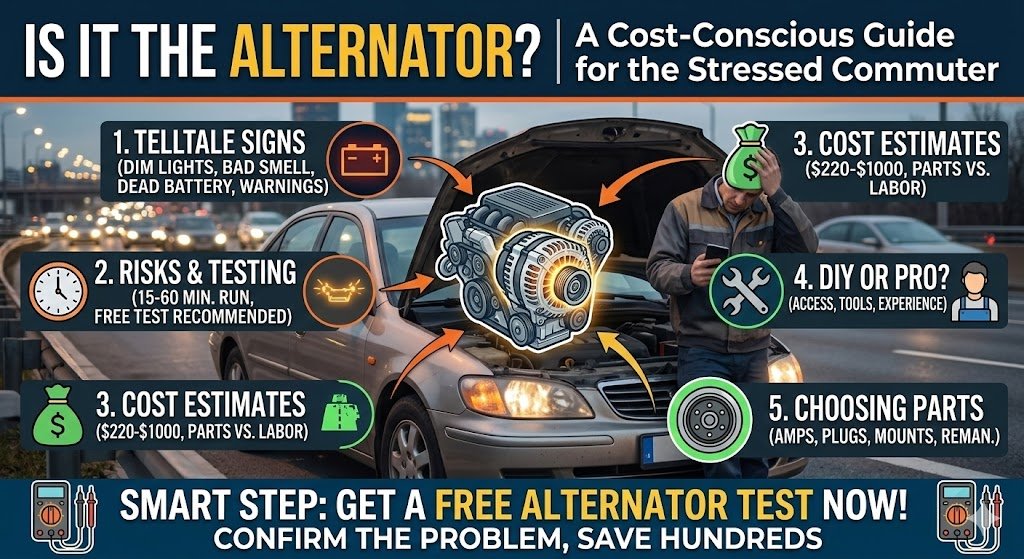
1. The Real Signs of a Failing Alternator
Before spending money on parts or labor, it’s important to confirm the problem. Alternator issues often mimic battery problems, so look for these telltale signs:
- Dim or flickering headlights that brighten when revving the engine
- Battery warning light glowing on the dashboard
- Electrical accessories (radio, power windows, A/C) acting erratically
- Burning rubber or electrical smell under the hood
- Dead battery after a short drive, even after a jump-start
If several of these symptoms appear together, the alternator is likely struggling to keep up.
2. Can the Car Still Be Driven?
Driving with a failing alternator is risky. Once the alternator stops charging, the car runs solely on battery power. Depending on the vehicle, that might last 15 to 60 minutes before everything shuts down—often without warning. Continuing to drive can also cause battery damage or even electronic system failure.
If the car shows multiple warning signs, it’s safest to avoid long trips and get a free alternator test before driving further.
3. The Cost Breakdown: What to Expect
Alternator replacement costs vary widely depending on the vehicle:
| Type of Vehicle | Parts Cost | Labor Cost | Total Estimate |
|---|---|---|---|
| Compact Car | $120–$250 | $100–$200 | $220–$450 |
| Mid-Size Sedan | $200–$400 | $150–$300 | $350–$700 |
| SUV or Truck | $300–$600 | $200–$400 | $500–$1,000 |
A free alternator test can confirm whether the alternator is truly bad before spending a dime. Sometimes, the issue is just a loose belt or corroded battery terminal, which can be fixed for under $50.
4. DIY or Professional Repair?
Replacing an alternator can be a moderate DIY job—if the right tools and patience are available. Consider these factors:
DIY-Friendly Situations:
- Alternator is easily accessible at the top of the engine
- Basic tools (ratchet set, belt tensioner tool) are on hand
- Confidence in disconnecting and reconnecting electrical components
Professional Repair Recommended:
- Alternator is buried under other components
- Vehicle has complex electrical systems or tight engine bays
- No experience with serpentine belt routing
For many commuters, the peace of mind of a Preferred Shop installation is worth the extra labor cost.
5. Avoiding Parts Confusion
Alternators come in many variations—even within the same model year. To avoid buying the wrong one:
- Match the amperage rating to the original part
- Check for 1-wire vs. 3-wire connections
- Verify mounting style and pulley type
- Compare remanufactured vs. new options (remanufactured can save 20–40%)
Bringing the old alternator to the store helps ensure an exact match.
6. The Smart Next Step: Free Alternator Testing
Before replacing anything, take advantage of a free alternator test service at a local auto parts store. The test takes just a few minutes and provides a clear answer—battery, alternator, or something else.
This no-cost check removes the guesswork, prevents unnecessary spending, and helps get back on the road with confidence.
Key Takeaway
For the cost-conscious commuter, knowledge is power. Confirm the diagnosis, understand the price range, and use free testing services to make an informed decision. Whether choosing a DIY fix or a professional repair, the goal is the same: a reliable ride without financial surprises.