
Buying a used vehicle can be a smart way to get reliable transportation while avoiding the higher cost of a new car. However, finding a good vehicle at a fair price requires more than choosing the lowest number on a listing. Buyers need to consider mileage, maintenance history, condition, market value, ownership costs, and potential repairs. Whether you are comparing private sellers or dealerships offering quality used cars for sale, careful research can help you avoid paying too much for a vehicle that may require expensive work later.
Set a Realistic Budget Before Shopping
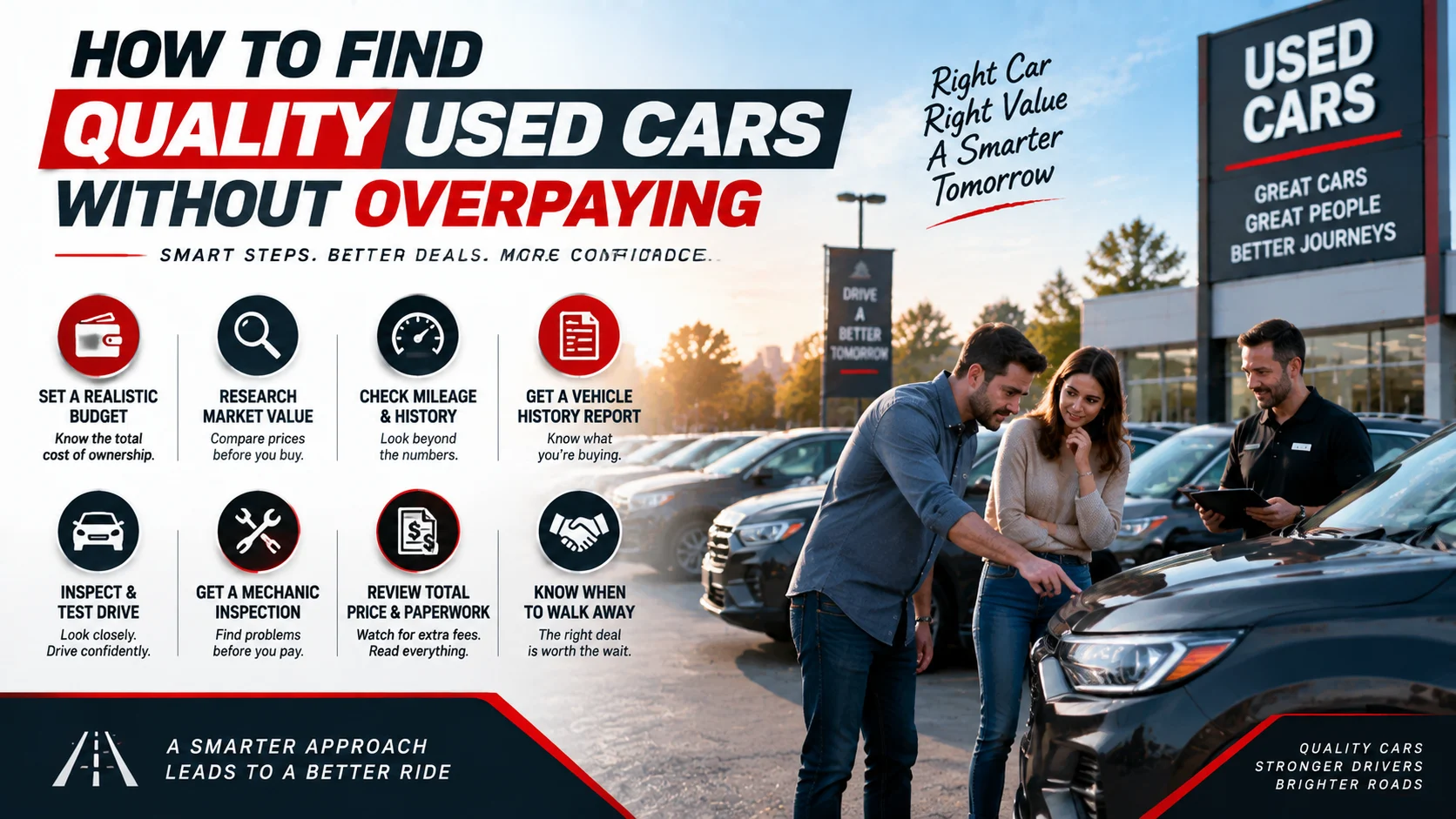
The first step toward avoiding overpayment is knowing exactly what you can afford. Your budget should include more than the vehicle’s advertised price. Registration, taxes, insurance, fuel, routine maintenance, and potential repairs can all add to the total cost of ownership.
If you are financing the vehicle, consider the total amount you will pay over the life of the loan rather than focusing only on the monthly payment. A lower monthly payment can sometimes result from a longer loan term, which may increase the overall cost.
Establish a maximum purchase price before visiting dealerships. Having a firm budget makes it easier to compare vehicles objectively and reduces the temptation to stretch your finances for additional features.
Research the Vehicle’s Market Value
Never assume that an asking price is automatically a fair price. Research the typical market value of the specific make, model, year, trim, mileage range, and condition you are considering.
Compare several similar listings in your area and pay attention to differences in mileage, equipment, accident history, and maintenance. Pricing guides and automotive marketplaces can also provide useful benchmarks.
The goal is not necessarily to find the cheapest example. A vehicle priced slightly higher may offer better maintenance records, fewer miles, newer tires, or a cleaner history. Comparing vehicles based on overall value rather than sticker price can help you make a more informed decision.
Pay Attention to Mileage, But Do Not Judge a Car by Mileage Alone
Mileage is an important factor, but it should not be the only measure of a used vehicle’s quality. A higher-mileage car with consistent maintenance may be a better purchase than a lower-mileage vehicle that has been neglected.
Look for evidence that the previous owner followed the manufacturer’s recommended maintenance schedule. Service invoices, maintenance records, and dealership service documentation can provide useful clues about how the vehicle was treated.
Consider how the mileage fits the vehicle’s age as well. An unusually low-mileage vehicle may sound attractive, but you should still investigate its history and condition carefully.
Get a Vehicle History Report
A vehicle history report can reveal important information that may not be obvious from a test drive or visual inspection. Depending on the report, you may learn about previous ownership, reported accidents, title problems, salvage history, and recorded mileage.
The Federal Trade Commission recommends obtaining a vehicle history report before purchasing a used car. However, a history report is not a replacement for an independent mechanical inspection.
Pay particular attention to inconsistencies. For example, a mileage reading that appears to move backward or an unexplained change in ownership history deserves further investigation.
Inspect the Vehicle Carefully
A clean exterior does not necessarily mean a vehicle is mechanically sound. During an initial inspection, examine the body panels for mismatched paint, dents, rust, uneven gaps, and signs of previous repairs.
Check the tires for uneven wear, inspect the windshield and lights, and look underneath the vehicle for visible leaks. Inside the cabin, test the air conditioning, heating, windows, locks, infotainment system, lights, and other electrical features.
Then take the vehicle for a thorough test drive. Listen for unusual noises and pay attention to braking, steering, acceleration, transmission behavior, and ride quality.
Have an Independent Mechanic Inspect It
One of the most effective ways to avoid an expensive mistake is to arrange an independent pre-purchase inspection. The mechanic can identify mechanical problems that may not appear in a vehicle history report or during a short test drive.
Ask the mechanic for a written report showing existing problems and estimated repair costs. If the inspection identifies necessary repairs, those costs can become part of your decision about whether the asking price represents good value.
Compare the Total Price, Not Just the Advertised Price
An attractive advertised price can become less attractive when additional fees, optional products, or other charges are added. Before agreeing to purchase, ask for the complete out-the-door price in writing.
Review the pricing details carefully and make sure discounts, fees, and other terms match what was originally presented. Optional products such as service contracts, protection packages, and other extras can increase the amount you pay.
If you do not need an add-on, do not assume you have to accept it as part of the purchase. Understanding exactly what you are paying for can prevent unexpected costs.
Review the Buyers Guide
When purchasing from a dealer, carefully read the Buyers Guide attached to the used vehicle. It provides important information about whether the vehicle is being sold with a warranty or “as is,” along with other disclosures.
Do not rely solely on verbal promises. If a salesperson agrees to make a repair, provide a warranty, or include something in the purchase, make sure the agreement is documented in writing before signing.
Use Financing Carefully
If you need financing, compare offers instead of automatically accepting the first option presented. Check the annual percentage rate, loan term, down payment, finance charges, and total amount paid.
Getting pre-approved through a bank or credit union can give you another financing option for comparison. It can also help you understand what payment and interest rate you may qualify for before negotiating at the dealership.
Most importantly, compare the total financing cost rather than focusing only on the monthly payment. A longer loan may reduce the monthly amount while increasing the total interest paid.
Know When to Walk Away
Sometimes the best way to avoid overpaying is to leave the deal. If the seller refuses an independent inspection, cannot provide satisfactory documentation, changes the price unexpectedly, or pressures you to make an immediate decision, take a step back.
There will always be other used vehicles available. Walking away from one questionable deal gives you the opportunity to continue researching and find a vehicle that better fits your budget and requirements.
Conclusion
Finding a quality used car without overpaying requires patience, research, and a willingness to look beyond the advertised price. Start with a realistic budget, research market values, compare mileage and maintenance records, obtain a vehicle history report, and arrange an independent inspection. Then review the total purchase price, financing terms, warranty information, and any additional charges before signing.
The right used car is not necessarily the cheapest one available. It is a vehicle whose condition, history, price, and expected ownership costs make sense together. By taking the time to verify those factors, buyers can make more confident decisions and reduce the risk of expensive surprises after the purchase.