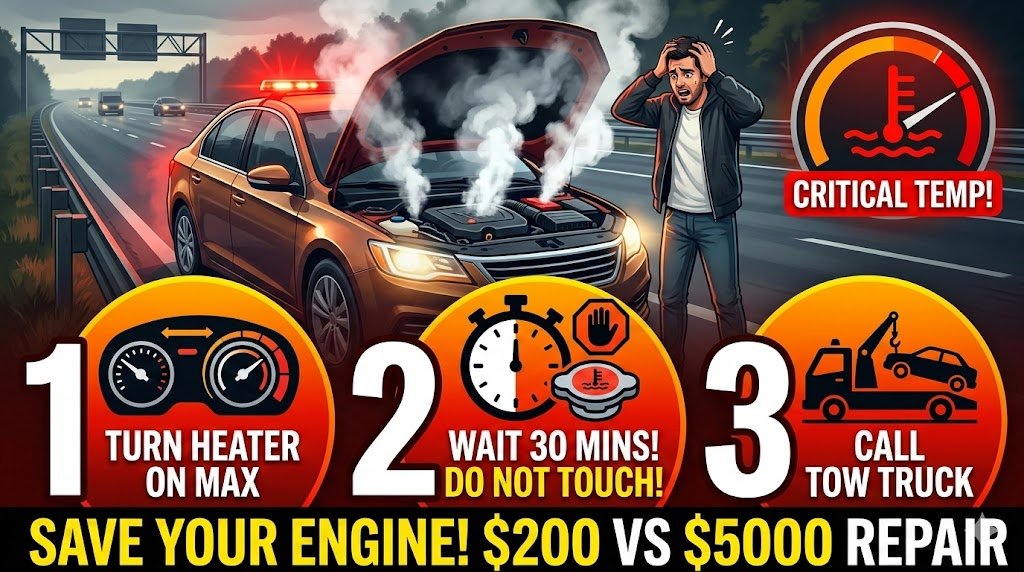

Essential safety steps to prevent engine damage and protect yourself on the road.
ou’re driving on the highway when the temperature gauge suddenly spikes into the red zone. Your heart races. Steam might even be billowing from under your hood.
This is not a moment to panic—but it is a moment to act decisively. An overheating car is a serious emergency that requires immediate attention, but following the right steps can save you thousands of dollars in engine damage and keep you safe.
In this guide, we’ll walk you through exactly what to do, what to avoid, and why each step matters. By the end, you’ll know how to protect yourself and your vehicle.

About This Guide
This article is written by ASE-certified automotive technicians with over 15 years of experience diagnosing and repairing engine overheating issues. We base all recommendations on manufacturer guidelines and real-world roadside emergency protocols.
ASE Certified
Engine Diagnostics
Safety Verified
Step 1: Pull Over Safely — RIGHT NOW
The first rule of engine overheating is stop driving immediately. Continuing to drive will only accelerate engine damage. Aim to pull over within 30-60 seconds.
What to Do:
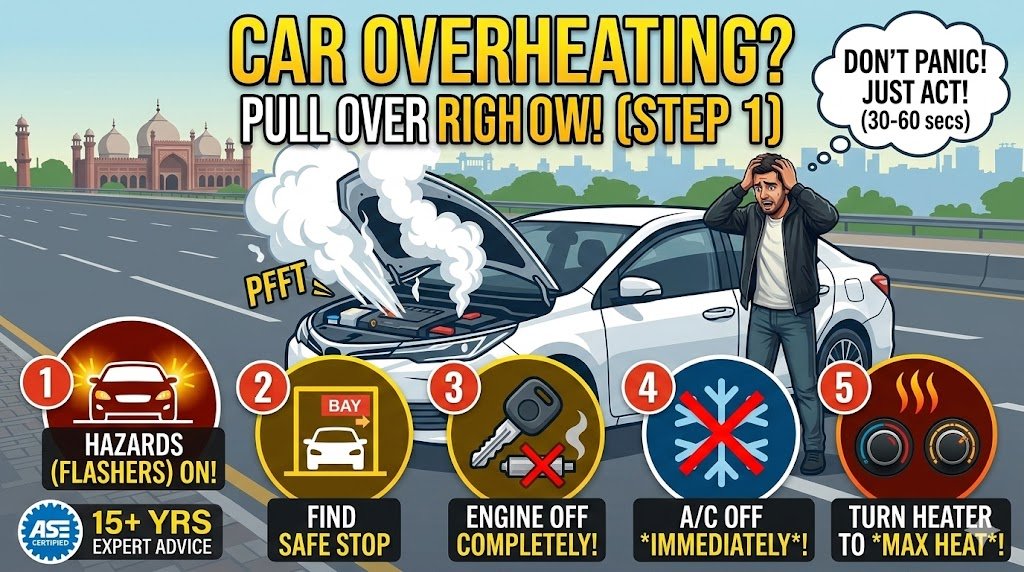
- Turn on your hazard lights (flashers) to alert other drivers
- Safely slow down and find a safe place to stop—a parking lot, side street, or emergency lane
- Once stopped, turn off your engine completely
- Turn OFF your A/C immediately
- Turn your heater to MAX heat
💡 Why Turn on the Heater?
This sounds counterintuitive, but your car’s heater draws warm air from the engine’s cooling system. By turning it to maximum, you’re helping pull excess heat away from the engine and into the cabin, buying you precious time before temperatures reach critical levels.
Step 2: Turn Off Engine & WAIT (The Hardest Part)
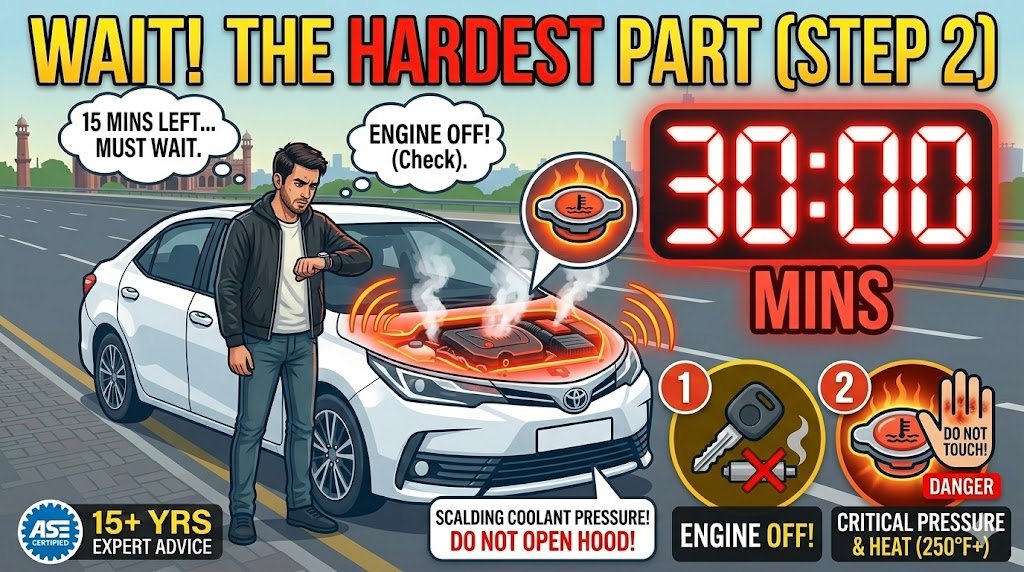
Once safely stopped, turn off your engine. Now comes the hard part: you must wait 15-30 minutes before opening the hood or touching anything.
An overheating engine reaches temperatures of 220°F (104°C) or higher. The coolant inside the radiator is under extreme pressure and can reach 250°F (121°C). If you open the hood or touch the radiator cap while the engine is hot, you risk severe burns from:
- Boiling coolant spraying out under pressure
- Superheated steam escaping from the radiator
- Hot engine components that can burn exposed skin
🚫 CRITICAL — DO NOT DO THESE THINGS:
- Do NOT open the hood immediately — You can suffer severe steam burns
- Do NOT touch the radiator cap — The pressure and heat can cause hot coolant to explode outward, causing severe injuries
- Do NOT pour cold water on the engine — This can crack the engine block due to thermal shock (sudden extreme temperature change)
- Do NOT turn the engine back on — Running an overheated engine will cause catastrophic damage
- Do NOT drive to a mechanic — Even a few miles at high temperatures can ruin your engine (costs $3,000–$5,000+)
⏱️ Use This Waiting Time:
Set a timer for 20 minutes. Use this time to take several deep breaths, call your insurance company to check roadside assistance coverage, and contact a tow truck service. This is not wasted time—it’s essential cooling time that prevents permanent engine damage.
Step 3: Call for Professional Help — Don’t Drive
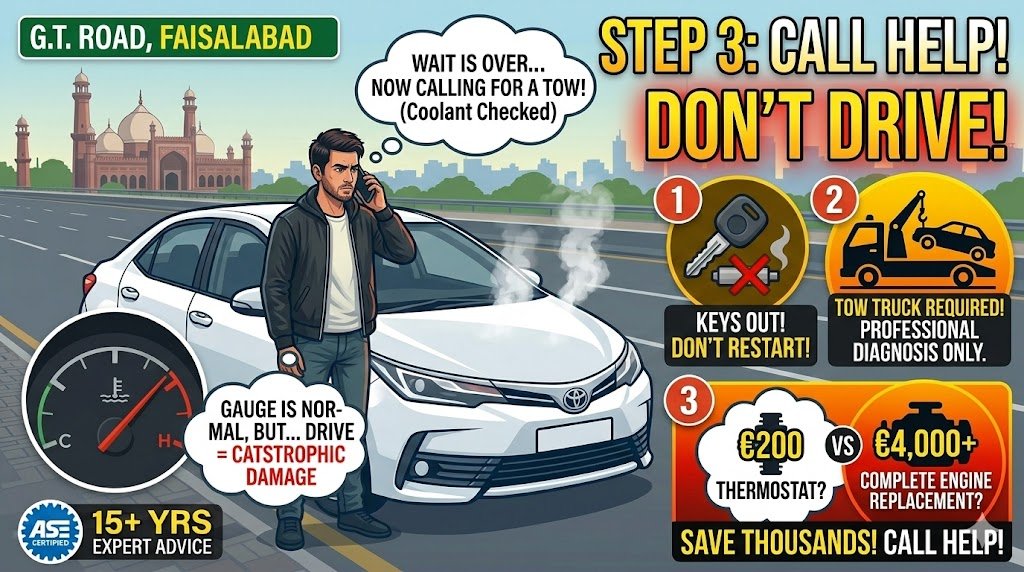
After waiting 15-30 minutes, the engine will cool enough that you can safely open the hood to check coolant levels—but that’s it. Do not attempt to drive to a mechanic, even if the temperature gauge has dropped back to normal.
Call a tow truck and schedule a professional diagnosis.
Why You Can’t Drive There:
- The underlying cause of the overheating hasn’t been fixed
- Driving even 5 miles to a repair shop can cause the engine to overheat again
- Running an engine that has just overheated is extremely risky—the damage may not be visible yet but could be spreading
- A $200 thermostat can become a $4,000 engine replacement if you ignore this warning
📞 How to Get Help:
Check your car insurance policy for roadside assistance (most plans include free towing). If you don’t have it, call AAA (if you’re a member) or a local towing company. Many offer 24/7 emergency service. Provide them with your location, vehicle details, and the fact that your engine overheated.
Why This Matters: The Cost of Acting Too Late
Engine overheating isn’t just an inconvenience—it’s a threat to your vehicle’s entire drivetrain. Here’s why acting immediately is so critical:
$150–$300
If caught early
(Thermostat or hose)
$1,000–$2,000
If ignored briefly
(Radiator replacement)
$3,000–$5,000+
If driven too far
(Engine block crack or head gasket)
$10,000+
Complete engine replacement
(Worst-case scenario)
By pulling over immediately and waiting for professional help, you’re likely keeping yourself in the $150–$500 repair range rather than facing a five-figure bill.
Common Causes of Engine Overheating
Understanding what likely caused your overheating can help you prevent it in the future. Here are the most common culprits:
1. Faulty Thermostat
The thermostat regulates coolant flow through your engine. If it gets stuck in the closed position, coolant can’t flow, and the engine overheats rapidly. Cost to repair: $150–$300.
2. Water Pump Failure
The water pump circulates coolant through the engine. If it fails or its bearings wear out, coolant stops flowing, and the engine heats up quickly. Cost to repair: $300–$750.
3. Radiator Leak or Clog
A radiator leak causes coolant loss. Over time, mineral buildup can clog the radiator, reducing cooling efficiency. Cost to repair: $400–$900.
4. Damaged Cooling Hose
Rubber hoses crack or disconnect, causing coolant leaks. These leaks reduce coolant levels and prevent proper heat transfer. Cost to repair: $100–$250.
5. Failed Head Gasket
The head gasket seals the engine block to the cylinder head. If it fails, coolant mixes with engine oil, and combustion gases enter the cooling system, causing overheating. Cost to repair: $1,000–$2,000.
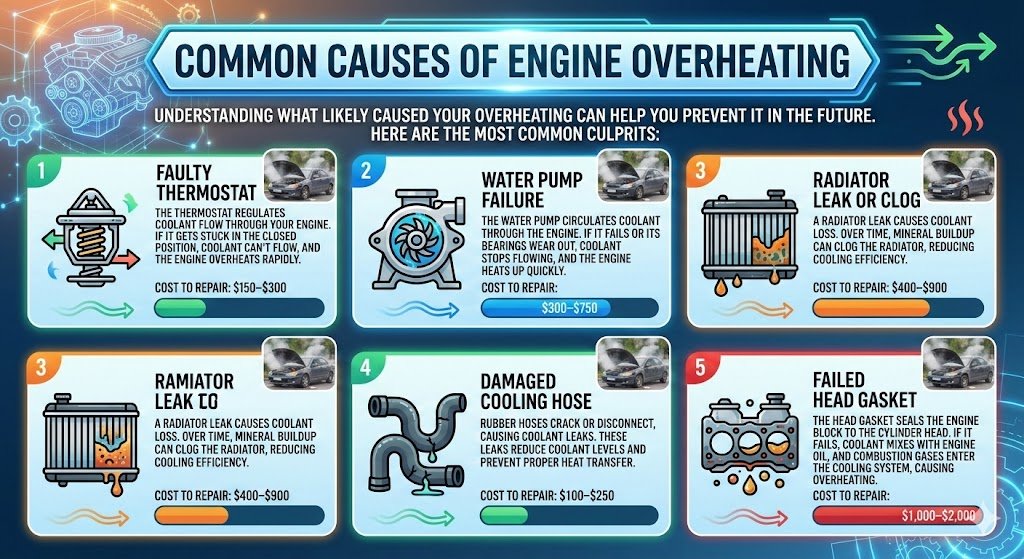
All of these require professional diagnosis and repair. You cannot fix them on the side of the road, which is why calling a tow truck is so important.
Prevention: How to Avoid Overheating in the Future
While not all overheating is preventable, following these practices significantly reduces your risk:
1. Check Your Coolant Levels Regularly
Once a month, when the engine is cold, check your coolant level in the overflow tank. It should be between the MIN and MAX marks. Top it off if needed (use the coolant type specified in your owner’s manual).
2. Flush Your Radiator Every 30,000–50,000 Miles
Mineral deposits and rust can build up in your cooling system, reducing efficiency. A radiator flush removes this buildup and keeps your cooling system operating at peak performance.
3. Replace Your Thermostat Every 5-10 Years
Even if it’s not failing, thermostats wear out and can fail unexpectedly. Preventive replacement is cheap insurance against overheating emergencies.
4. Inspect Hoses and Connections
Look for cracks, leaks, or loose connections in cooling hoses. If you spot issues, have them repaired immediately—a small leak now prevents a breakdown later.
5. Don’t Ignore Warning Signs
If your temperature gauge starts creeping up, your A/C isn’t cooling as well as it should, or you smell a sweet burning odor (coolant smell), get to a mechanic immediately. These are early warning signs.
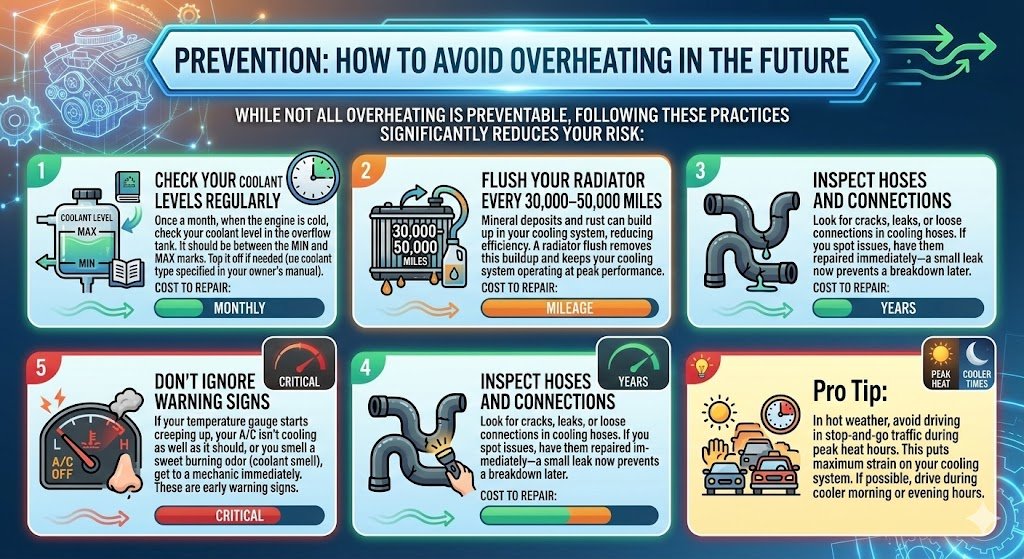
💡 Pro Tip: In hot weather, avoid driving in stop-and-go traffic during peak heat hours. This puts maximum strain on your cooling system. If possible, drive during cooler morning or evening hours.
Final Thoughts
Engine overheating is frightening, but remember: you did the right thing by stopping immediately. This simple act likely saved you thousands of dollars in repairs.
The steps in this guide—pulling over safely, waiting before opening the hood, and calling for professional help—are designed to protect both you and your vehicle. By following them, you’re minimizing the risk of injury and catastrophic engine damage.
Next time you see a temperature gauge spike, take a deep breath. You know exactly what to do.