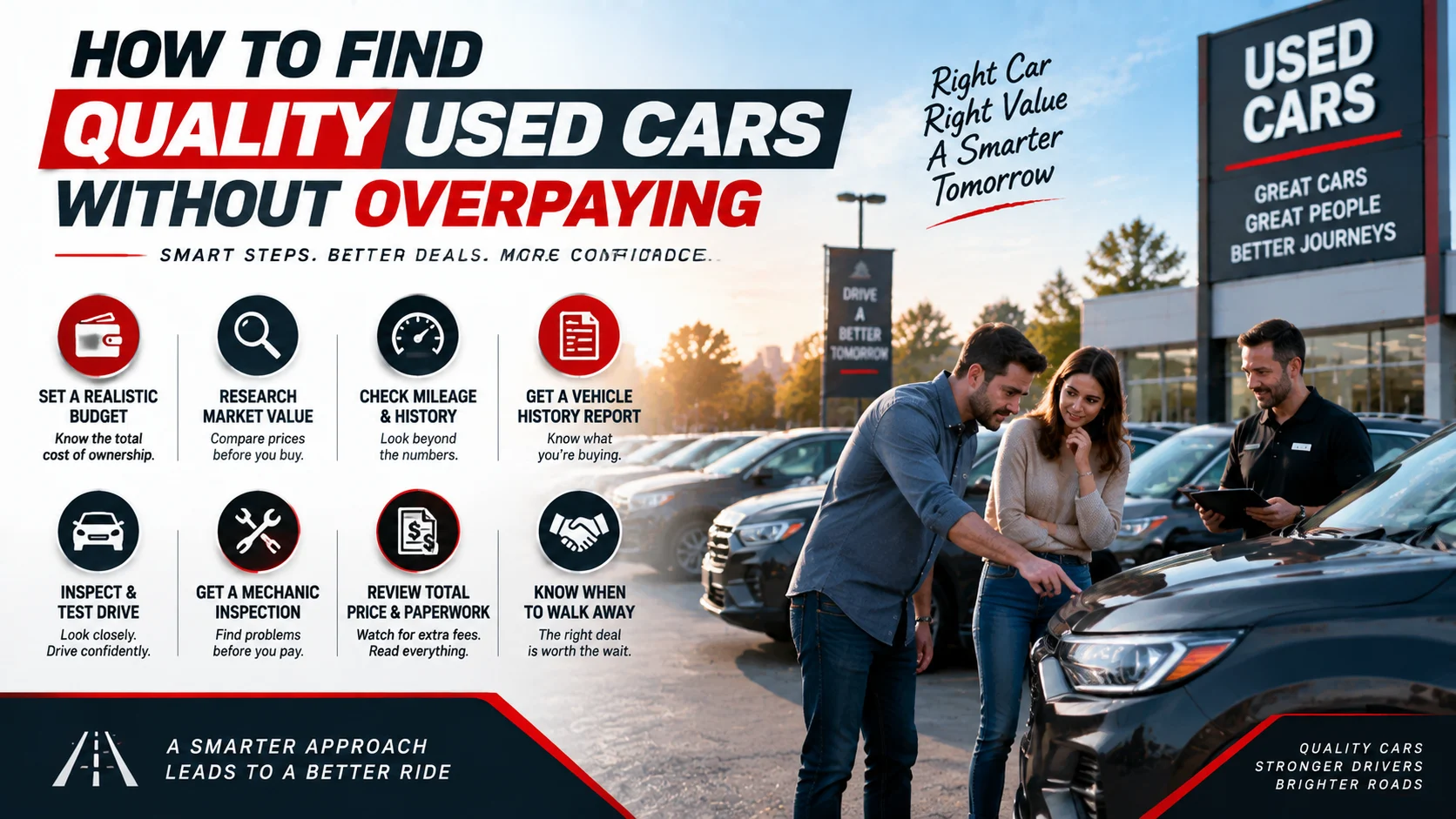

Finding the right used car requires more than choosing a model that looks attractive or fits a particular price range. Buyers should consider their daily needs, budget, mileage, vehicle history, condition, maintenance requirements, and long-term ownership costs. Whether you are comparing listings online or visiting dealerships, exploring Used cars for sale in Lake Park can help you see different options and narrow down your choices. Taking a careful, step-by-step approach can make the buying process easier and help you avoid unexpected problems.
Start With a Realistic Budget
Before searching for a vehicle, determine how much you can comfortably spend. Your budget should include more than the purchase price. Registration, insurance, fuel, routine maintenance, taxes, and possible repairs can all add to the overall cost of ownership.
If you plan to finance the vehicle, look beyond the monthly payment. Consider the interest rate, loan term, down payment, and total amount you will pay over the life of the loan. A longer loan may reduce monthly payments while increasing the total financing cost. Comparing financing options before visiting a seller can also help you understand your limits.
Determine What You Need From the Car
The right used car depends heavily on how you plan to use it. Think about your typical driving conditions, passenger requirements, cargo needs, and preferred features.
A compact car may make sense for frequent city driving, while an SUV could provide additional passenger and cargo space. If you regularly travel long distances, fuel economy and highway comfort may be particularly important. Families may prioritize safety technology, rear-seat space, and storage capacity.
Creating a list of essential features and optional preferences can prevent you from being distracted by vehicles that look appealing but do not suit your lifestyle.
Research Models Before Shopping
Once you understand your needs, research several models rather than immediately choosing one vehicle. Look into reliability information, typical maintenance requirements, fuel economy, safety features, available technology, and common issues associated with the model.
It is also useful to compare prices for similar vehicles. Consider model year, mileage, trim level, equipment, condition, and service history when comparing listings. Two vehicles with the same model name can have significantly different values depending on their history and condition.
Check the Vehicle History
A vehicle history report can provide valuable information about a used car’s past. Depending on the report, you may find details about reported accidents, ownership history, mileage, title information, and other recorded events. However, a history report should not be treated as a complete inspection of the vehicle.
Check the vehicle identification number (VIN) and compare the information in the report with the seller’s documentation. Ask questions about anything that appears inconsistent or unclear.
It is also worth checking whether the vehicle has outstanding safety recalls and reviewing available maintenance records. Regular service documentation can provide useful clues about how the vehicle was maintained.
Inspect the Exterior and Interior
A careful physical inspection can reveal issues that photographs or advertisements may not show. Examine the exterior in good lighting and look for mismatched paint, uneven panel gaps, dents, scratches, rust, or signs of previous repairs.
Inside the vehicle, check the seats, dashboard, carpets, windows, locks, lights, air conditioning, infotainment system, and other electronic features. Pay attention to unusual odors or excessive wear that may not match the vehicle’s reported mileage.
Tires are also worth checking. Uneven tread wear can sometimes indicate alignment, suspension, or other mechanical problems.
Get an Independent Mechanical Inspection
Even if a vehicle looks excellent and has a clean history report, consider having it inspected by an independent mechanic before completing the purchase. A history report cannot identify every mechanical problem, so professional inspection can provide another layer of protection.
A mechanic can examine components such as the engine, transmission, brakes, suspension, steering, tires, fluids, and signs of leaks or previous repairs. If significant issues are discovered, you can factor potential repair costs into your decision.
Take a Thorough Test Drive
A test drive is one of the most important steps in evaluating a used vehicle. Drive on different types of roads when possible and pay attention to acceleration, braking, steering, transmission behavior, suspension, and overall comfort.
Listen for unusual noises, vibrations, rattles, or warning sounds. Check that dashboard warning lights behave normally and make sure the vehicle feels comfortable for your normal driving position.
A test drive can also help you determine whether the vehicle’s size, visibility, seating position, and controls work well for your needs.
Compare the Complete Purchase Cost
When comparing vehicles, focus on the total cost rather than simply the advertised price. Ask for a clear breakdown of the purchase price, taxes, registration-related costs, financing charges, and any optional products or services.
If a seller offers additional products or add-ons, ask what each one costs and whether it is optional. The Federal Trade Commission advises buyers to understand these charges before agreeing to them.
Comparing the complete cost of several vehicles gives you a more accurate picture of which options fit your budget.
Review the Paperwork Carefully
Before signing anything, read the sales and financing documents carefully. Confirm that the VIN, vehicle description, agreed price, financing terms, warranty information, and other important details are accurate.
If the vehicle comes with a warranty or is sold as-is, understand exactly what those terms mean. Keep copies of the documents, inspection report, vehicle history report, and maintenance records for your records.
Conclusion
Finding the right used car is a process that rewards careful research. Start with a realistic budget, identify your practical requirements, compare suitable models, and investigate each vehicle’s history. A thorough inspection, professional mechanical check, and test drive can provide additional information before you commit to a purchase. By considering both the upfront price and long-term ownership costs, you can make a more informed choice and select a used vehicle that fits your needs and expectations.