1. Introduction
Disc brake pads are essential components of a vehicle’s braking system, playing a critical role in determining braking efficiency, stopping distance, and overall driving safety. Their friction characteristics, material composition, structural design, and thermal stability directly influence braking performance under different driving conditions.
High-performance disc brake pads are engineered to provide consistent friction, effective heat management, reliable braking response, and long-term durability. This article explores how brake pad materials, friction characteristics, structural design, and high-temperature resistance contribute to improved vehicle braking performance.
2. How Do Disc Brake Pads Work?
Disc brake pads operate through friction generated between the pad friction material and the rotating brake disc (rotor).
When the driver presses the brake pedal, hydraulic pressure is transmitted through the braking system to the brake caliper. The caliper then pushes the brake pads against both sides of the rotating brake disc, generating friction that converts the vehicle’s kinetic energy into thermal energy and gradually reduces wheel rotation speed.
The effectiveness of this process depends on several factors, including the coefficient of friction, contact pressure, friction material properties, and operating temperature.
During braking, substantial heat is generated at the friction interface. An effectively engineered brake pad must maintain stable friction characteristics while managing thermal loads to minimize brake fade, uneven wear, and other performance-related issues.
3. Key Factors That Improve Disc Brake Pad Performance
3.1 Optimizing the Coefficient of Friction
The coefficient of friction is one of the most important parameters affecting brake pad performance. It determines the frictional force generated between the brake pad and the brake disc under a given contact pressure.
High-quality brake pads are developed using carefully engineered friction material formulations, which may incorporate metallic fibers, ceramic components, organic materials, and other friction modifiers.
Different formulations offer different performance characteristics in terms of friction stability, wear resistance, noise and vibration control, and thermal performance.
However, a higher coefficient of friction does not necessarily mean better braking performance. The key objective is to achieve a consistent and predictable friction coefficient across a wide range of operating temperatures, speeds, and braking conditions.
This helps ensure reliable braking response, effective deceleration, and stable vehicle control.
3.2 Improving Structural Design and Friction Material Engineering
Brake pad structural design plays an important role in overall braking efficiency, durability, and comfort.
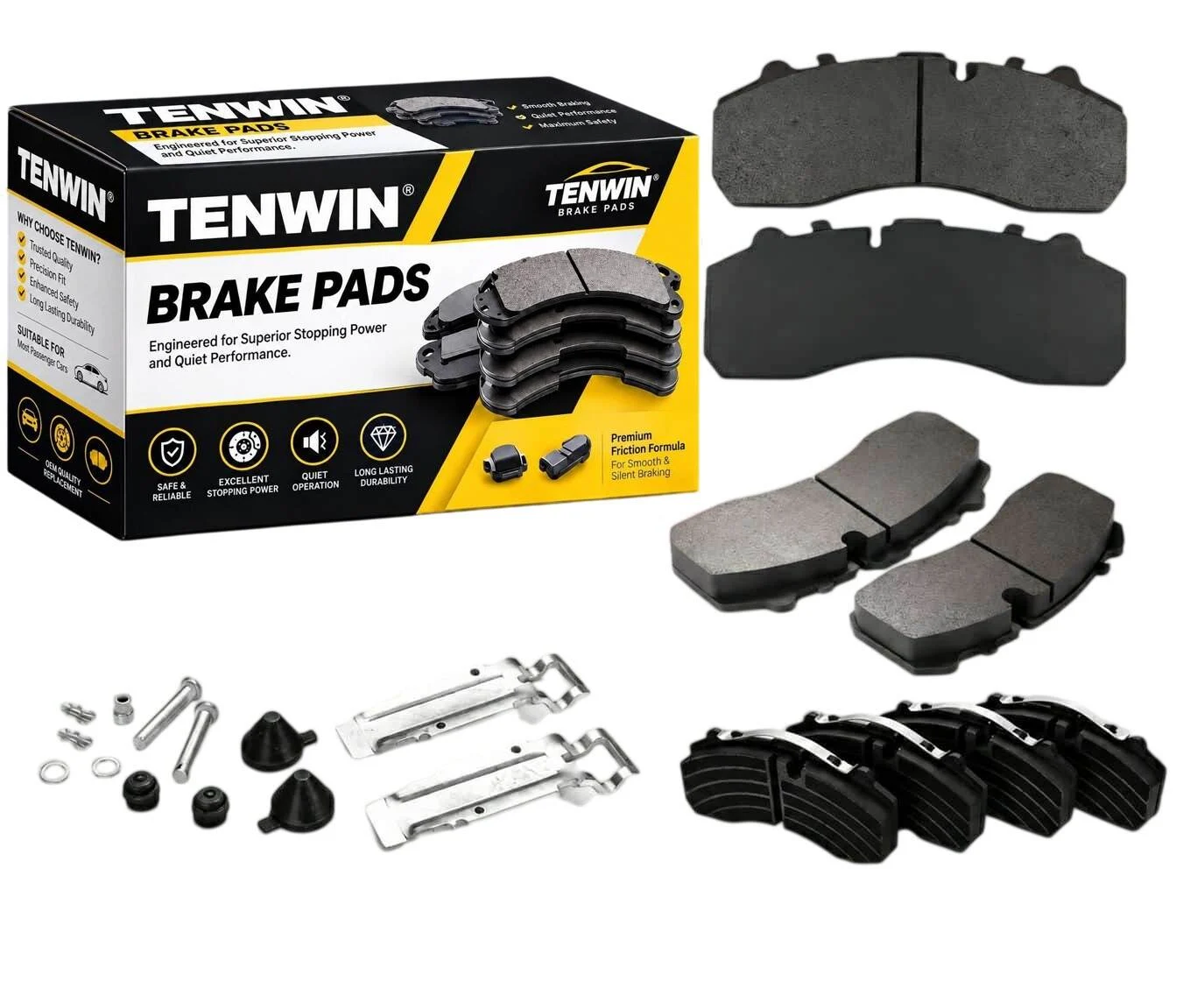
Modern disc brake pads typically incorporate several engineered features, including:
·
Chamfers: Help reduce friction-induced noise and vibration during braking.
·
·
Slots: Assist in managing heat, releasing gases and debris, and reducing certain noise-related issues.
·
·
Shims: Help absorb vibrations and minimize brake squeal.
·
·
Backing Plates: Provide structural support and ensure reliable transmission of clamping force from the caliper to the friction material.
·
In addition, optimized friction material density, compressibility, bonding strength, and wear characteristics contribute to consistent contact with the brake disc and improved service life.
A properly engineered brake pad should maintain stable contact pressure and predictable friction behavior throughout its service life.
3.3 Enhancing High-Temperature Resistance and Thermal Stability
Temperature management is another critical factor affecting brake pad performance.
During repeated or intensive braking, frictional heat can cause brake pad temperatures to rise significantly. If the friction material cannot withstand these thermal conditions, its coefficient of friction may become unstable, resulting in brake fade and reduced braking effectiveness.
To address this issue, manufacturers optimize friction material formulations and manufacturing processes to improve thermal stability and resistance to high-temperature degradation.
High-temperature-resistant brake pads are designed to:
Maintain stable friction characteristics under demanding operating conditions.
Reduce the risk of brake fade during repeated braking.
Improve resistance to thermal degradation.
Maintain reliable bonding between the friction material and backing plate.
Provide consistent braking performance over a wider temperature range.
Effective thermal management also depends on the brake disc, caliper, ventilation design, and overall braking system configuration.
3.4 Improving Wear Resistance and Friction Stability
Brake pad durability is closely related to the quality of friction materials and manufacturing consistency.
High-quality friction formulations are designed to balance braking effectiveness with controlled wear rates. They should provide sufficient friction against the brake disc while minimizing excessive pad wear and rotor damage.
Stable friction characteristics and controlled wear help maintain consistent braking performance throughout the product’s service life.
For automotive aftermarket suppliers and distributors, these characteristics are particularly important because they directly influence product reliability, customer satisfaction, and brand reputation.
4. How High-Performance Brake Pads Improve Real-World Braking
The benefits of advanced brake pad technology can be evaluated through several important performance indicators:
Shorter and More Consistent Stopping Distance
Appropriate friction characteristics and stable contact conditions help generate effective braking force, contributing to predictable stopping performance.
Reduced Brake Fade
Improved thermal stability helps maintain braking effectiveness during repeated or high-temperature braking applications.
Better Braking Comfort
Optimized friction formulations, chamfers, slots, and noise-reduction shims help minimize unwanted noise and vibration.
Extended Service Life
Improved wear resistance and controlled friction characteristics help reduce premature pad replacement and maintain reliable performance.
Improved Driving Safety
Consistent friction performance and predictable braking response help drivers maintain better control under different road and operating conditions.
It is important to note that actual stopping distance also depends on tire condition, road surface, vehicle weight, braking system condition, and vehicle speed. Brake pad performance should therefore be evaluated as part of the complete braking system.
5. How to Choose the Right Disc Brake Pads
Selecting the right brake pads is essential for maintaining braking safety and vehicle performance. Buyers, distributors, and vehicle owners should consider the following factors:
Vehicle Compatibility: Verify the correct OE number, vehicle model, production year, and brake system specifications.
Friction Performance: Evaluate friction coefficient stability across different operating temperatures and braking conditions.
Thermal Resistance: Choose products with suitable high-temperature performance for their intended applications.
Wear Resistance: Consider pad durability and compatibility with the brake disc.
Noise and Vibration Control: Check the effectiveness of shims, chamfers, slots, and friction material formulation.
Manufacturing Quality: Evaluate production processes, quality control systems, and relevant product testing and certification.
For automotive parts importers and wholesalers, working with an experienced brake pad manufacturer is also important for ensuring consistent product quality, reliable supply, and comprehensive vehicle application coverage.
6. Conclusion
Disc brake pads improve vehicle braking performance through carefully engineered friction material formulations, optimized structural design, thermal stability, and wear resistance.
The most effective brake pads are not simply those with the highest friction coefficient, but those that deliver consistent friction, reliable heat resistance, controlled wear, and effective noise and vibration management under different operating conditions.
For automotive parts distributors, importers, and wholesalers, selecting a reliable brake pad manufacturer is essential to supplying products that meet market requirements and deliver dependable braking performance.
As friction material technology and manufacturing processes continue to advance, modern disc brake pads will offer further improvements in braking consistency, durability, and overall vehicle safety.