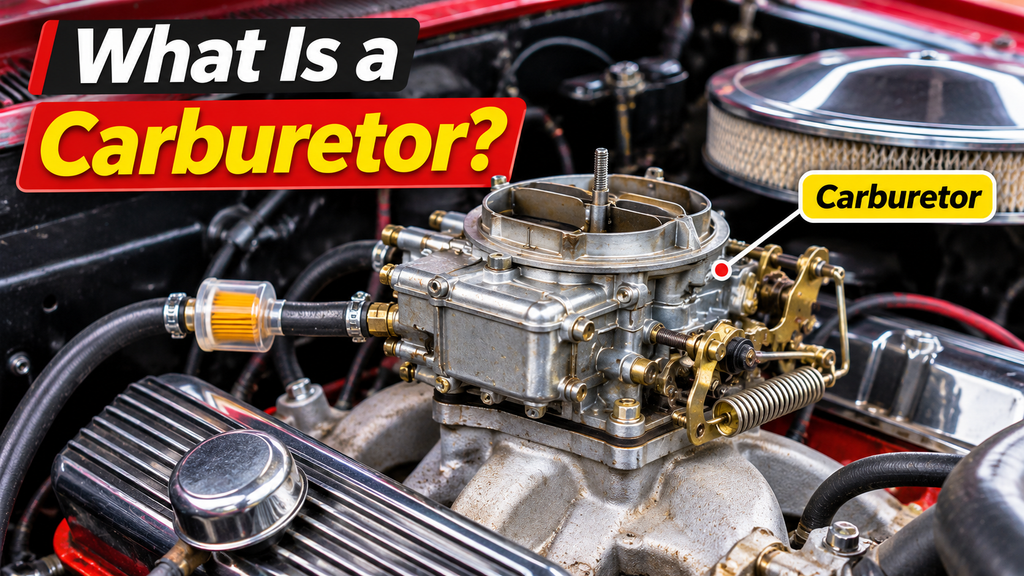
Before electronic fuel injection became common, gasoline engines relied on carburetors to deliver the air and fuel needed for combustion. You can still find them in classic cars, older motorcycles, and many small gasoline-powered engines.
But what does a carburetor do, how does it work, and who invented it?
A carburetor is a mechanical device that mixes gasoline with incoming air before the mixture enters an engine. Its history reaches back to the 1800s, when several inventors developed different ways to supply liquid fuel to internal combustion engines.
This guide explains the carburetor’s purpose, important components, operating principles, invention history, and differences from modern fuel injection.
Quick Answer: What Is a Carburetor?
A carburetor mixes gasoline and air in the proportions needed by a spark-ignition engine. It uses airflow and pressure differences to draw fuel into the incoming air.
The mixture then travels through the intake system into the engine cylinders, where it is compressed and ignited by spark plugs.
Who invented it? No single inventor is universally credited with every carburetor design. Samuel Morey developed an early version in 1826, while Donát Bánki, János Csonka, and Wilhelm Maybach made important improvements during the late 1800s.
What Does a Carburetor Do in an Engine?
A gasoline engine needs air and fuel to produce power. The carburetor’s main job is to deliver an appropriate mixture as engine operating conditions change.
When the driver presses the accelerator, the carburetor allows more airflow through the engine and supplies additional fuel as needed. When the driver releases the pedal, airflow decreases, and the carburetor’s idle system helps keep the engine running.
Why Is the Air–Fuel Mixture Important?
An engine needs enough fuel to burn efficiently, but adding too much or too little can cause problems.
- Rich mixture: Too much fuel relative to air, potentially causing excessive fuel consumption or rough running.
- Lean mixture: Too little fuel relative to air, potentially causing hesitation, overheating, or poor performance.
- Suitable mixture: An appropriate balance for the engine’s current operating conditions.
A carburetor does not maintain one exact mixture under every condition. Cold starting, idling, acceleration, and heavy loads may require different fuel delivery.
How Does a Carburetor Work?
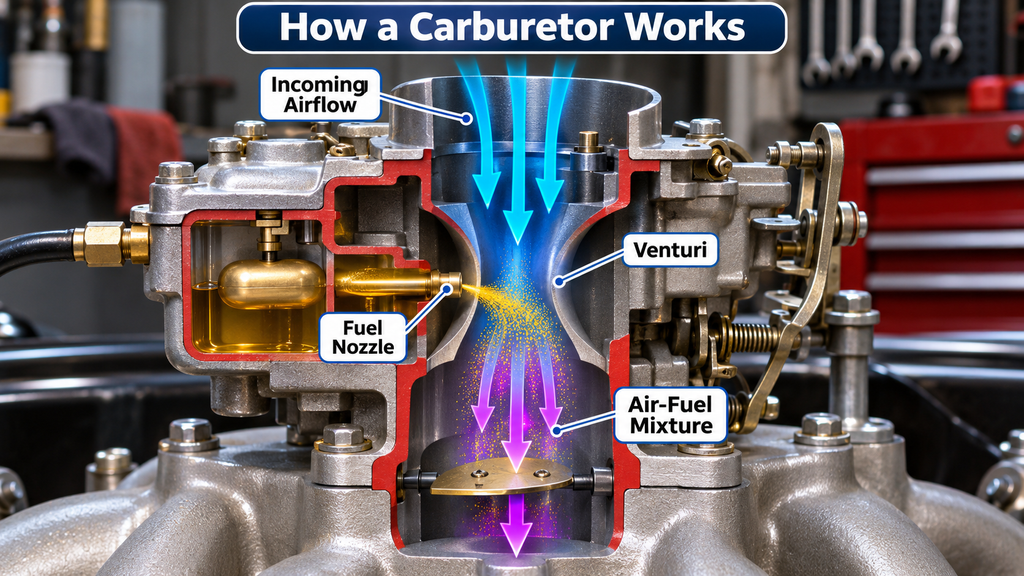
The basic operating principle involves a narrowed air passage called a venturi.
As air moves through this narrow section, its speed increases and its static pressure decreases. The pressure difference helps draw gasoline from a fuel passage into the moving air.
Step 1: Air Enters the Carburetor
Air passes through the engine’s air filter and enters the carburetor. The filter helps prevent dust and debris from entering the intake system.
Step 2: Air Moves Through the Venturi
The venturi is a narrowed section inside the carburetor. As air passes through it, the pressure drops, helping fuel flow from a discharge nozzle into the air stream.
Step 3: Fuel Mixes With the Air
Fuel leaves the nozzle as small droplets and begins mixing and vaporizing in the airflow. The resulting mixture travels toward the intake manifold and engine cylinders.
Step 4: The Throttle Controls Engine Airflow
The throttle plate changes how much air can pass through the carburetor. Opening it generally allows the engine to draw in more air and the fuel system to deliver more fuel.
What Happens When You Press the Accelerator?
Opening the throttle increases airflow. Many automotive carburetors also use an accelerator pump to provide a brief extra amount of fuel during sudden acceleration, helping prevent hesitation.
What Are the Main Parts of a Carburetor?
Carburetors differ by design, but many conventional automotive models contain the following components.
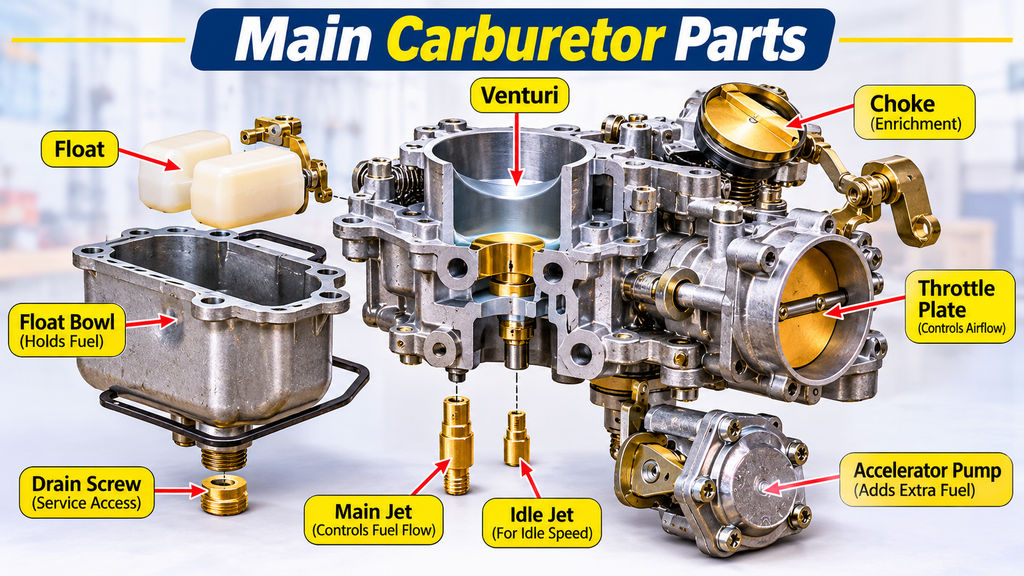
| Component | Function |
|---|---|
| Venturi | Speeds up incoming air and lowers pressure. |
| Float bowl | Stores a small supply of gasoline. |
| Float and needle valve | Help regulate fuel level in the bowl. |
| Fuel jet | Meters fuel through a calibrated opening. |
| Throttle plate | Controls airflow into the engine. |
| Choke | Enriches the mixture for cold starting. |
| Idle circuit | Delivers fuel during idle and low-throttle operation. |
What Do the Float Bowl and Fuel Jets Do?
The float bowl maintains a controlled gasoline supply. As its fuel level changes, the float and needle valve regulate additional fuel entering the chamber.
Fuel jets use calibrated openings to help control how much gasoline passes through the carburetor’s fuel circuits.
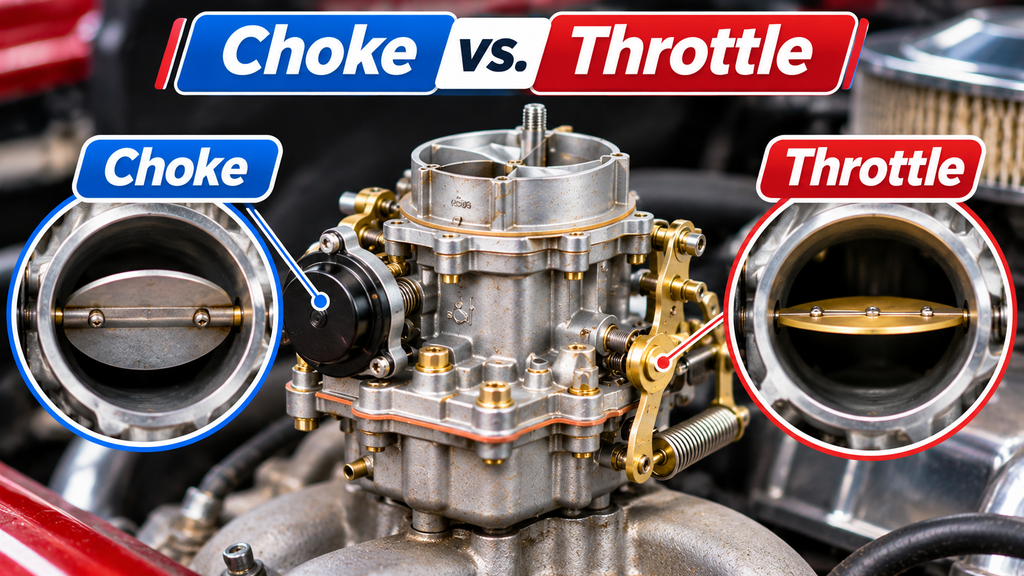
What Is the Difference Between a Choke and a Throttle?
The throttle regulates engine airflow during normal operation. A conventional choke restricts incoming air during cold starting, helping create the richer mixture a cold engine may need.
Some carburetors use alternative enrichment systems rather than a traditional choke plate.
Who Invented the Carburetor?
The history of the carburetor involves several inventors. Early designs vaporized fuel, while later designs used improved nozzles and mechanical controls to deliver gasoline more reliably.
Samuel Morey and Early Carburetor Development
American inventor Samuel Morey developed an early liquid-fuel internal combustion engine in 1826.
His engine used a device to produce combustible fuel vapor. The Smithsonian’s National Museum of American History preserves records of a replica of Morey’s carburetor from this period.
However, Morey’s system was different from the familiar automotive carburetors that appeared later.
Enrico Bernardi and Early Gasoline Engines
Italian engineer Enrico Bernardi developed an early gasoline-powered engine in 1882, using a carburetor as part of its fuel-delivery system.
His work represents another important stage in adapting liquid fuels for internal combustion engines.
Donát Bánki and János Csonka
Hungarian engineers Donát Bánki and János Csonka developed an important atomizing carburetor design around 1890 and filed a joint Hungarian patent application on February 11, 1893.
Their design helped provide a more practical way to mix liquid fuel with incoming air while maintaining a controlled fuel supply.
Wilhelm Maybach and the Spray-Nozzle Carburetor
German automotive engineer Wilhelm Maybach developed a spray-nozzle carburetor during the 1890s.
His work was a significant advancement in automotive engine technology. Mercedes-Benz describes the spray-nozzle carburetor as a major milestone in the development of the automobile.
So Who Should Be Credited as the Carburetor Inventor?
The answer depends on the type of carburetor being discussed. Morey is associated with an early vapor-producing design, Bánki and Csonka with an important atomizing carburetor, and Maybach with a significant automotive spray-nozzle design.
Because these developments occurred at different times and addressed different engineering problems, it is more accurate to explain their contributions than to name one person as the sole inventor.
Carburetor Invention Timeline
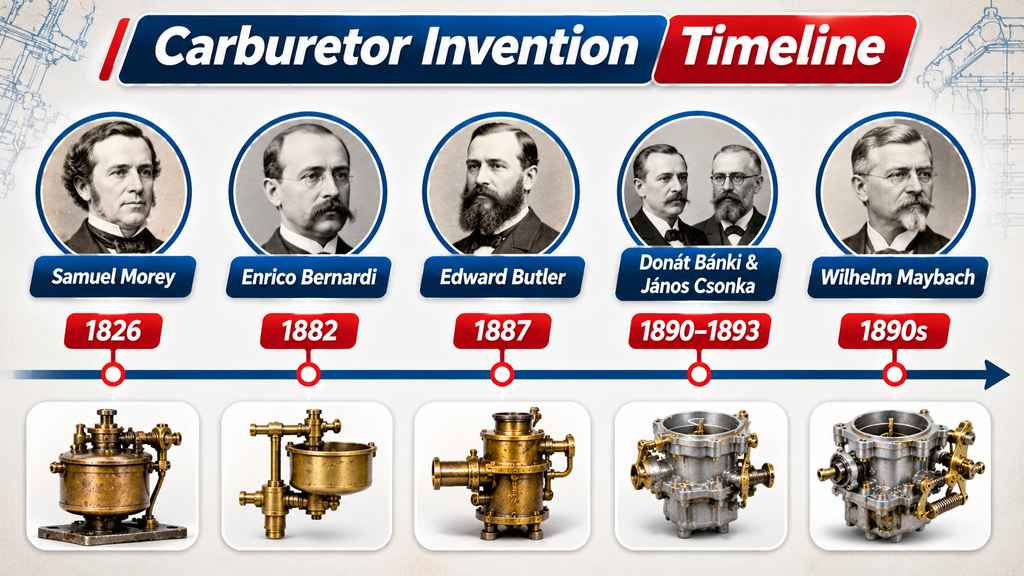
The following milestones show how carburetor technology developed rather than appearing as one finished invention.
| Year | Inventor | Contribution |
|---|---|---|
| 1826 | Samuel Morey | Early liquid-fuel engine and vapor-producing carburetor. |
| 1882 | Enrico Bernardi | Carburetor development for an early gasoline engine. |
| 1887 | Edward Butler | Patent application for an early fuel atomizer. |
| 1890–1893 | Bánki and Csonka | Development and patent application for an atomizing carburetor. |
| 1890s | Wilhelm Maybach | Automotive spray-nozzle carburetor development. |
These dates represent important milestones, not a complete record of every early fuel-metering invention.
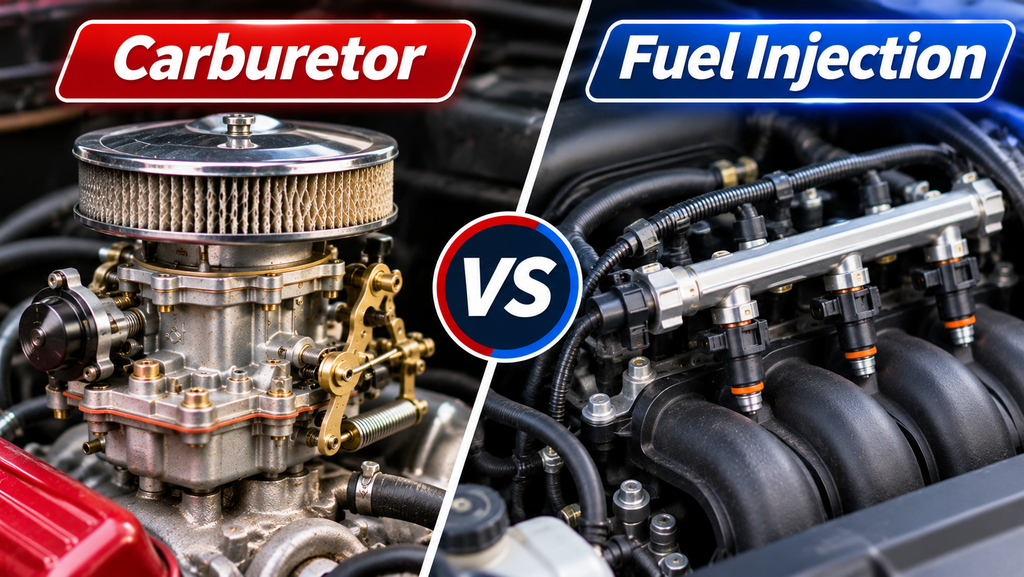
Carburetor vs. Fuel Injection: What’s the Difference?
Both systems supply gasoline to an engine, but they use different methods to control fuel delivery.
| Feature | Carburetor | Electronic Fuel Injection |
|---|---|---|
| Fuel delivery | Uses airflow, pressure differences, and mechanical metering. | Uses electronically controlled injectors. |
| Adjustment | Mechanical settings and fuel circuits. | Computer-controlled fuel delivery. |
| Cold starting | Often uses a choke or enrichment circuit. | Engine computer adjusts injection using sensor information. |
| Common applications | Classic cars, older motorcycles, and small engines. | Most modern gasoline-powered cars. |
Why Did Modern Cars Replace Carburetors?
Electronic fuel injection can adjust fuel delivery more precisely across changing temperatures, engine loads, and operating conditions.
This helps manufacturers meet modern emissions and fuel-efficiency requirements while improving starting and drivability.
Carburetors remain useful in certain simpler engines and continue to be important for classic-vehicle restoration.
What Are Common Carburetor Problems?
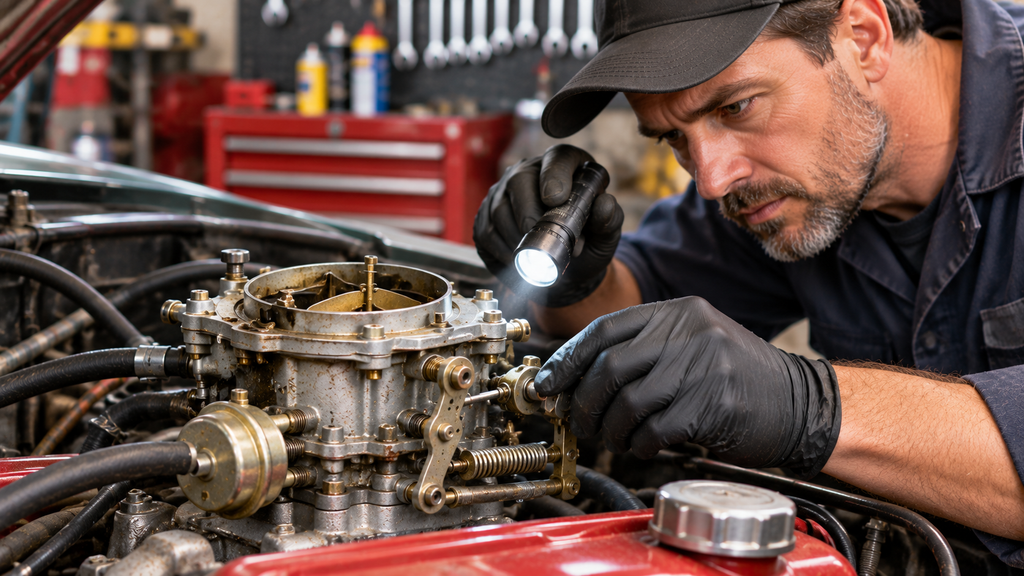
Carburetors contain small passages, seals, moving parts, and mechanical adjustments. Wear, contamination, or incorrect settings can affect engine operation.
Symptoms That May Indicate a Problem
- Hard starting: Possible choke, fuel delivery, or adjustment problems.
- Rough idle: Possible dirty idle passages, incorrect settings, or an intake air leak.
- Hesitation during acceleration: Possible accelerator pump or fuel-metering problems.
- Fuel smell or leakage: Possible damaged seals, float problems, or overflowing fuel.
- High fuel consumption: Possible excessively rich mixture or incorrect calibration.
Does Rough Running Always Mean the Carburetor Is Bad?
No. Ignition problems, vacuum leaks, low compression, and other engine faults can produce similar symptoms. Proper diagnosis is necessary before repairing or replacing the carburetor.
Safety note: Gasoline vapors are flammable. Avoid open flames and ignition sources when inspecting fuel-system components. Do not operate an engine with visible fuel leaks.
Frequently Asked Questions
Who invented the first carburetor?
Samuel Morey is associated with an early carburetor used in his 1826 liquid-fuel engine. Later inventors, including Donát Bánki, János Csonka, and Wilhelm Maybach, developed important fuel-atomizing and automotive carburetor designs.
What is the main purpose of a carburetor?
Its main purpose is to meter gasoline into incoming air to create a combustible mixture for a spark-ignition engine.
What makes fuel enter the carburetor’s airflow?
Air moving through a narrowed venturi creates a pressure difference that helps draw gasoline from the fuel system into the air stream.
What does the choke do in a carburetor?
A conventional choke enriches the air–fuel mixture during cold starts, commonly by restricting incoming air.
Does a carburetor control engine speed?
Its throttle regulates airflow into the engine, helping control engine speed and power output according to operating conditions and load.
Do modern cars still use carburetors?
Most modern gasoline-powered passenger cars use electronic fuel injection. Carburetors remain common in some older vehicles and smaller engines.
Can a gasoline engine run without a carburetor?
Yes. An engine equipped with a suitable fuel-injection system does not need a carburetor.
What is the difference between a carburetor and a fuel injector?
A carburetor generally uses airflow and pressure differences to meter fuel, while an injector sprays fuel through a controlled nozzle, often under electronic management.
Can a dirty carburetor cause poor acceleration?
Yes. Blocked fuel passages or an accelerator pump problem may cause hesitation. However, ignition and other fuel-system faults can create similar symptoms.
Final Takeaway
A carburetor is a mechanical fuel-metering device that helps an engine receive the correct air–fuel mixture under different operating conditions. Its venturi, fuel circuits, throttle, and other components work together to supply gasoline to the incoming air.
The carburetor’s development also has a long history. Samuel Morey, Enrico Bernardi, Donát Bánki, János Csonka, and Wilhelm Maybach contributed to different stages of its evolution.
Although electronic fuel injection has largely replaced carburetors in modern cars, understanding how they work remains valuable for automotive students, classic-car owners, and anyone interested in engine technology.