Buying new tires is a significant expense, so understanding your protection before something goes wrong matters. Discount Tire offers several forms of coverage, including manufacturer warranties, basic prorated road-hazard protection, and optional Certificates for Repair, Refund or Replacement.
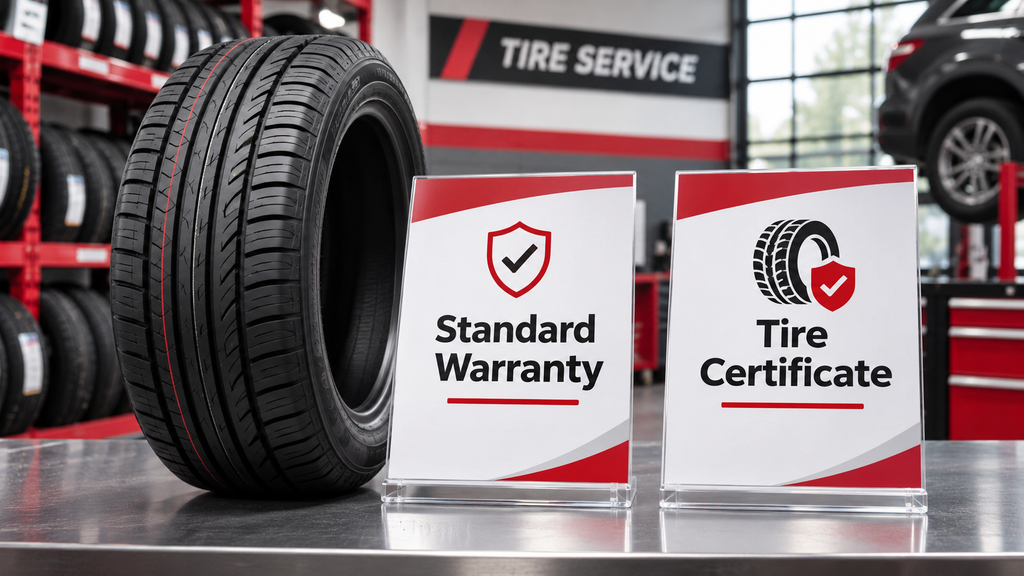
However, the Discount Tire warranty and the optional certificate are not the same thing. They cover different situations and may provide different financial benefits when a tire is damaged.
This guide explains what comes with your tire purchase, how certificates work, which types of damage may qualify, what coverage costs, and how to file a claim.
Quick Answer: What Does Discount Tire Warranty Cover?
Standard protection: Every tire purchased from Discount Tire includes a free prorated road-hazard warranty and an applicable manufacturer’s limited warranty.
Optional certificate: Discount Tire sells additional protection that may provide a full tire purchase-price refund or eligible replacement for covered, nonrepairable damage.
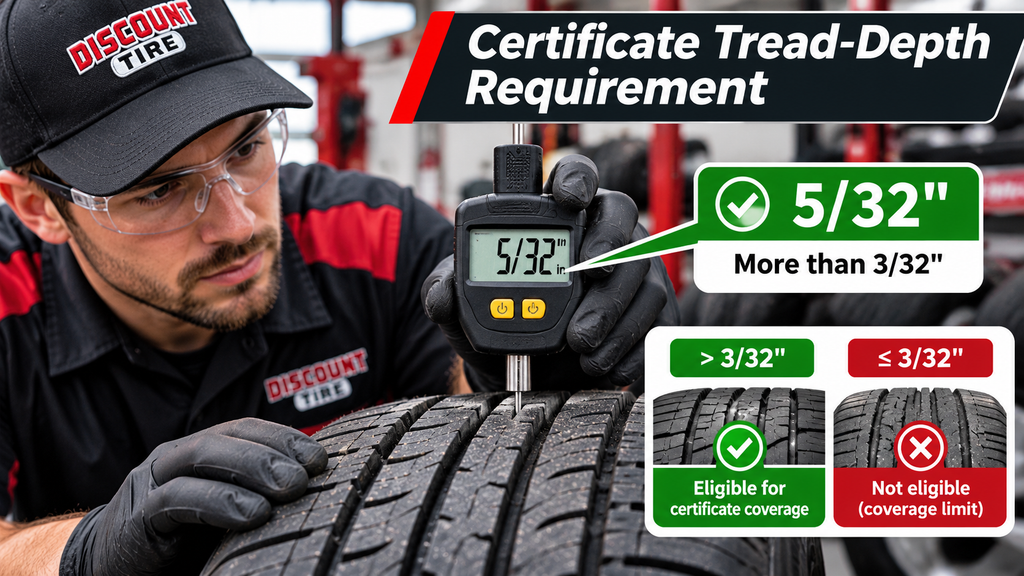
Certificate requirements: The covered tire generally must be within three years of purchase and have more than 3/32 inch of remaining tread.
Important: A standard warranty does not guarantee a free replacement for every puncture, blowout, or damaged tire. Coverage depends on the specific policy and the results of a tire inspection.

What Warranty Comes With Discount Tire Tires?
Discount Tire purchases generally include two forms of protection without requiring you to buy an additional certificate.
Manufacturer’s Limited Tire Warranty
Most new tires include a warranty supplied by their manufacturer. The exact terms depend on the tire brand, model, and type of warranty offered.
Common manufacturer protections include:
- Workmanship and materials: Coverage for qualifying manufacturing defects.
- Treadwear warranty: Possible prorated credit if an eligible tire wears out before the manufacturer’s stated mileage limit.
- Satisfaction guarantee: Some brands allow a limited trial period with specific exchange or refund conditions.
Does a Mileage Warranty Cover Every Tire?
No. Not all tire models qualify for mileage coverage, and many warranties exclude irregular wear caused by improper inflation, alignment problems, or inadequate maintenance.
Discount Tire helps customers with manufacturer warranty claims, but the manufacturer establishes the applicable mileage and defect-coverage rules.
Free Prorated Road-Hazard Warranty
Discount Tire also includes basic prorated road-hazard protection with tire purchases.
If a tire sustains qualifying damage that requires replacement, the remaining usable tread may determine how much credit you receive toward another tire.
Prorated coverage means the replacement credit is adjusted according to tire wear. A heavily worn tire generally receives less credit than a newer tire.
This differs from the optional certificate, which can provide a full purchase-price refund for qualifying damage without mileage-based proration.
What Is a Discount Tire Certificate?
A Discount Tire Certificate is an optional protection product that customers can purchase for eligible tires.
Its official name is the Certificate for Repair, Refund or Replacement. It is designed to reduce the financial impact of qualifying tire damage that may not be fully covered by standard warranty protection.
What Does a Discount Tire Certificate Cover?
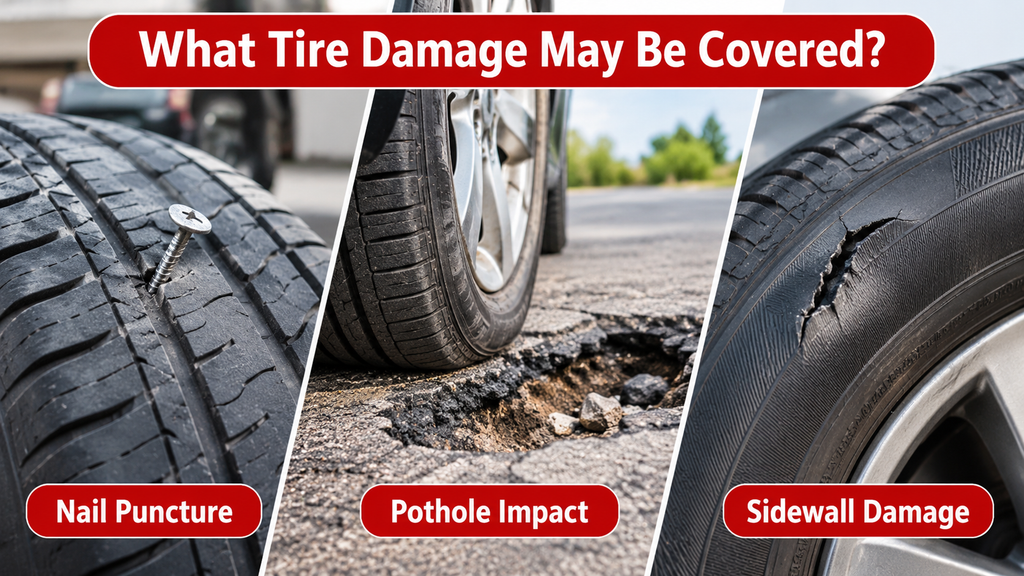
Depending on the tire’s condition and the applicable contract, certificate protection may cover qualifying damage from:
- Nails, screws, and sharp roadway debris
- Potholes and certain road impacts
- Eligible manufacturer defects
- Other qualifying damage that makes a tire unsafe to repair
If the tire can be safely repaired, repair may be performed under the certificate. If it cannot be repaired and meets the eligibility requirements, the customer may qualify for a full purchase-price refund, including applicable sales tax.
Potholes, Sidewall Damage, and Blowouts
A pothole impact may damage the internal structure of a tire or create a sidewall bulge. Sidewall injuries and severe structural damage generally cannot be safely repaired.
Certificate protection may apply to these situations if the cause of damage and the tire’s condition meet the contract requirements.
A blowout is not automatically a covered claim. The technician must inspect the damage and determine whether the tire qualifies.
Discount Tire Warranty vs. Certificate: Key Differences
The following comparison shows why an optional certificate may provide greater financial protection than standard prorated coverage.
| Feature | Standard Protection | Optional Certificate |
|---|---|---|
| Purchase cost | Included with eligible tire purchase | Additional fee |
| Road-hazard replacement | Prorated credit for qualifying damage | Full purchase-price refund for eligible nonrepairable damage |
| Manufacturer defects | According to manufacturer terms | Qualifying defects covered |
| Mileage adjustment | May apply | No mileage-based proration on eligible claims |
| Coverage duration | Varies by warranty | Up to three years, subject to tread requirements |
| Eligibility | Subject to applicable warranty terms | Certificate conditions and inspection |
The most important difference is the potential refund amount. Standard protection may provide partial credit, while a qualifying certificate claim can provide the original tire purchase price rather than a treadwear-adjusted amount.
How Long Does a Discount Tire Certificate Last?
Certificate protection generally lasts for up to three years from the original tire purchase date, provided the tire still has more than 3/32 inch of remaining tread.
Understanding the 3/32-Inch Tread Requirement
Tread depth is measured in thirty-seconds of an inch. The certificate’s remaining-tread requirement is important because a tire may reach the coverage limit before its third anniversary.
For example, consider a tire purchased two years ago. If its remaining tread measures 5/32 inch and the damage qualifies, it may still meet the certificate’s age and tread requirements.
However, a tire with exactly 3/32 inch remaining does not satisfy the stated requirement of more than 3/32 inch.
Does the Certificate Last Until the Tire Is Completely Worn Out?
No. Although Discount Tire describes certificate protection in terms of tire life, coverage remains limited by the three-year period, tread-depth condition, and applicable contract terms.
You should not assume that a certificate remains active until the tire reaches the usual 2/32-inch treadwear replacement threshold.
What Is Not Covered by Discount Tire Certificates?
Optional protection is extensive, but it is not unlimited. The applicable certificate agreement controls claim eligibility.
Common Coverage Exclusions
Discount Tire identifies several conditions that may not qualify, including:
- Damage caused by vandalism
- Cosmetic damage that does not affect tire serviceability
- Normal tire wear
- Improper tire maintenance
- Misuse or deliberate abuse
- Damage outside the certificate’s age or tread limits
Contract terms may also exclude collision-related damage, mechanical defects of the vehicle, preexisting damage, and consequential losses.
Does the Certificate Cover Wheels and Other Vehicle Damage?
The tire certificate should not be treated as general insurance for the vehicle. Damage to rims, suspension components, bodywork, or other parts is not automatically covered by tire protection.
Read the applicable service contract, including any state-specific conditions, before assuming that an additional expense is reimbursable.
How Much Do Discount Tire Certificates Cost?
Discount Tire does not advertise one fixed certificate price for every tire. The cost depends on the tire and applicable purchase details.
Review the certificate price during online checkout or request an itemized quote at the store.
Can You Buy Certificates After Purchasing Tires?
Yes. Discount Tire generally allows customers to add certificates at purchase or within 30 days of the original tire purchase.
If you choose not to buy protection during checkout, contact your local store before the 30-day window expires to confirm eligibility.
How Does a Prorated Credit Compare With a Full Refund?
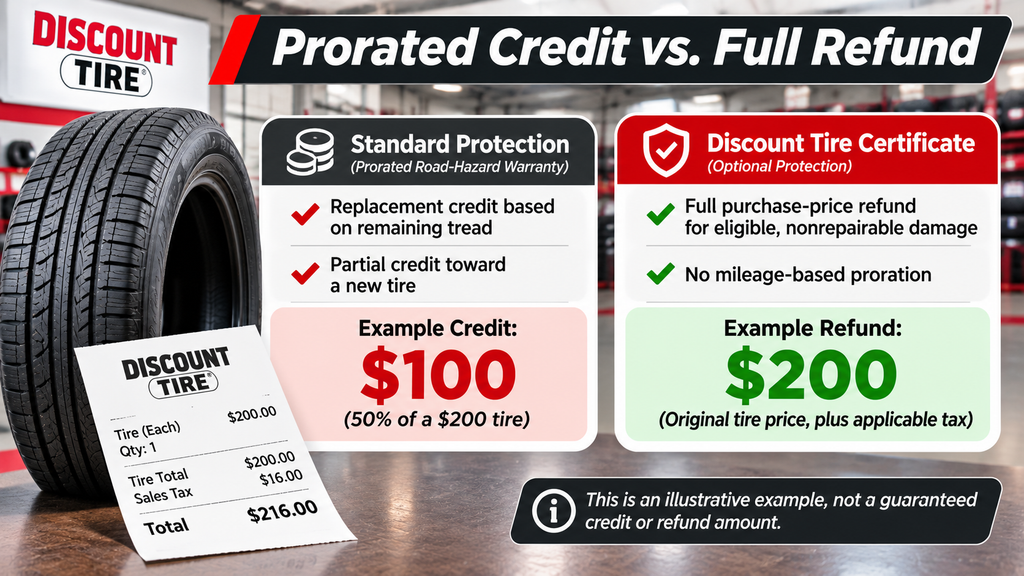
Consider a hypothetical tire originally purchased for $200.
| Scenario | Illustrative Outcome |
|---|---|
| Standard prorated protection | If the applicable calculation produced 50% credit, it would equal $100. |
| Eligible certificate claim | Full original purchase-price refund of $200, plus applicable sales tax. |
This is a simplified example, not an actual Discount Tire quote or a guaranteed prorated-credit calculation.
The certificate’s advantage is avoiding mileage-based proration when a claim qualifies. Ask whether any additional installation charges or new certificate purchase would apply to your replacement transaction.
How to File a Discount Tire Warranty Claim
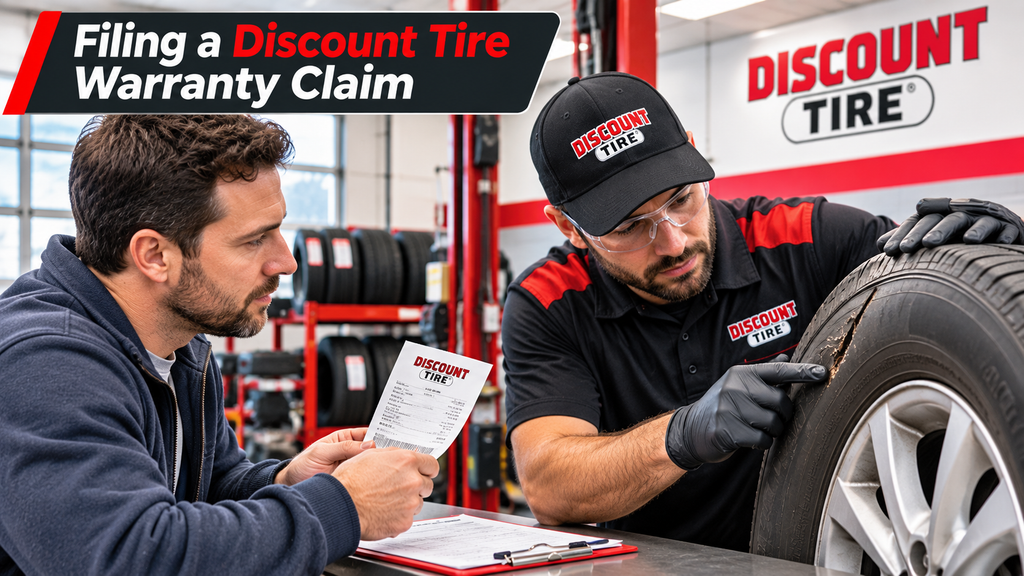
Whether you are using a manufacturer’s warranty, standard road-hazard protection, or a purchased certificate, the process starts with having the damaged tire inspected.
Step 1: Check Your Purchase Information
Locate your receipt, order number, or certificate details if available. Discount Tire may be able to retrieve your purchase information through its records.
Step 2: Visit a Discount Tire Location
Contact or visit a nearby store and explain the damage. Discount Tire accepts certificate redemption requests at its locations.
If the tire is flat, rapidly losing air, or visibly unsafe, do not drive on it. Use an approved spare or arrange appropriate roadside assistance.
Step 3: Have the Tire Inspected
A technician will evaluate the tire’s condition, damage location, tread depth, and eligibility under the relevant warranty.
If the tire can be repaired safely, repair may be recommended. If it cannot be safely repaired, the store will review replacement or refund options.
Step 4: Review the Claim Decision
For a qualifying certificate claim, the store may provide a full purchase-price refund or facilitate an eligible replacement. Standard warranties may instead provide prorated credit.
Ask for an explanation of any replacement-related charges before approving the work.
What If You Are Traveling Away From a Discount Tire Store?
Discount Tire directs certificate customers who are away from a nearby store to contact its customer support team at 800-589-9642.
Explain the situation before arranging outside repairs whenever possible. Reimbursement for outside service is subject to the applicable contract and claim requirements.
Are Discount Tire Certificates Worth It?
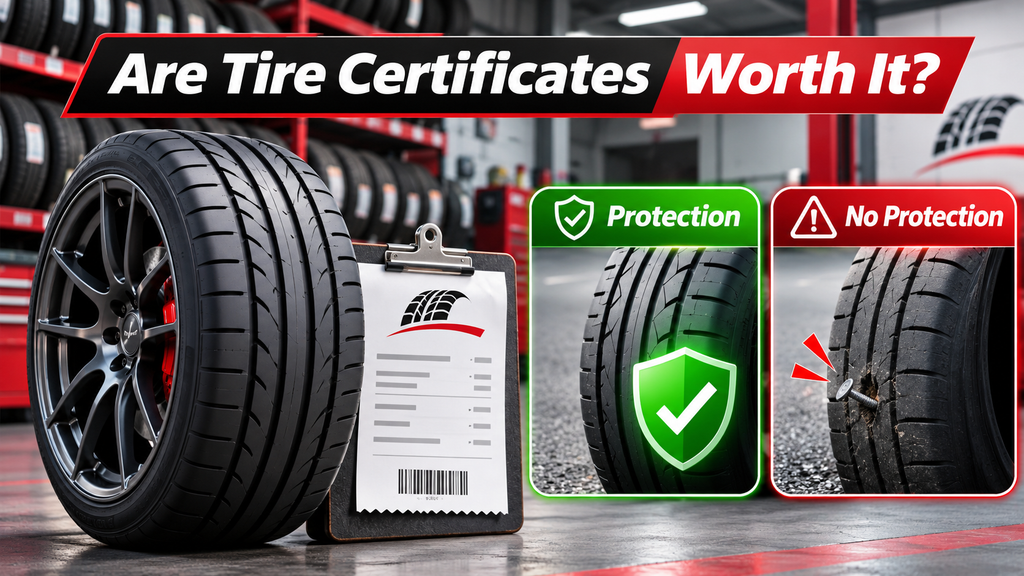
Whether additional tire protection is worth buying depends on your replacement costs, driving conditions, and willingness to accept unexpected expenses.
When Certificates May Offer Better Value
Optional protection may be particularly attractive if:
- You purchase expensive performance, low-profile, or specialty tires.
- You regularly travel on roads with potholes or construction debris.
- You want predictable protection against qualifying nonrepairable damage.
- You would find an unexpected replacement expense financially inconvenient.
When You Might Skip Additional Coverage
Skipping certificates may be reasonable if your tires are relatively inexpensive, the certificate price is high compared with replacement cost, or you prefer to cover unexpected damage yourself.
Remember that Discount Tire already provides standard prorated road-hazard protection and manufacturer warranty assistance with eligible purchases.
A Simple Certificate Value Test
Before buying, compare the combined certificate cost with the price of replacing one tire.
Then consider how much you drive, the roads you use, and whether the certificate’s specific exclusions and three-year limit fit your needs.
There is no universal answer. The best decision depends on your tires and circumstances
Does Discount Tire Offer Free Tire Repairs Without Certificates?
Yes. Discount Tire advertises free flat tire repairs for most punctures that meet accepted safety guidelines, even when the tires were purchased elsewhere.
Professional repair generally requires inspecting the tire internally and using an approved patch-and-plug method.
Damage to the sidewall or shoulder, large punctures, and certain internal injuries cannot be repaired safely.
For drivers with an ordinary repairable nail puncture, a free repair may be available without purchasing a certificate. The optional certificate becomes more valuable when qualifying damage makes a tire impossible to repair safely.
Frequently Asked Questions
Does Discount Tire offer a warranty on all tires?
Discount Tire states that tires it sells include a free prorated road-hazard warranty and the manufacturer’s applicable limited warranty. Exact coverage depends on the tire and policy.
Is the Discount Tire Certificate free?
No. The certificate is an optional purchase that provides additional protection for qualifying tire damage.
How long is the Discount Tire tire warranty?
Manufacturer warranty periods vary. Optional Discount Tire Certificate coverage generally lasts up to three years from purchase, provided the tire has more than 3/32 inch of remaining tread and satisfies other conditions.
Can I buy a Discount Tire Certificate after purchasing tires?
Yes. Eligible customers generally have up to 30 days from the original tire purchase to add certificates.
Will Discount Tire replace a tire damaged by a nail?
A nail puncture may qualify for a safe repair. If the tire cannot be repaired and qualifies under your coverage, a refund, replacement, or prorated credit may be available.
Does a Discount Tire Certificate cover sidewall damage?
Qualifying road-hazard sidewall damage may be covered when the tire meets all applicable certificate requirements. The tire must be inspected to determine eligibility.
Does Discount Tire have a mileage warranty?
Discount Tire does not offer its own traditional mileage warranty, but many tire manufacturers provide limited treadwear warranties on eligible models.
Can I use my Discount Tire Certificate at another location?
Yes. Discount Tire allows customers to request eligible certificate services at its locations, subject to verification and the applicable contract.
Do certificates automatically cover replacement tires?
Do not assume a replacement tire receives a new certificate automatically. Ask the store whether continued protection requires a separate certificate purchase.
Is a Discount Tire Certificate worth buying?
It may be worthwhile for expensive tires or drivers concerned about nonrepairable road-hazard damage. Compare the certificate cost with your potential replacement expense and review the coverage terms before purchasing.
Final Verdict: Which Tire Protection Should You Choose?
The standard Discount Tire warranty provides useful included protection through manufacturer coverage and prorated road-hazard benefits.
For drivers who want additional protection against qualifying nonrepairable damage, a Discount Tire Certificate may reduce the cost of an unexpected replacement by providing a full purchase-price refund under its conditions.
Before buying certificates, compare their cost against the price of replacing a tire. Review the three-year limit, remaining tread requirement, exclusions, and claim procedure so you know exactly what your purchase covers.
If you already have a damaged tire, start with a professional inspection rather than assuming that repair or replacement is automatically covered.