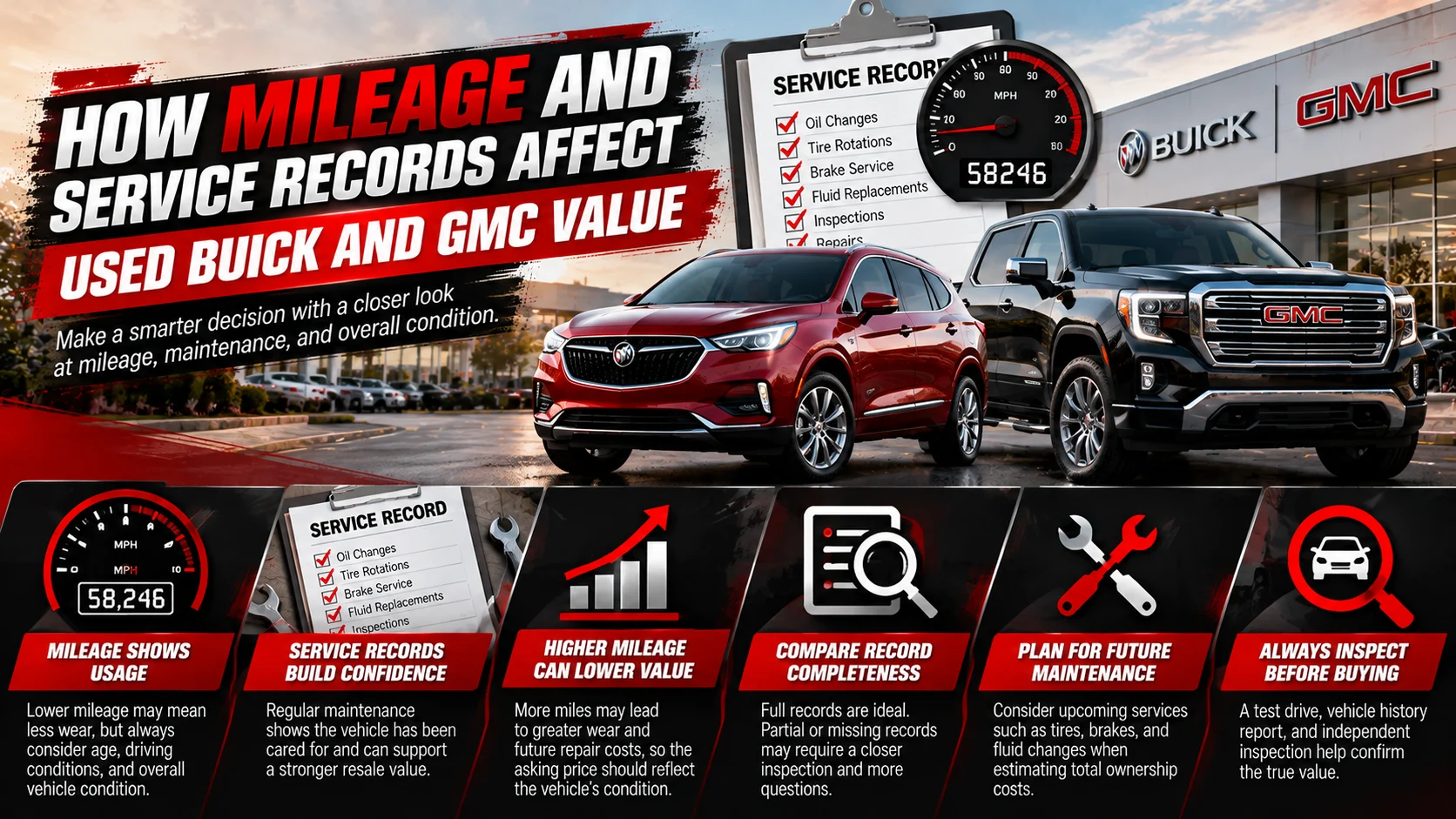
When shopping for a used Buick or GMC, two important factors can influence a vehicle’s value: its mileage and its service history. Mileage provides clues about how much a vehicle has been driven, while service records help explain how well it has been maintained. Together, these details can help buyers estimate future maintenance needs, compare similar vehicles, and decide whether an asking price is reasonable. Whether you are considering a Buick SUV for family travel or a GMC truck for work and recreation, looking beyond the price tag is essential. Exploring the used Buick and GMC inventory can help you compare available options. Understanding how mileage and maintenance records affect value will make it easier to evaluate vehicles and choose one that suits your needs and budget.
Why Mileage Matters When Evaluating a Used Vehicle
Mileage is one of the first details buyers usually check when comparing used vehicles. In general, a vehicle with fewer miles may have experienced less wear on certain components, making it attractive to buyers looking for long-term transportation.
For example, a GMC Sierra pickup with relatively low mileage may appeal to someone who wants a truck for regular work and occasional towing. Similarly, a Buick Envision with modest mileage may interest drivers seeking a comfortable SUV for commuting and family errands.
However, mileage should never be considered in isolation. A vehicle’s age, driving conditions, maintenance history, and mechanical condition all contribute to its value. A higher-mileage vehicle that received regular servicing may be a better option than a low-mileage vehicle that was neglected.
Compare mileage with the vehicle’s age and intended use. Consider whether the vehicle was primarily driven on highways, used for frequent short trips, or regularly exposed to demanding conditions. These details can provide a more complete picture of its likely wear.
How High Mileage Can Influence Resale Value
Higher mileage often reduces a used vehicle’s market value because buyers may anticipate more maintenance and repairs as components age. Parts such as tires, brakes, suspension components, and certain engine or transmission components can require attention over time.
For Buick and GMC vehicles, the specific maintenance needs depend on the model, engine, drivetrain, age, and previous use. A GMC Canyon used for demanding hauling, for instance, may have experienced different wear from a similar truck primarily driven for commuting.
Higher mileage does not automatically make a vehicle a poor purchase. A well-maintained GMC SUV or Buick sedan may continue to provide dependable transportation well beyond the mileage that some buyers initially prefer.
The key is determining whether the asking price reflects the vehicle’s condition and expected maintenance needs. Review comparable listings with similar model years, equipment, mileage, and condition before deciding whether the price represents good value.
Why Service Records Are Important
Service records provide evidence of how a vehicle was maintained throughout its ownership. They may include oil changes, tire rotations, brake repairs, fluid replacements, inspections, and other scheduled maintenance.
These documents can help buyers understand whether important services were completed at appropriate intervals. They may also reveal recurring mechanical issues or significant repairs that deserve closer examination.
A Buick with consistent maintenance records may inspire greater confidence than a similar vehicle with little documentation. The same applies to GMC trucks and SUVs, particularly when they have been used for work or towing.
Service records can support a stronger resale value because they reduce uncertainty about the vehicle’s history. They do not guarantee that a vehicle is mechanically sound, but they give buyers and appraisers useful information when assessing its condition.
Ask for dated invoices, digital service records, or maintenance-book entries. Ideally, the documents should identify the vehicle, service date, recorded mileage, and work performed.
Comparing Full, Partial, and Missing Service Histories
Not every used vehicle comes with a complete maintenance file. Understanding the difference between available records can help you assess how much confidence to place in a vehicle’s history.
A full service history provides documentation for most or all recommended maintenance intervals. It helps establish a consistent timeline and may show that important services were completed on schedule.
A partial service history contains some maintenance information but has gaps. This does not necessarily mean the vehicle was neglected. Previous owners may have misplaced receipts or used repair facilities that no longer have accessible records.
A vehicle with no service documentation presents greater uncertainty. You may have less information about oil changes, fluid services, repairs, or other maintenance.
If records are incomplete, ask whether the previous owner or servicing dealership can provide additional information. You can also arrange an independent inspection to assess the vehicle’s current condition before making a decision.
The Relationship Between Mileage and Maintenance
Mileage and service records are most useful when evaluated together. A low odometer reading may look appealing, but it does not prove that a vehicle has been properly maintained.
Consider two used Buick SUVs of similar age. One has lower mileage but no maintenance documentation. The other has somewhat higher mileage, consistent service records, and evidence of completed repairs. The second vehicle may offer better value if its overall condition supports the documented history.
The same principle applies to GMC trucks. A higher-mileage truck with verified maintenance may be a reasonable option for a buyer who needs a capable vehicle without paying the premium associated with a lower-mileage model.
Look for a logical progression of mileage across service records. Inconsistent readings or unexplained gaps should prompt questions. Also, remember that a service history cannot prove every aspect of a vehicle’s past, so a physical inspection remains important.
Consider Future Maintenance and Ownership Costs
The purchase price is only one part of a vehicle’s overall cost. Buyers should also estimate what it may cost to maintain and operate the vehicle over the next several years.
A higher-mileage Buick may need new tires, brake components, or suspension repairs sooner than a comparable vehicle with less wear. A used GMC truck may require additional attention depending on whether it has been used for towing, hauling, or frequent off-road driving.
Review the maintenance schedule for the exact model year and powertrain. Ask which recommended services have already been completed and which may be due soon.
It is also sensible to consider insurance, fuel, routine servicing, and potential repairs when setting your budget. If a vehicle needs immediate maintenance, include those expenses when comparing its price with similar options.
A vehicle with a slightly higher purchase price may prove more economical if it has a documented maintenance history, good current condition, and fewer immediate repair needs.
Inspect the Vehicle Before Making a Decision
Even an attractive mileage reading and a detailed service history cannot replace a thorough vehicle inspection. Before purchasing a used Buick or GMC, examine the exterior, interior, tires, brakes, and visible engine components.
During a test drive, listen for unusual noises and pay attention to steering, acceleration, braking, transmission operation, and dashboard warning lights. Test the air conditioning, infotainment system, windows, and other essential features.
Review the vehicle history report when available, and check for reported accidents, title concerns, or unresolved safety recalls. For additional confidence, arrange an independent inspection by a qualified mechanic.
Ask the seller to explain any missing records, unusual wear, or recent repairs. Clear answers and supporting documentation can help you evaluate the vehicle more accurately.
Conclusion
Mileage and service records play important roles in determining the value of used Buick and GMC vehicles, but neither factor tells the complete story on its own. Lower mileage can be appealing, while consistent maintenance records help demonstrate how a vehicle has been cared for. By evaluating both alongside age, condition, previous use, and future ownership costs, you can compare vehicles more confidently. Review the available documentation, take a thorough test drive, and consider an independent inspection before committing to a purchase. A vehicle with the right balance of mileage, maintenance, condition, and price can provide practical value and greater confidence for the road ahead.