Buying a Chevrolet can be an exciting experience, whether you need a dependable commuter car, a spacious family SUV, or a capable pickup truck. However, finding the right vehicle involves more than choosing a model and visiting the nearest dealership. Prices, financing options, dealer discounts, available incentives, and additional fees can vary between dealerships across Georgia. Taking time to compare these details can help you make a more informed decision and avoid unexpected expenses. Exploring resources such as Chevrolet Georgia can be one step in researching available vehicles and understanding your options. With a clear comparison strategy, you can evaluate dealership offers more confidently and select a Chevrolet that suits your needs and budget.
Start by Identifying the Right Chevrolet Model
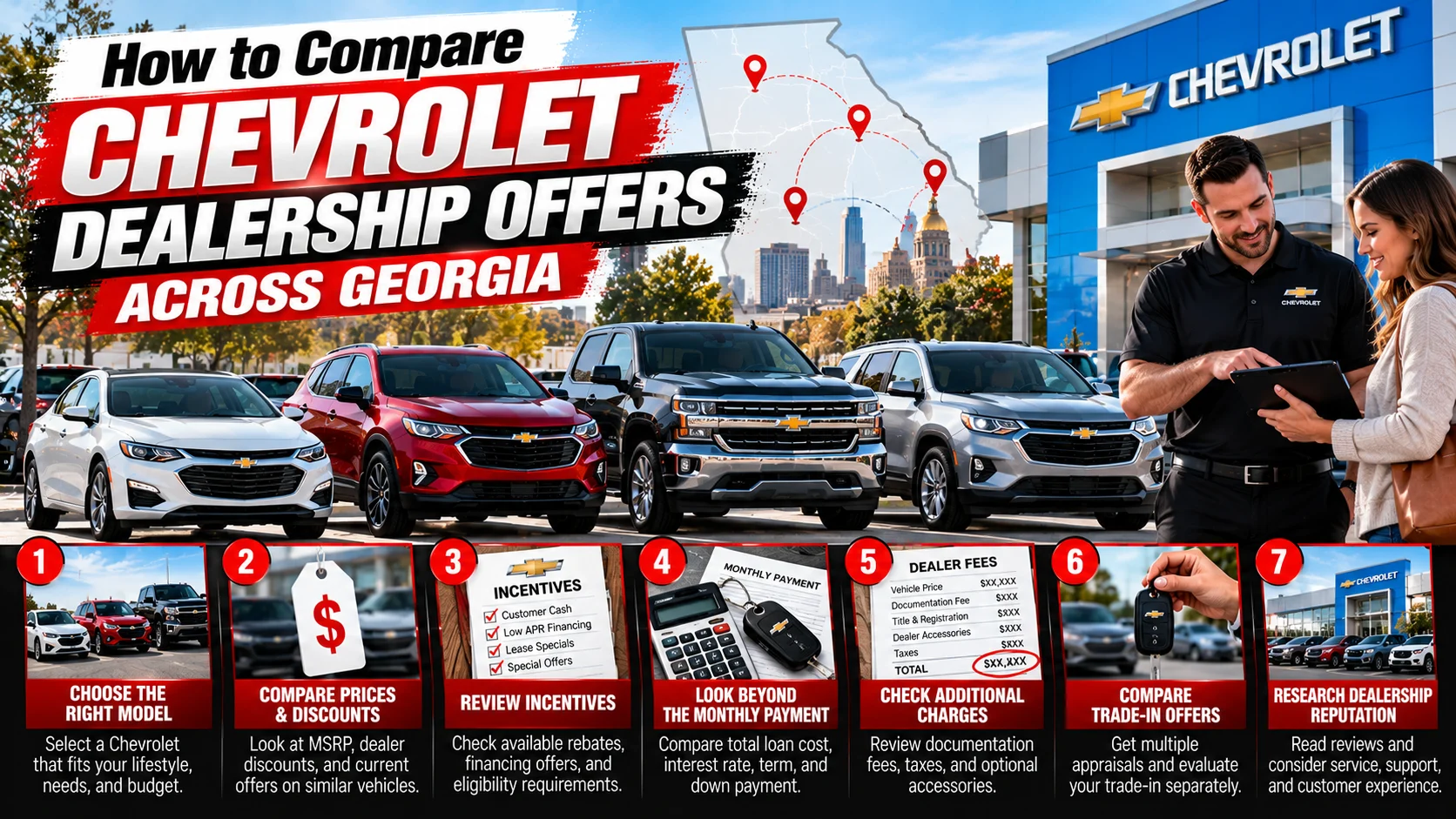
Before comparing dealership offers, decide which Chevrolet vehicle best matches your lifestyle. Your needs will determine which models, features, and price ranges deserve your attention.
For everyday commuting, a compact vehicle such as the Chevrolet Trax or Equinox may provide a practical combination of comfort, efficiency, and convenience. Families may prefer an SUV with additional passenger space, while drivers who regularly transport equipment or tow trailers might consider a Chevrolet Silverado pickup.
Once you have identified a suitable model, narrow your search to a specific trim level. Different trims can have significantly different prices because of variations in technology, interior materials, safety features, and performance equipment.
Comparing similar vehicles makes it easier to determine which dealership is offering the strongest overall value.
Compare Advertised Prices and Dealer Discounts
A dealership’s advertised price is an important starting point, but it should not be the only factor in your decision. Some dealers promote substantial discounts, while others highlight special financing or customer incentives.
Begin by checking the manufacturer’s suggested retail price, commonly called the MSRP. Then compare it with each dealership’s advertised selling price. Look for the dealer discount and any manufacturer-supported offers listed separately.
Pay attention to whether the advertised discount applies to every eligible customer or depends on specific conditions. Some offers may require financing through a particular lender, trading in an eligible vehicle, or qualifying for a special incentive.
It is also important to compare the exact vehicle whenever possible. Two Chevrolet SUVs with the same model name may have different equipment packages, optional accessories, or production years. A lower price does not necessarily represent a better deal if the vehicle lacks features you want.
Understand Manufacturer Incentives and Special Offers
Chevrolet dealerships may advertise different types of incentives, including customer cash, promotional financing, lease specials, and offers for eligible military members or first responders. Availability can depend on the model, location, purchase date, and buyer eligibility.
Read the terms of each offer carefully. A cash rebate may reduce the amount you pay for a vehicle, while a low annual percentage rate (APR) can reduce the interest charged on a qualifying loan. However, promotional financing and certain cash incentives may not be combined.
For example, a dealership might advertise a substantial cash discount while another promotes a low-interest financing option. The better choice depends on the vehicle’s final price, your down payment, the loan term, and the incentives available to you.
Ask each dealership to explain which offers apply to your circumstances. Confirm expiration dates and eligibility requirements before making a decision, since advertised promotions can change.
Look Beyond the Monthly Payment
Monthly payments are convenient for budgeting, but they can make two very different offers appear similar. A dealership may advertise a low payment by extending the loan term or requiring a larger down payment.
Instead of comparing monthly payments alone, examine the complete financing arrangement. Consider the loan amount, interest rate, repayment period, down payment, and total interest paid over the life of the loan.
A longer loan term may reduce monthly payments but increase the overall cost of borrowing. Similarly, a low advertised payment may depend on a substantial upfront payment or other conditions.
Request written financing estimates from multiple dealerships or lenders. Comparing the same loan term and a similar down payment will give you a clearer picture of which offer is most affordable over time.
Check Documentation Fees and Additional Charges
The advertised vehicle price may not include every expense associated with completing the purchase. Documentation fees, taxes, title charges, registration costs, and dealer-installed accessories can affect the final amount.
Ask each dealership for an itemized out-the-door price. This figure should clearly identify the vehicle’s selling price, applicable discounts, mandatory fees, taxes, and other charges required to complete the transaction.
Review optional products separately. Paint protection, extended service plans, appearance packages, and other add-ons may provide value for some buyers, but they should not be accepted automatically.
Comparing itemized quotes helps reveal whether a seemingly inexpensive vehicle becomes more costly after additional charges are included. It also gives you a clearer basis for discussing the final price with a salesperson.
Compare Trade-In Offers Separately
If you plan to trade in your current vehicle, evaluate its value independently from the price of the Chevrolet you intend to purchase.
Dealerships may provide different trade-in estimates depending on the vehicle’s condition, mileage, service history, market demand, and inventory needs. Request offers from several dealers and consider obtaining an independent valuation to establish a reasonable price range.
When reviewing a purchase proposal, separate the trade-in allowance from the new vehicle’s selling price. A dealership might offer a generous trade-in figure while providing a smaller discount on the Chevrolet itself.
Calculate the overall cost after the trade-in, but keep each part of the transaction visible. This approach makes it easier to identify which offer genuinely provides the greatest financial benefit.
Research Dealership Reputation and Customer Service
Price matters, but the dealership experience can also influence your satisfaction with the purchase. Research customer reviews to understand how dealerships handle communication, pricing questions, paperwork, and concerns after a sale.
Look for consistent patterns across multiple reviews rather than relying on one unusually positive or negative comment. Pay attention to whether customers describe transparent pricing, helpful explanations, and professional treatment.
You may also want to ask about service department availability, maintenance scheduling, warranty support, and access to genuine Chevrolet parts. These considerations can become important after you drive the vehicle home.
A dealership that communicates clearly and answers questions directly may offer a more comfortable buying experience, even when its initial advertised price is not the lowest.
Request Written Quotes From Multiple Dealerships
Once you have identified several suitable vehicles, contact dealerships and request written quotes. Provide the same basic requirements to each one, including the model, trim, preferred equipment, and whether you plan to finance or pay in cash.
Whenever possible, compare quotes for the same vehicle identification number (VIN). This helps ensure that differences in pricing are not caused by different options or equipment.
Keep a simple comparison record that includes:
- Vehicle selling price and dealer discount.
- Manufacturer incentives and eligibility requirements.
- Documentation fees, accessories, and other charges.
- Financing terms and total estimated cost.
- Trade-in value, if applicable.
Having these details organized makes it easier to ask informed questions and negotiate based on specific figures instead of general promises.
Conclusion
Comparing Chevrolet dealership offers across Georgia requires more than looking for the lowest advertised price. By identifying the right model, reviewing incentives, examining financing terms, checking additional fees, and researching dealership reputations, you can make a decision based on the complete value of each offer. Requesting written quotes and comparing similar vehicles will also help you recognize meaningful differences between dealerships. With careful research and a clear understanding of your budget, you can approach the purchasing process confidently and choose a Chevrolet that meets your practical needs and financial goals.