
Learn the shaft definition in mechanical engineering, how shafts transmit torque and rotational power, the main types of shafts, common materials, mechanical applications, and the difference between a shaft, axle, and spindle.
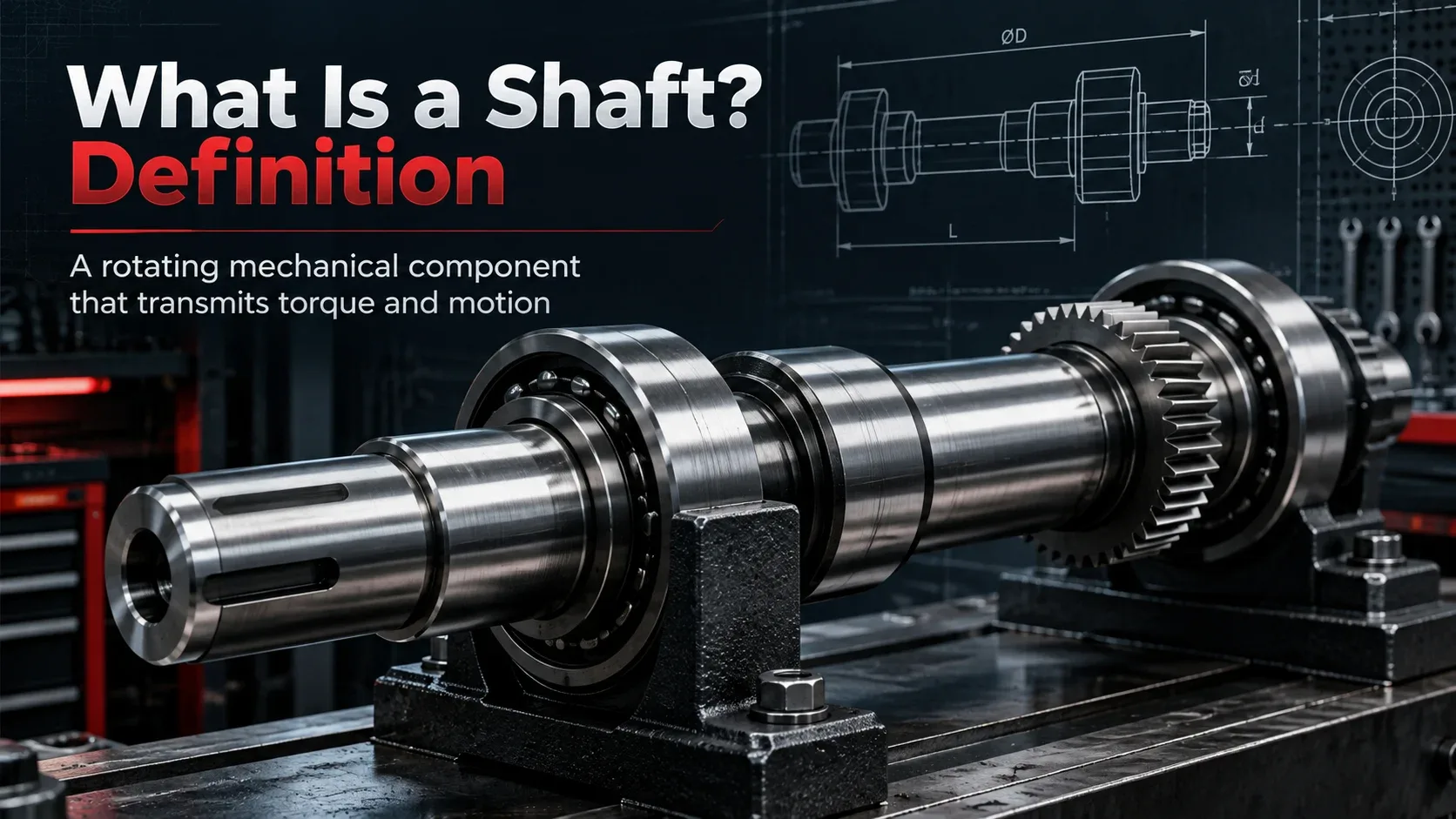
Shafts are among the most important mechanical components used in machines, vehicles, motors, pumps, turbines, gearboxes, conveyors, and industrial equipment. Although a shaft may look like a simple cylindrical metal part, its function is essential for transferring rotational motion and mechanical power.
Understanding the shaft definition is important for mechanical engineering students, technicians, machinists, automotive enthusiasts, maintenance professionals, and anyone who wants to understand how rotating machinery works.
What Is a Shaft in Mechanical Engineering?
If you are searching for what is a shaft or trying to define shaft in engineering terms, it can be described as a rotating machine element that transmits torque and often supports other rotating components.
Gears, pulleys, sprockets, flywheels, bearings, and couplings may be mounted on a shaft. When the shaft rotates, it allows mechanical energy to move through the system.
Shaft design depends on factors such as torque, rotational speed, bending force, material strength, shaft length, shaft diameter, bearing positions, and operating conditions.
Meaning of Shafts in Machines
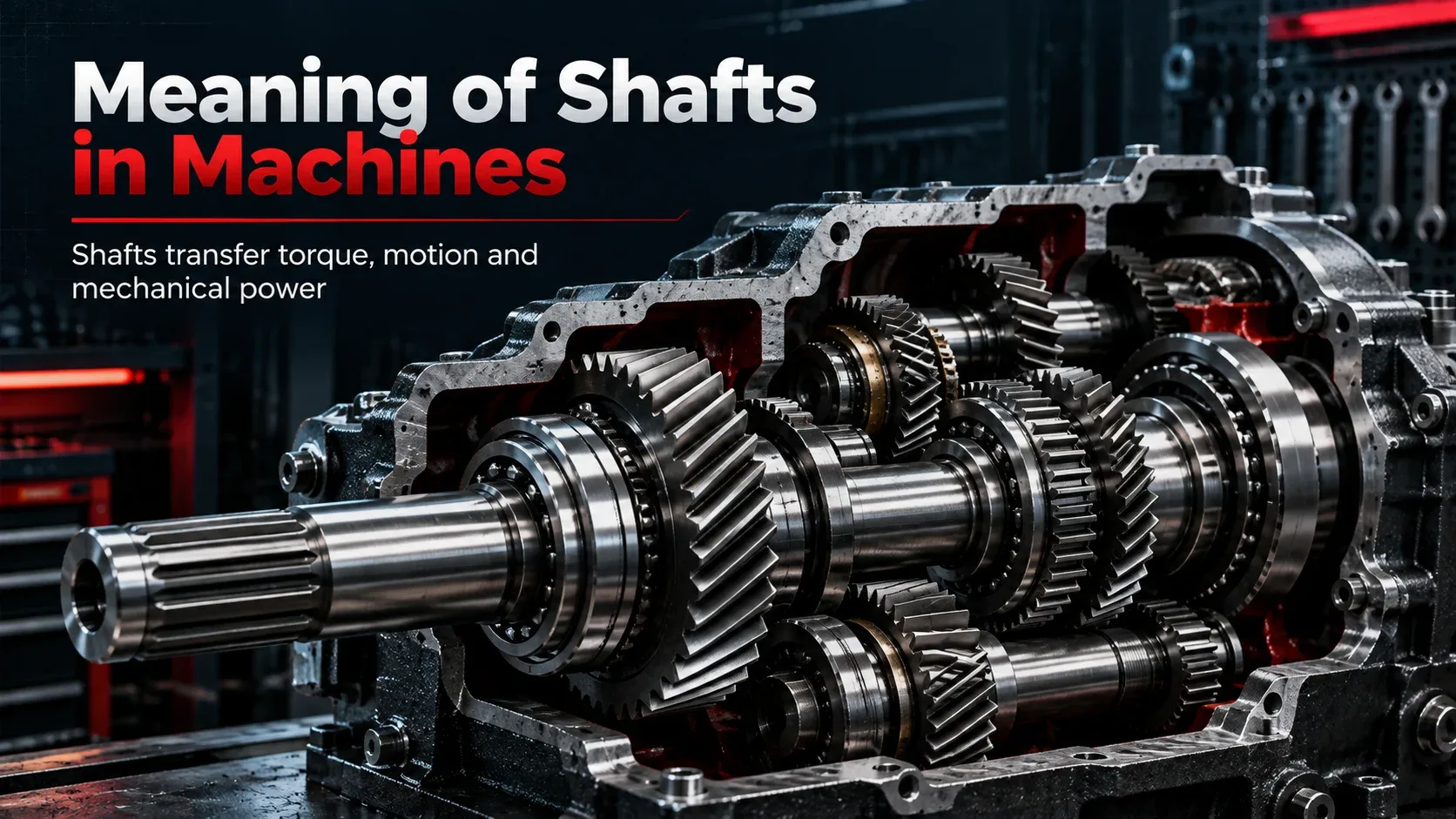
The meaning of shafts becomes easier to understand when we examine their role inside mechanical systems. Shafts act as a connection between rotating machine components and allow mechanical power to travel from one point to another.
Transmit Torque
Shafts carry twisting force from a power source to another machine component.
Transfer Rotational Motion
A shaft carries rotational movement between gears, pulleys, sprockets, couplings, and other rotating parts.
Support Machine Components
Bearings, gears, flywheels, pulleys, and other components can be mounted directly on a shaft.
Transfer Mechanical Power
Shafts provide a physical path for moving mechanical power from the driving component to the driven component.
How Does a Mechanical Shaft Work?
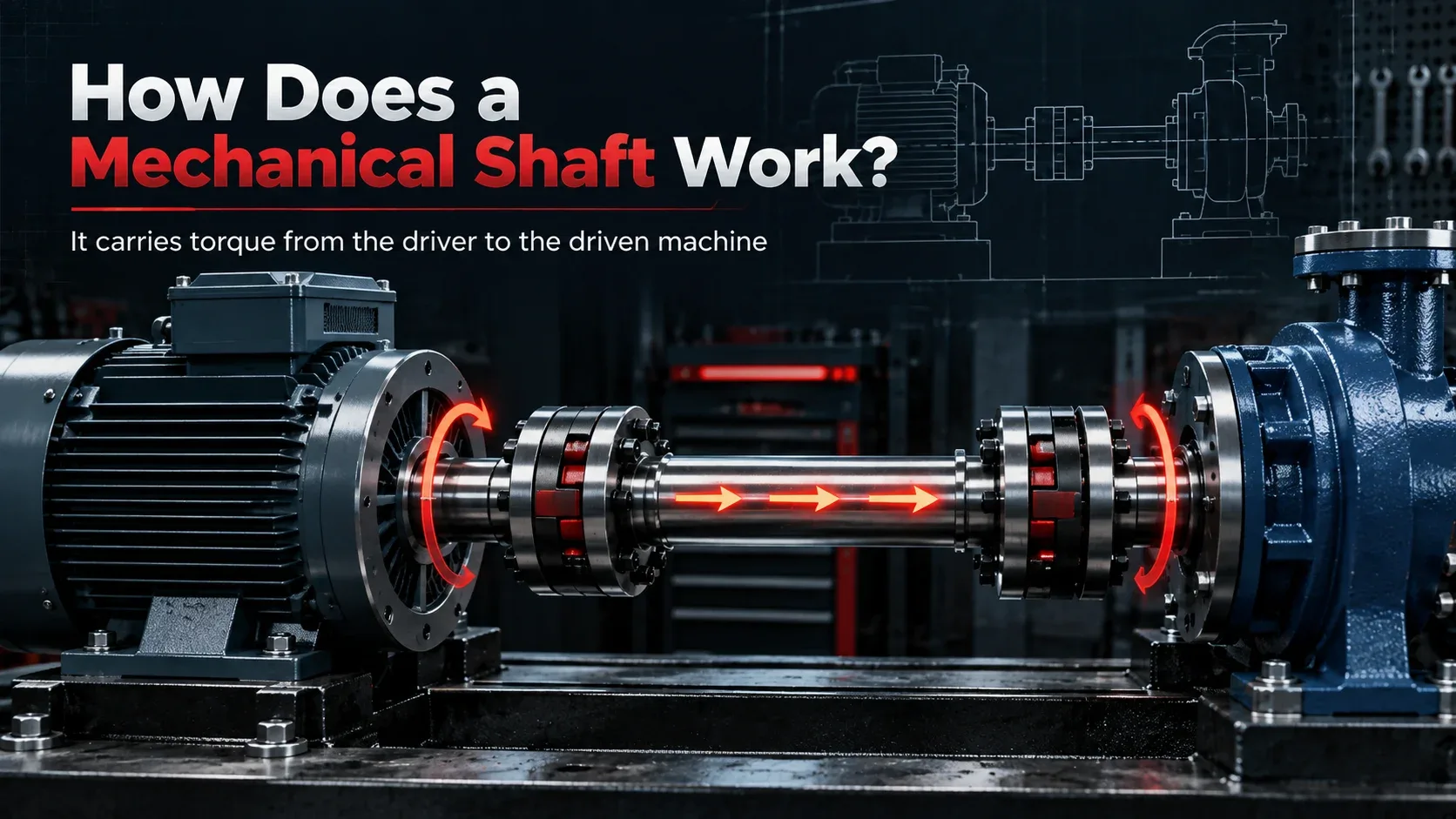
A mechanical shaft receives rotational force from a driving component and transfers it to another component.
Consider an electric motor connected to a pump. The motor produces torque at its output shaft. A coupling connects the motor shaft to the pump shaft. As the motor rotates, torque travels through the coupling and into the pump shaft.
Understanding Torque
Torque is the turning effect of force. Because shafts transmit torque, they experience twisting stress known as torsional stress. Shafts can also experience bending, axial, and dynamic loads depending on the machine.
Main Parts and Features of a Shaft
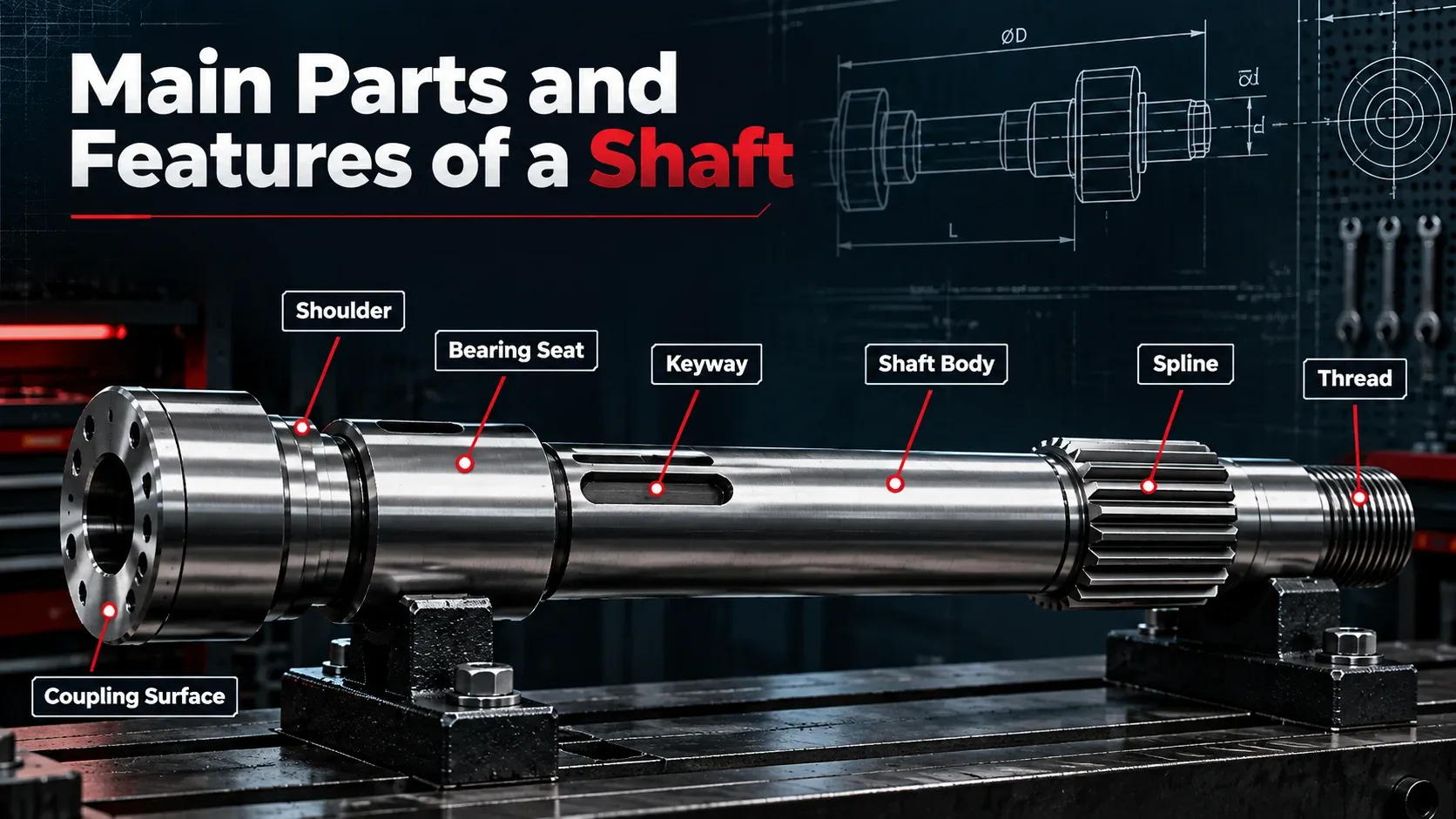
Bearing Seats
Precisely machined surfaces where bearings support the shaft while allowing smooth rotation.
Shoulders
Changes in shaft diameter used to position bearings, gears, collars, and other machine components.
Keyways
Slots machined into a shaft that hold keys and prevent mounted components from slipping around the shaft.
Splines
Multiple ridges or grooves that create a strong connection between a shaft and mating component.
Threads
Threaded portions may be used for retaining nuts, adjustment, or securing components.
Coupling Surfaces
Shaft ends may be shaped or machined for connection to couplings, joints, gears, or other drive components.
Types of Shafts
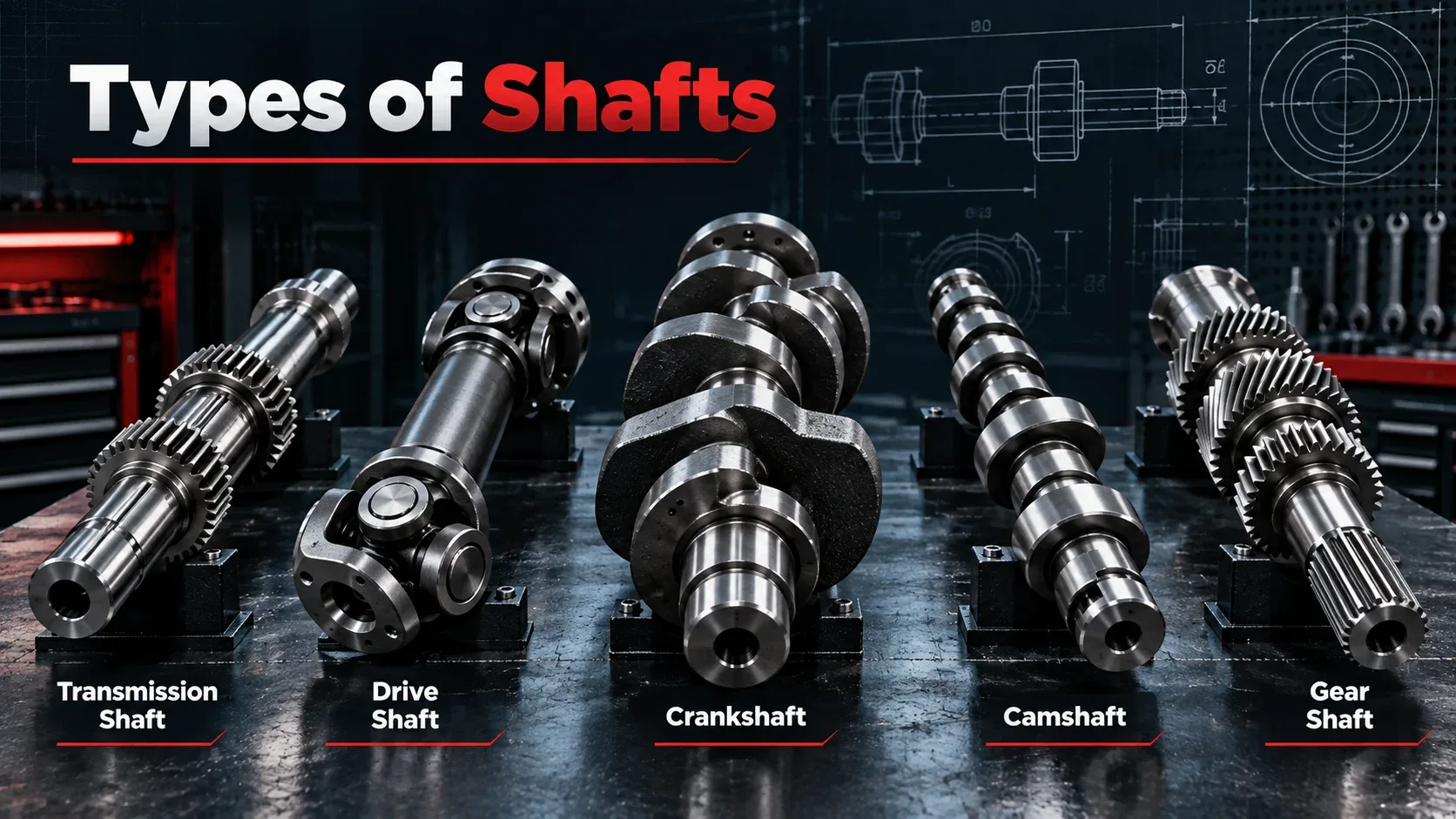
Mechanical shafts can be classified according to their function, shape, construction, and application.
1. Transmission Shaft
A transmission shaft transfers mechanical power between a power source and another machine component.
2. Machine Shaft
A machine shaft is designed as an integral component of a particular machine.
3. Drive Shaft
A drive shaft transfers rotational power between drivetrain components.
4. Crankshaft
A crankshaft converts reciprocating movement into rotational motion.
5. Camshaft
A camshaft contains shaped lobes used to control the movement of other mechanical components.
6. Gear Shaft
Gear shafts support gears and transfer torque through gear trains.
7. Propeller Shaft
A propeller shaft transfers rotational power to a propeller or drivetrain component.
8. Motor Shaft
A motor shaft is connected to the rotor of an electric motor and provides its rotating mechanical output.
Shaft Types by Shape and Construction
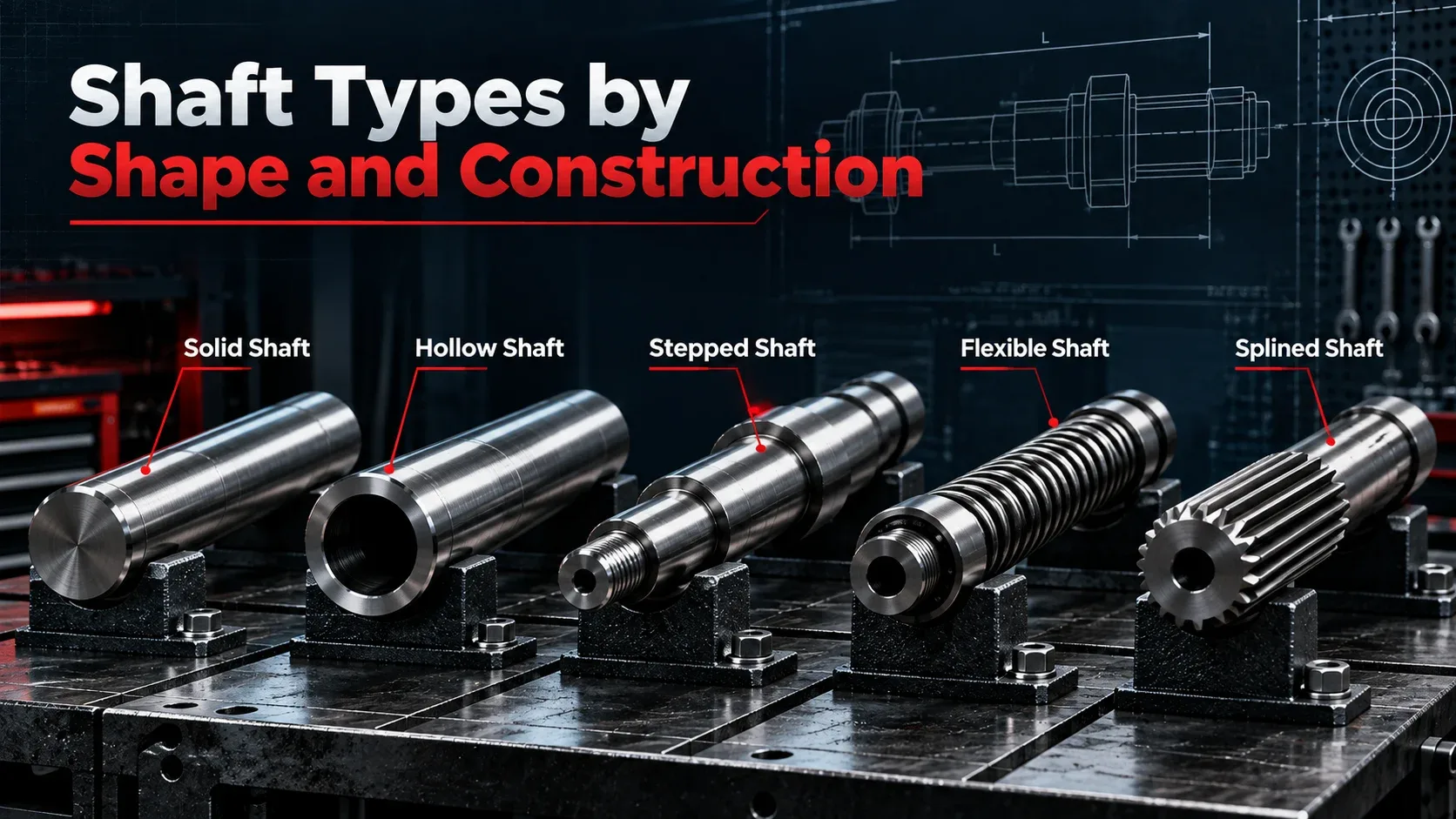
| Type | Description | Typical Use |
|---|---|---|
| Solid Shaft | A shaft with a completely solid circular cross-section. | Motors, gearboxes, machinery |
| Hollow Shaft | A tubular shaft with an empty central section. | Weight-sensitive drive systems |
| Stepped Shaft | A shaft with two or more diameters along its length. | Gears, bearings, motors |
| Flexible Shaft | A shaft capable of transmitting rotation while bending. | Flexible tools and remote drives |
| Splined Shaft | A shaft containing longitudinal grooves or teeth. | Transmissions and industrial drives |
Common Materials Used for Shafts
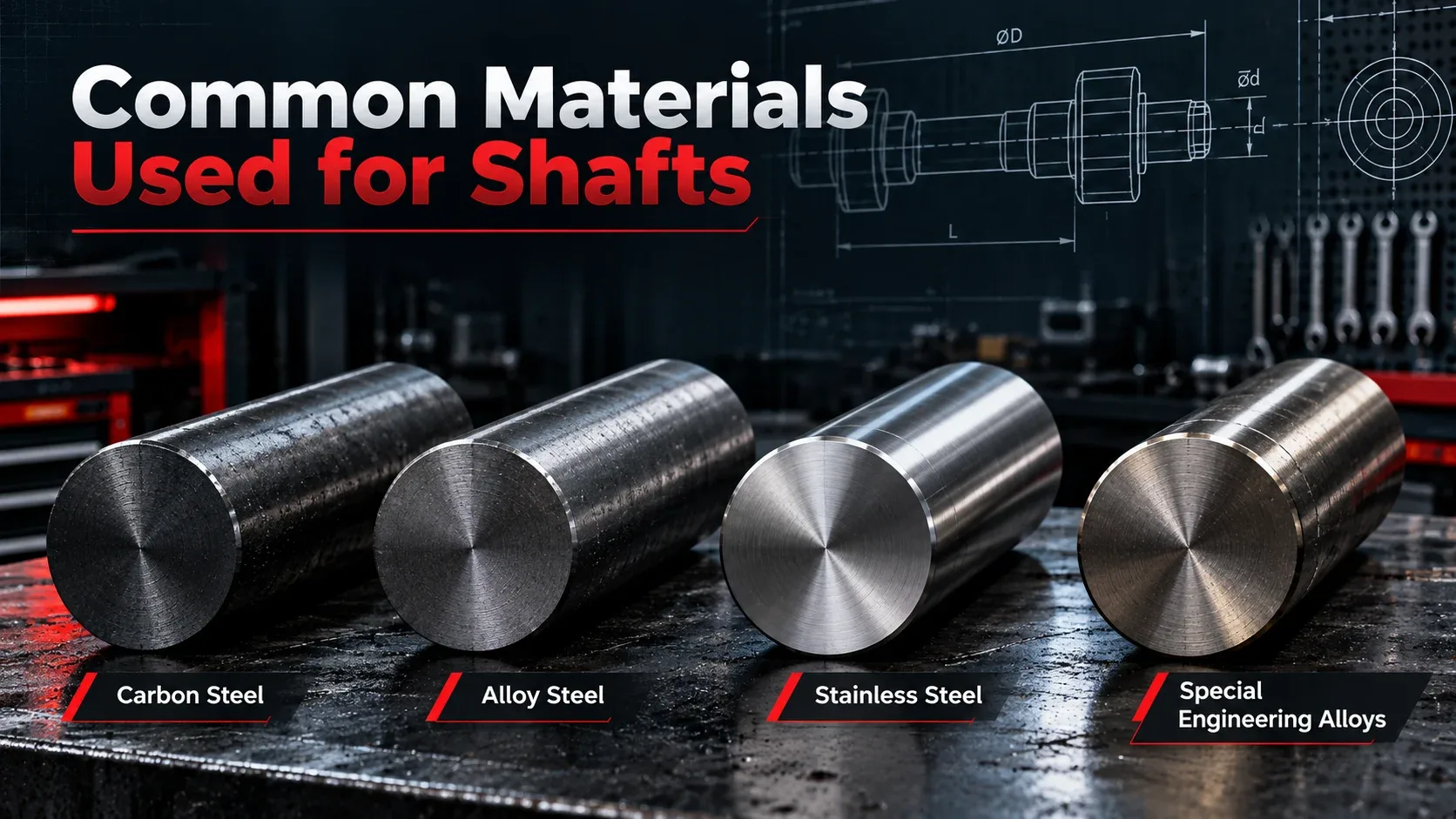
Shaft materials must provide enough strength, fatigue resistance, toughness, wear resistance, and machinability for the application.
- Carbon steel: commonly used in general-purpose shaft applications.
- Alloy steel: used when higher strength, toughness, or fatigue resistance is required.
- Stainless steel: selected when corrosion resistance is important.
- Special engineering alloys: used for extreme temperatures, high loads, corrosive conditions, or specialized environments.
Loads Acting on a Shaft
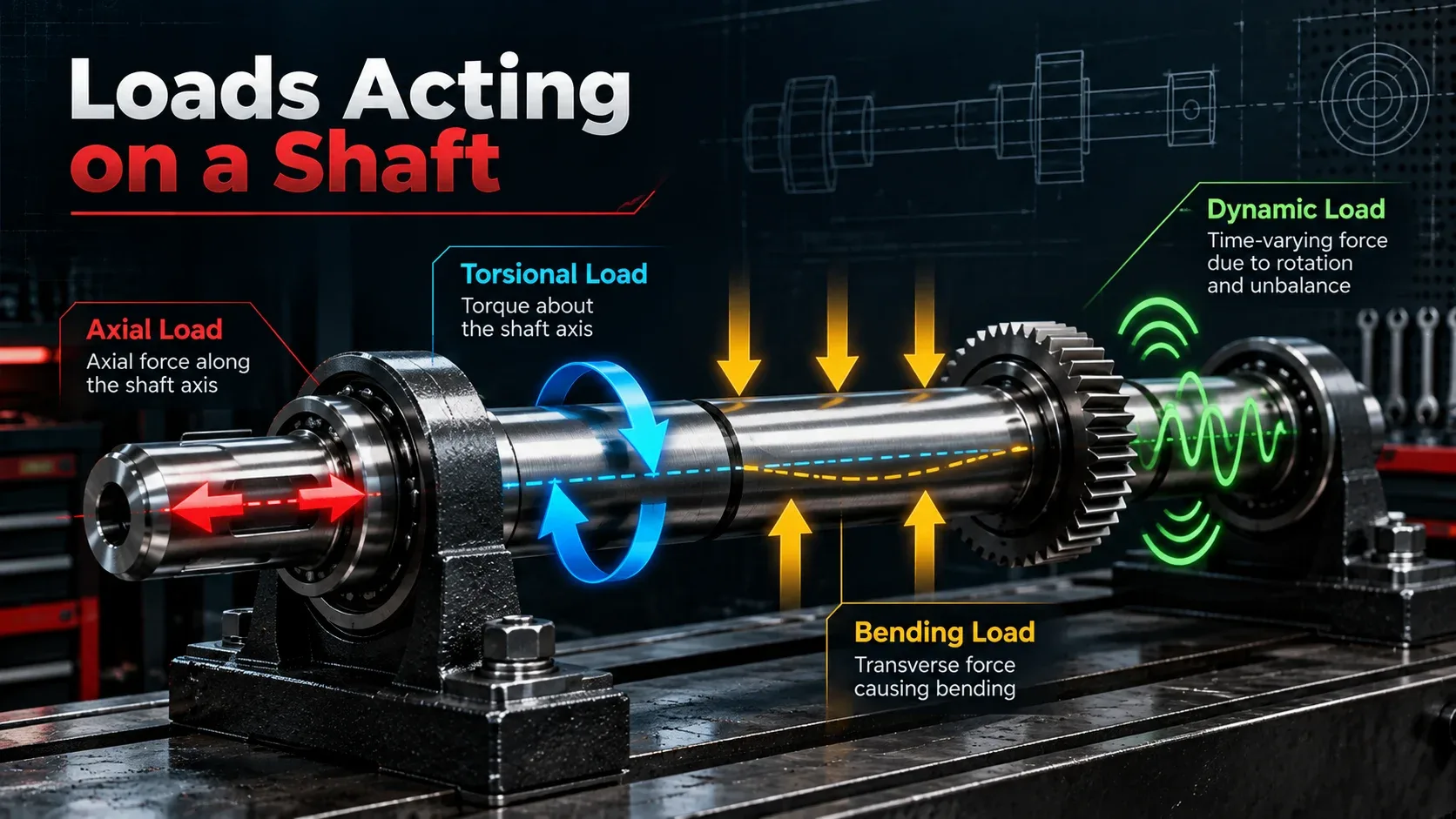
Torsional Load
Torsional loading occurs when torque twists the shaft during power transmission.
Bending Load
Bending forces can be created by gears, pulleys, belts, sprockets, and external loads.
Axial Load
Axial forces act along the length of the shaft and can occur in propellers, pumps, and gear systems.
Dynamic Load
Repeated or changing loads can gradually cause fatigue damage over time.
Mechanical Uses of Shafts
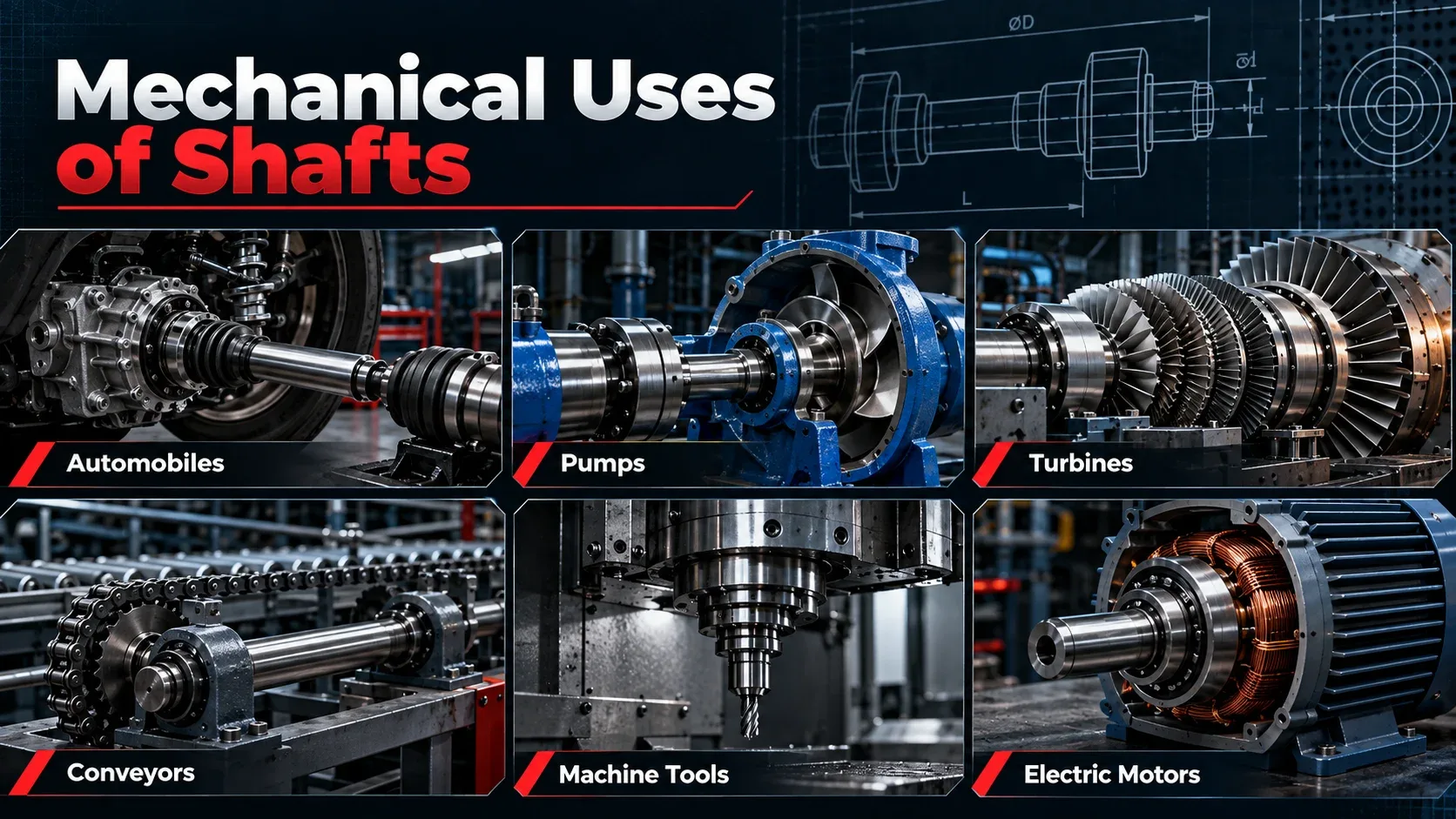
| Application | Example Shaft | Main Purpose |
|---|---|---|
| Automobiles | Drive shaft | Transfers drivetrain torque |
| Engines | Crankshaft | Converts piston motion into rotation |
| Electric Motors | Motor shaft | Provides rotating output |
| Gearboxes | Input and output shafts | Transfer torque through gear stages |
| Pumps | Pump shaft | Drives the impeller or pumping element |
| Turbines | Turbine shaft | Transfers rotor power |
Shaft vs Axle vs Spindle
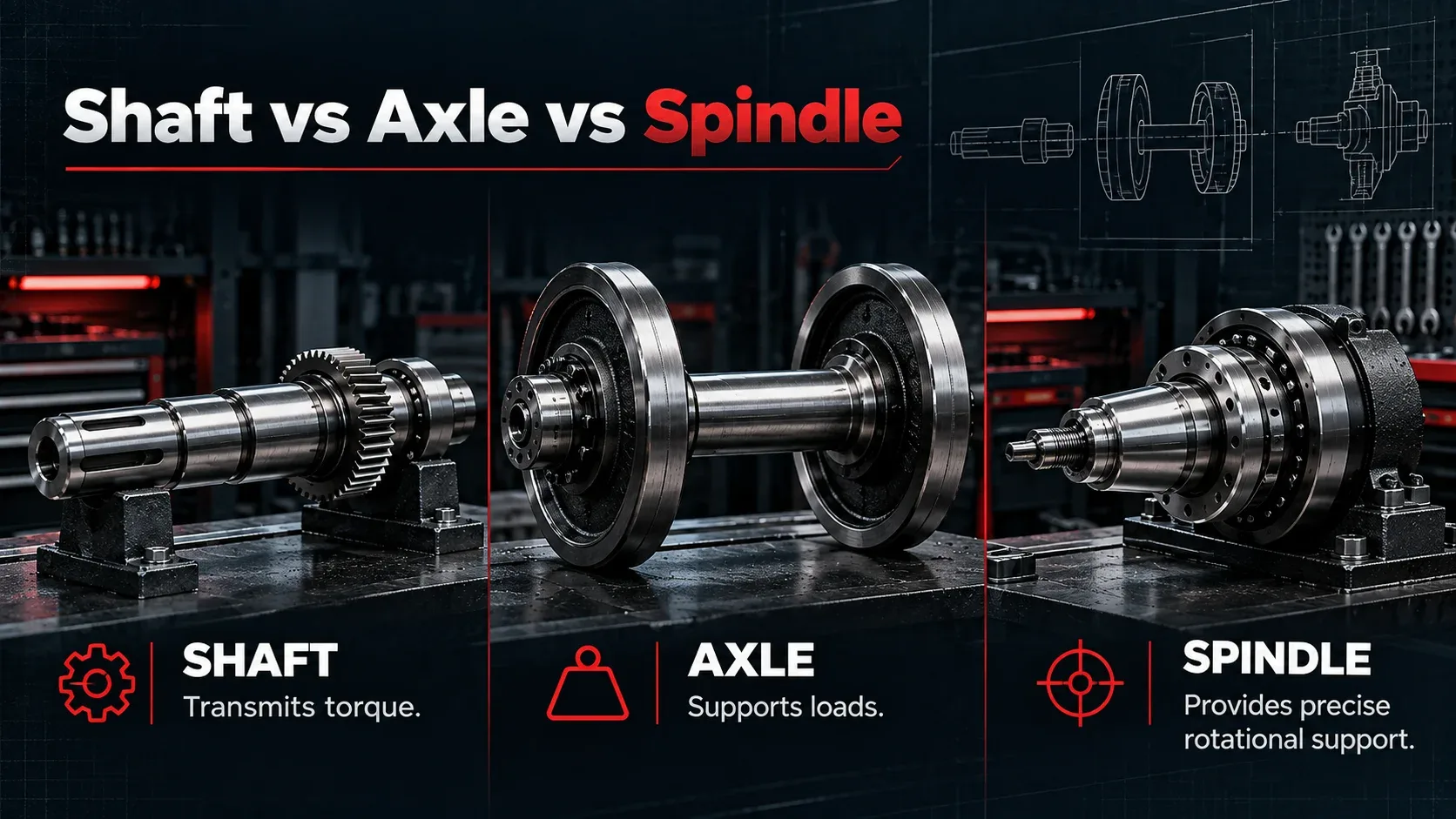
| Component | Main Purpose | Usually Rotates? | Transmits Torque? |
|---|---|---|---|
| Shaft | Transfers rotational power | Yes | Yes |
| Axle | Primarily supports rotating components or loads | Sometimes | Usually not |
| Spindle | Provides short, precise rotational support | Yes | Often |
| Rod | Transfers force or provides structural support | Not necessarily | Not necessarily |
How Are Shafts Connected to Other Components?
- Keys and keyways prevent relative rotation.
- Splines distribute torque across multiple teeth.
- Couplings join two rotating shafts.
- Press fits secure components through interference.
- Set screws help secure hubs and collars.
- Tapered connections provide precise mechanical seating.
- Flanges connect larger rotating components.
Common Shaft Failures
Fatigue
Repeated loading can produce cracks that gradually grow until the shaft fails.
Overloading
Excessive torque or bending can permanently deform or fracture a shaft.
Misalignment
Incorrect alignment can increase vibration, bearing forces, and fatigue stress.
Wear
Bearing seats, seal surfaces, keyways, and splines can wear over time.
Factors Considered When Designing a Shaft
- Torque requirements
- Bending forces
- Axial loads
- Rotational speed
- Shaft diameter
- Shaft length
- Material strength
- Fatigue resistance
- Bearing positions
- Deflection and stiffness
- Stress concentrations
- Vibration and critical speed
Frequently Asked Questions
What is the simple definition of a shaft?
A shaft is a rotating mechanical component mainly used to transmit torque, rotational motion, and mechanical power.
What is shaft in mechanical engineering?
In mechanical engineering, a shaft is a rotating machine member that carries torque and may support gears, bearings, pulleys, sprockets, and couplings.
What is the meaning of shafts?
Shafts are mechanical components designed to transfer rotation or mechanical power between parts of a machine.
What is the difference between a shaft and an axle?
A shaft is primarily designed to transmit torque and rotational power, while an axle traditionally supports wheels or other rotating components.
Final Summary: Shaft Definition and Purpose
The simplest shaft definition is a rotating mechanical component used to transmit torque, rotational motion, or mechanical power. Shafts are found in motors, vehicles, pumps, gearboxes, turbines, conveyors, and many other mechanical systems.
- Shafts usually rotate and transmit torque.
- They can support gears, bearings, pulleys, and couplings.
- Shafts may experience torsion, bending, axial loading, and fatigue.
- Common types include drive shafts, motor shafts, gear shafts, and crankshafts.
- Carbon steel and alloy steel are common shaft materials.
- Shafts and axles perform different primary mechanical functions.