
A sawing machine is a powered machine tool used to cut raw material into required lengths, sections, or shapes. Depending on the machine and blade, sawing can be used for steel, aluminum, wood, plastics, pipes, tubes, bars, and structural sections.
Sawing is one of the most common material-cutting processes used in machine shops, fabrication facilities, steel-processing plants, maintenance workshops, construction, automotive production, and woodworking.
In this guide, you will learn what a sawing machine is, how it works, its main parts, different types of sawing machines, blade selection, cutting parameters, applications, advantages, limitations, maintenance, safety, and common problems.
What Is a Sawing Machine?
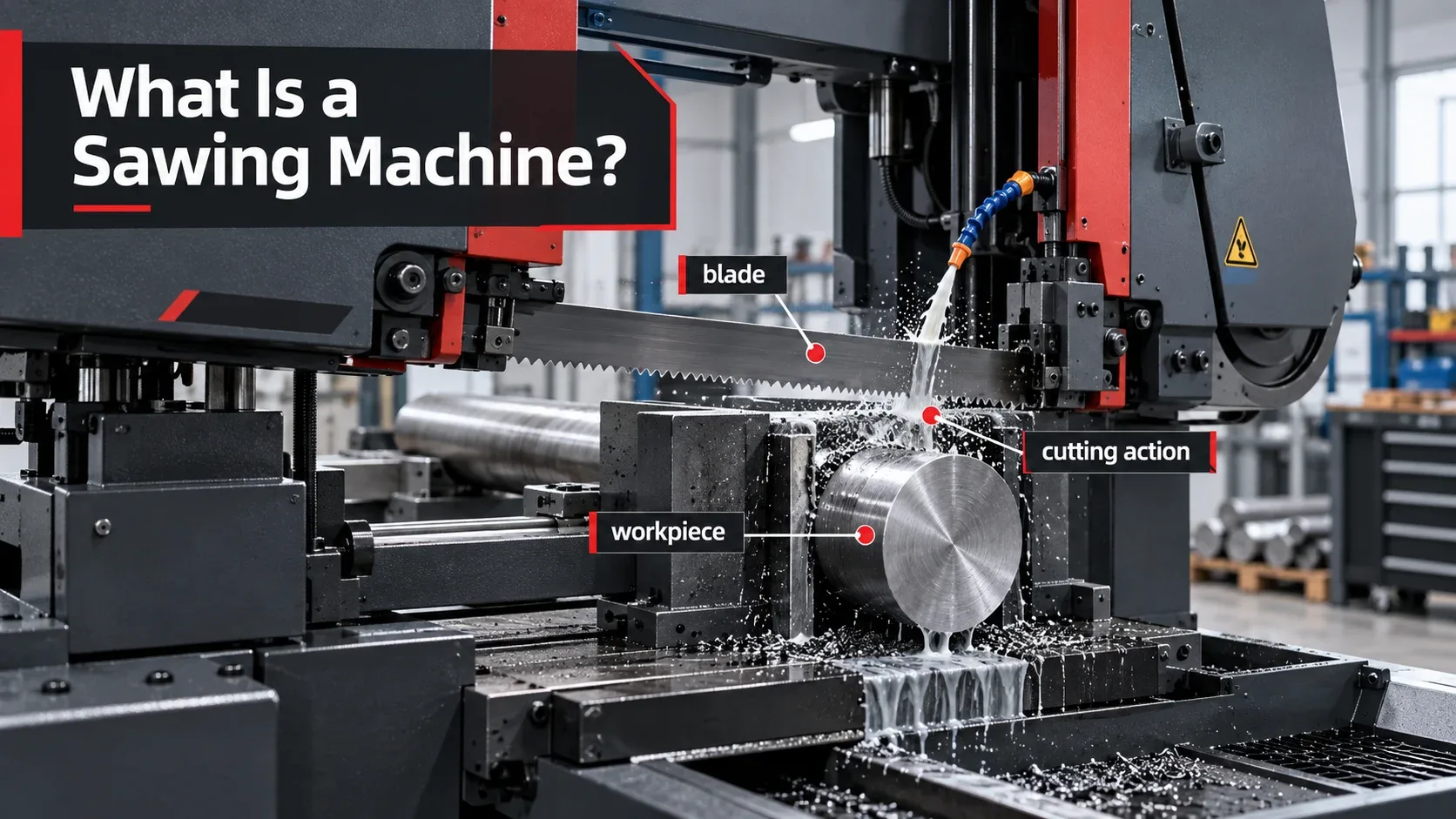
A sawing machine is a machine tool that separates or shapes material using a toothed blade, rotating cutting disc, or abrasive wheel. As the cutting element moves through the workpiece, its teeth or abrasive particles remove small amounts of material until the cut is complete.
In manufacturing, sawing is often used before other machining operations. For example, a long steel bar may first be cut into shorter blanks on a band saw before those blanks are machined on a lathe or milling machine.
How Does a Sawing Machine Work?
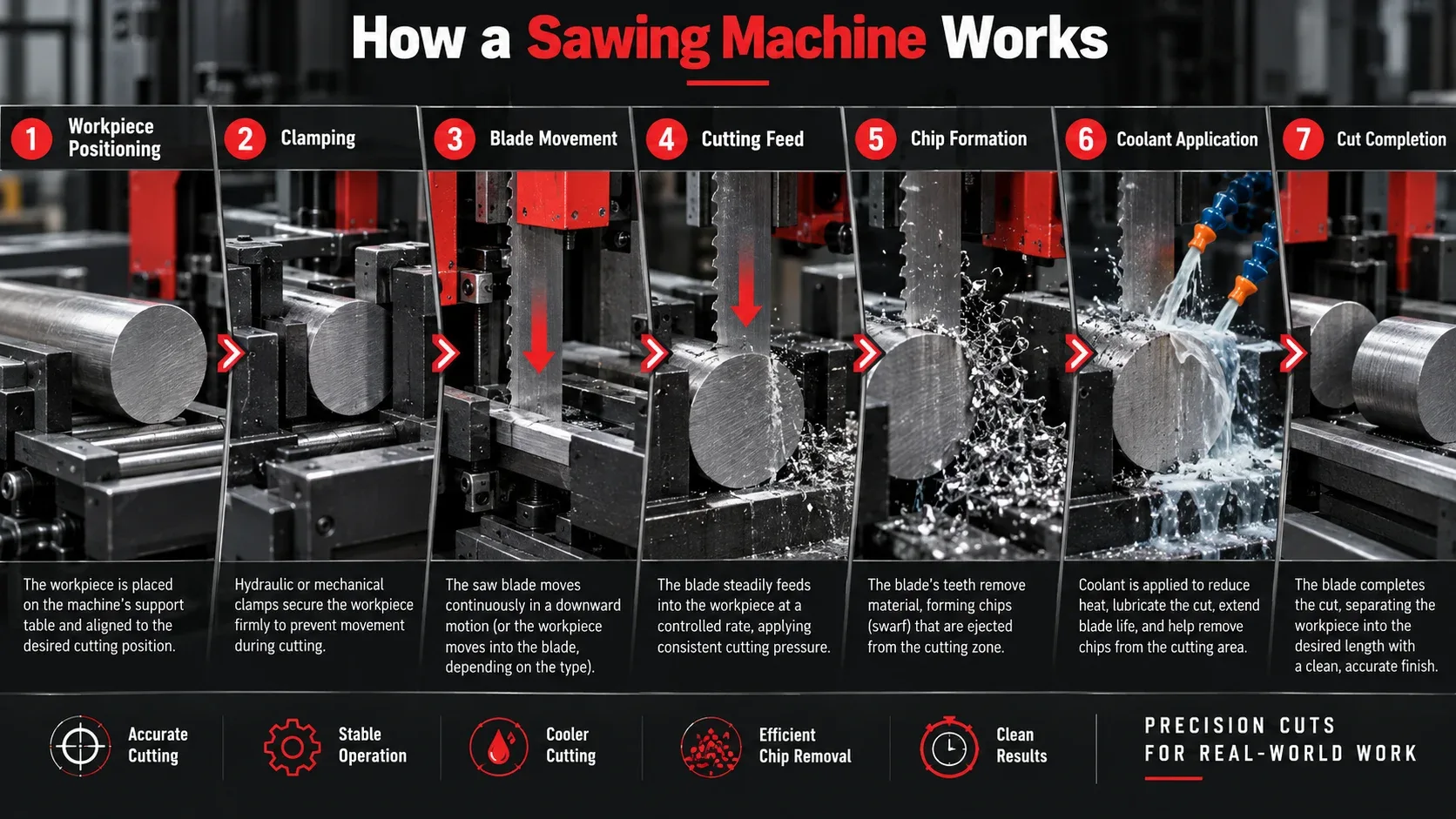
Different sawing machines use different blade motions, but the basic cutting process is similar. The material is positioned and secured before a powered blade moves through the workpiece and removes material as chips.
Workpiece Positioning
The material is placed on the machine bed, table, rollers, or support system in the correct cutting position.
Workpiece Clamping
A vise or clamping system holds the workpiece securely. Correct clamping reduces vibration and helps maintain cut accuracy.
Blade Movement
The cutting blade begins moving. The movement depends on the type of sawing machine.
- Continuous motion: Used by band saws.
- Rotary motion: Used by circular and cold saws.
- Reciprocating motion: Used by power hacksaws.
Cutting Feed
The blade or saw head is gradually fed into the material. The feed must match the material, blade type, tooth pitch, and machine specifications.
Chip Formation
The cutting teeth remove small chips from the workpiece. Efficient chip removal is important because accumulated chips can interfere with cutting.
Cooling and Lubrication
Metal-cutting machines may use coolant to control heat, provide lubrication, remove chips, and help extend blade life.
Cut Completion
When the blade passes completely through the material, the cutting cycle ends. Automatic machines may then feed the next section of material and repeat the process.
Main Parts of a Sawing Machine
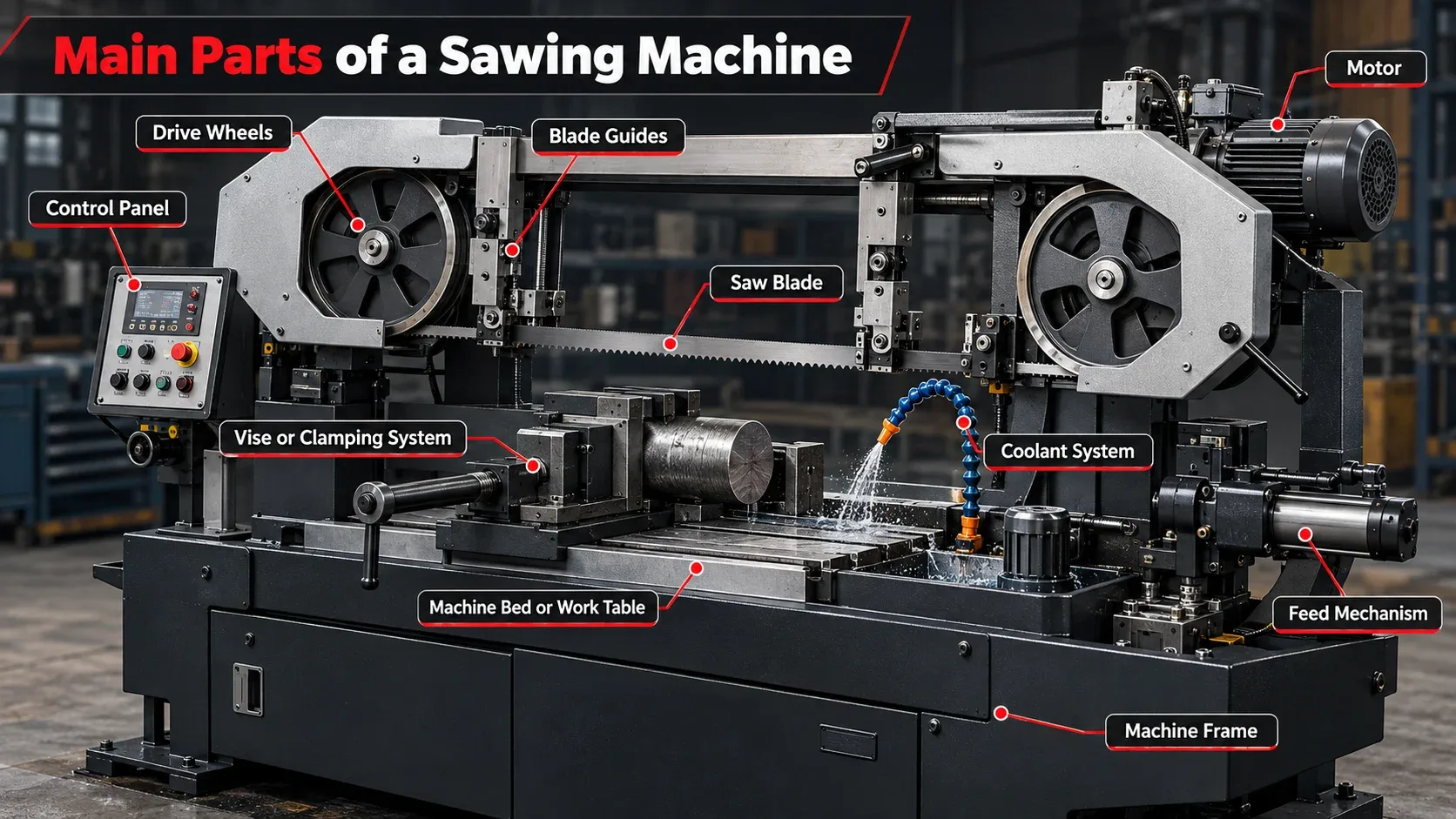
The design of a sawing machine varies according to its type, but most industrial machines contain several common components.
Saw Blade
The blade performs the cutting operation. Its tooth geometry, material, width, thickness, and tooth pitch affect cutting efficiency and blade life.
Motor
The motor provides the power needed to drive the blade or cutting disc.
Machine Frame
The machine frame supports the cutting mechanism, blade, motor, guides, and workholding components.
Machine Bed or Work Table
The bed supports the material during cutting. Larger industrial machines may use roller conveyors for long bars, pipes, or beams.
Vise or Clamping System
The vise secures the material so it does not move during cutting. Machines may use manual, pneumatic, or hydraulic clamping systems.
Blade Guides
Blade guides help keep a band-saw blade aligned near the cutting area and reduce unwanted blade deflection.
Drive Wheels
Band saws use wheels to support and move the continuous blade around the machine.
Feed Mechanism
The feed mechanism controls the movement of the blade into the workpiece. Feed may be manual, gravity controlled, hydraulic, or servo driven.
Coolant System
Coolant systems circulate cutting fluid through the cutting area to reduce heat and help remove chips.
Control Panel
Modern automatic and CNC machines use control panels to manage blade speed, feed rate, cut length, cycle quantity, and other settings.
| Part | Main Function |
|---|---|
| Saw Blade | Removes material from the workpiece. |
| Motor | Provides power for blade movement. |
| Machine Frame | Supports the main machine components. |
| Vise | Holds the workpiece securely. |
| Blade Guides | Maintain blade alignment. |
| Feed Mechanism | Controls cutting movement and pressure. |
| Coolant System | Controls heat and assists chip removal. |
| Control Panel | Controls machine settings and cutting cycles. |
Types of Sawing Machines
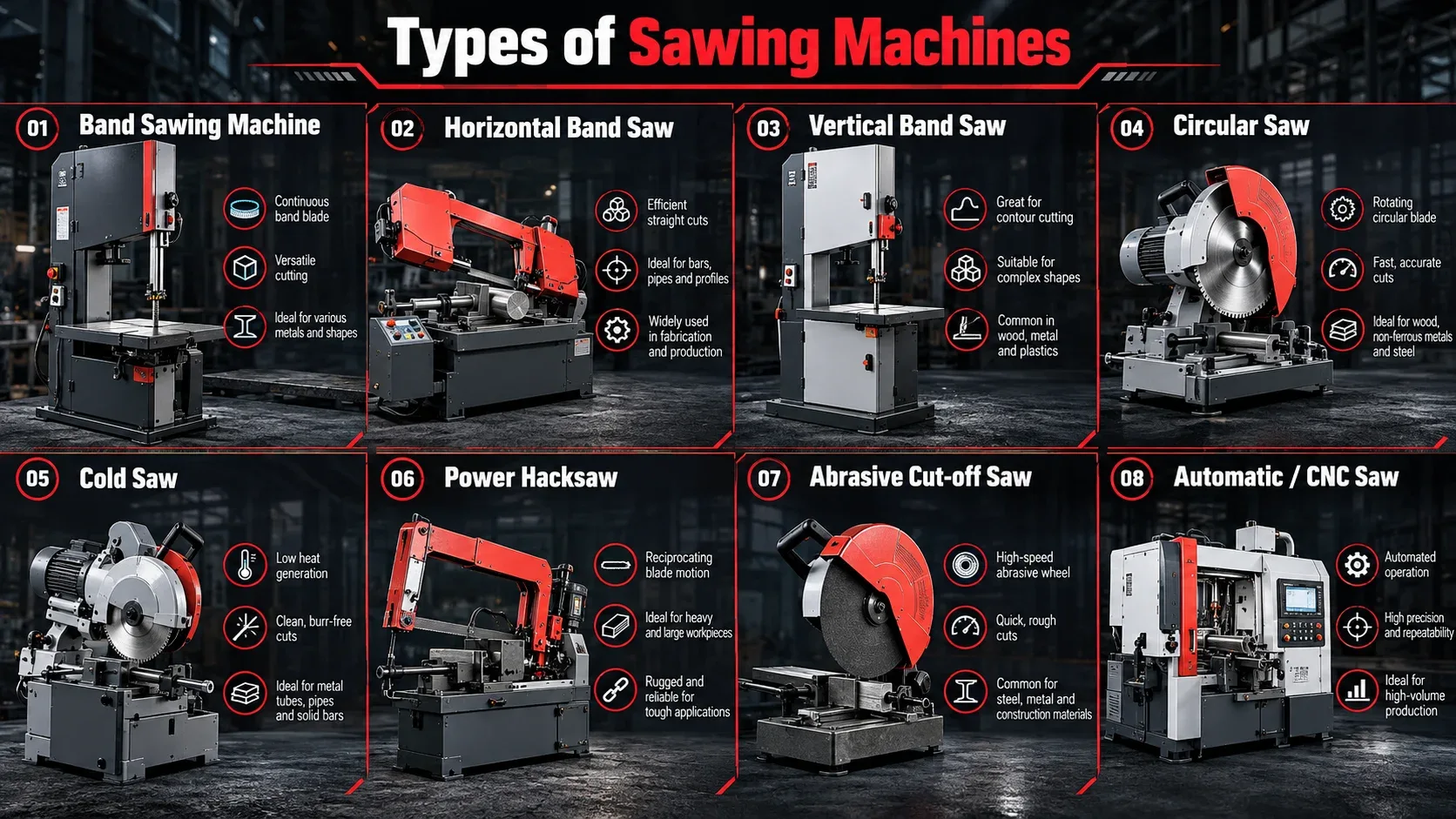
There are several important types of sawing machines used in workshops and manufacturing facilities.
1. Band Sawing Machine
A band sawing machine uses a long flexible blade joined into a continuous loop. The blade travels around two or more wheels and continuously passes through the cutting area.
Band saws are widely used because they can cut many materials while producing a relatively narrow kerf.
- Steel bars
- Pipes
- Tubes
- Structural sections
- Aluminum stock
- Wood
2. Horizontal Band Saw
A horizontal band saw uses a blade that cuts horizontally through the workpiece. The material is generally held stationary while the saw head moves downward.
- Round bar
- Square bar
- Tubing
- Pipe
- Channels
- Structural beams
3. Vertical Band Saw
A vertical band saw uses a blade that moves vertically through a work table. The operator usually moves the workpiece into the blade.
- Contour cutting
- Curved profiles
- Sheet material
- Prototype components
- Toolroom work
4. Circular Sawing Machine
A circular sawing machine uses a rigid rotating circular blade. Cutting teeth are positioned around the outside edge of the blade.
5. Cold Saw
A cold saw is a metal-cutting circular saw that uses a toothed blade operating at controlled speed. During proper cutting, much of the generated heat is carried away by the chips.
6. Power Hacksaw Machine
A power hacksaw uses a straight blade that moves back and forth through the material. Cutting normally takes place primarily during one direction of the stroke.
7. Abrasive Cut-Off Saw
An abrasive cut-off saw uses a high-speed abrasive wheel rather than conventional cutting teeth.
8. Automatic Sawing Machine
Automatic sawing machines can feed the material, position it to a programmed length, clamp it, perform the cut, and repeat the cycle automatically.
9. CNC Sawing Machine
A CNC sawing machine uses computer-controlled positioning and machine settings to perform repeatable cutting operations.
Sawing Machine Types Comparison
| Machine Type | Blade Motion | Best For | Typical Use |
|---|---|---|---|
| Horizontal Band Saw | Continuous | Straight stock cutting | Bars, tubes and beams |
| Vertical Band Saw | Continuous | Contour cutting | Profiles and sheet material |
| Circular Saw | Rotary | Fast repetitive cuts | Production cutting |
| Cold Saw | Rotary | Clean metal cutting | Tube, bar and sections |
| Power Hacksaw | Reciprocating | General metal cutting | Workshop use |
| Abrasive Saw | Rotary abrasive wheel | Rapid rough cutting | Fabrication and construction |
| Automatic Saw | Varies | Repeated cuts | Production facilities |
| CNC Saw | Computer controlled | High-volume automation | Manufacturing |
Types of Saw Blades
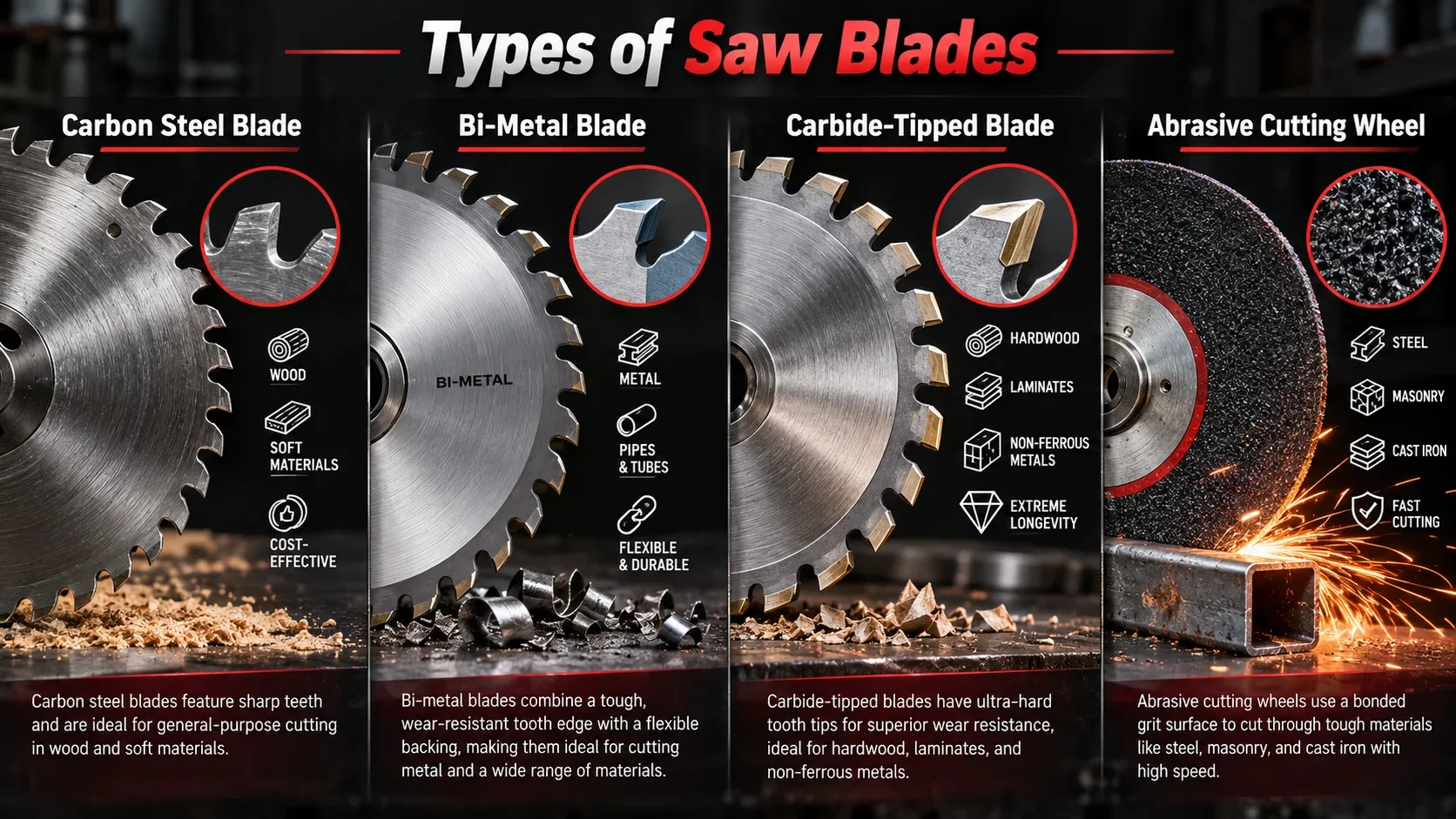
Carbon Steel Blades
Carbon steel blades are commonly used for softer materials, wood, plastics, and light-duty cutting.
Bi-Metal Blades
Bi-metal blades combine a flexible backing with harder cutting teeth, making them a common choice for metal-cutting band saws.
Carbide-Tipped Blades
Carbide-tipped blades are designed for difficult materials and demanding production applications where high wear resistance is required.
Abrasive Cutting Wheels
Abrasive wheels remove material by grinding action rather than conventional cutting teeth.
What Is Blade Tooth Pitch?
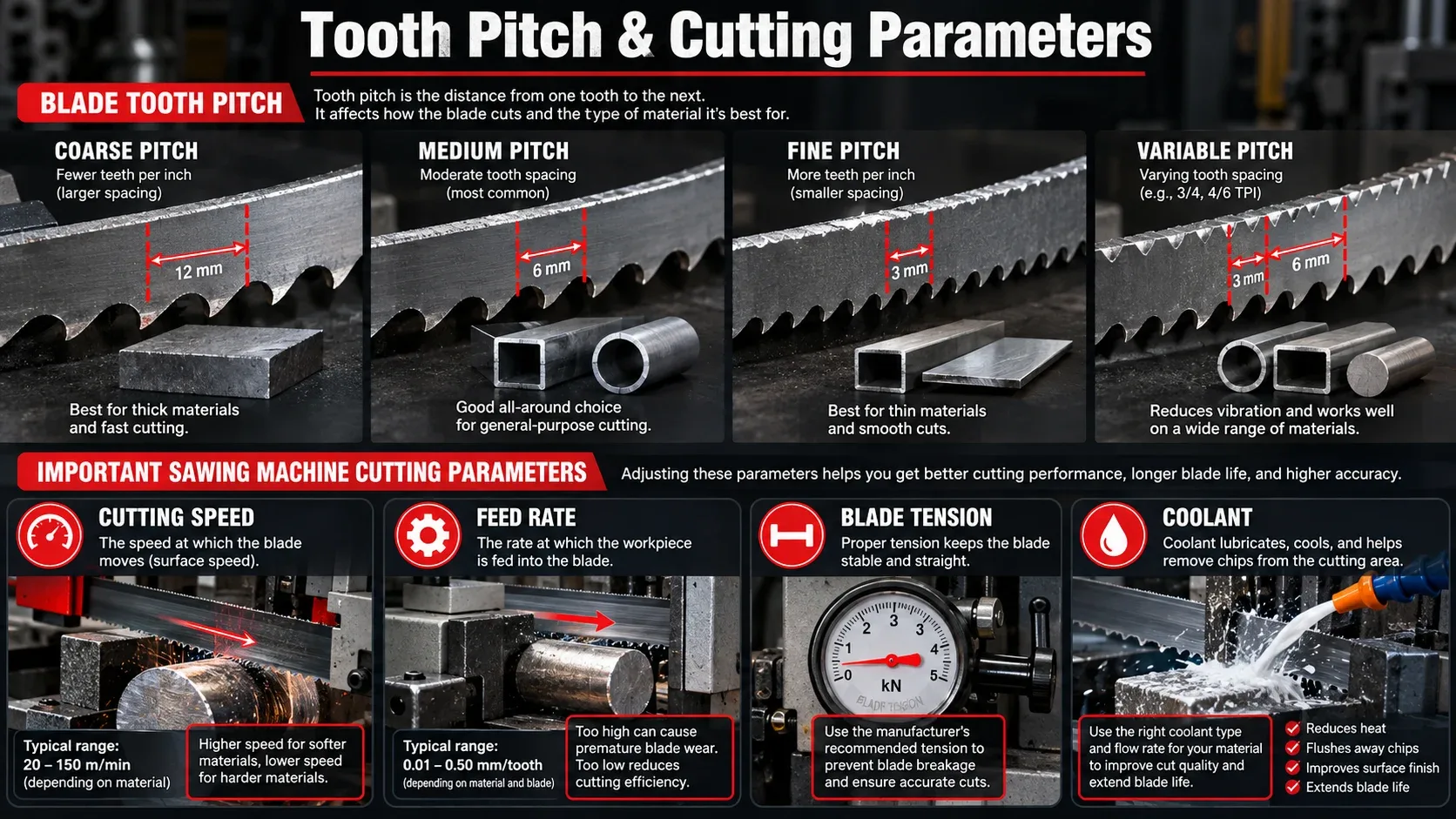
Blade tooth pitch describes the spacing between cutting teeth. On many blades it is expressed as teeth per inch, or TPI.
- Coarse tooth pitch: Larger gaps help remove bigger chips from thicker material.
- Fine tooth pitch: More teeth are available to cut thin sections.
- Variable pitch: Different tooth spacing can help reduce vibration in some applications.
Important Sawing Machine Cutting Parameters
Cutting Speed
Cutting speed refers to the speed of the cutting teeth relative to the workpiece. The correct speed depends on the workpiece and blade material.
Feed Rate
Feed rate controls how quickly the blade passes through the material. Excessive feed can overload the teeth, while insufficient feed can reduce productivity.
Tooth Pitch
Correct tooth pitch allows the blade to form and remove chips effectively.
Blade Tension
Proper blade tension is especially important on band saws because it helps maintain blade stability and straight cutting.
Coolant
Coolant helps reduce heat, lubricate the cutting zone, clear chips, and support blade life.
Materials That Can Be Cut With Sawing Machines
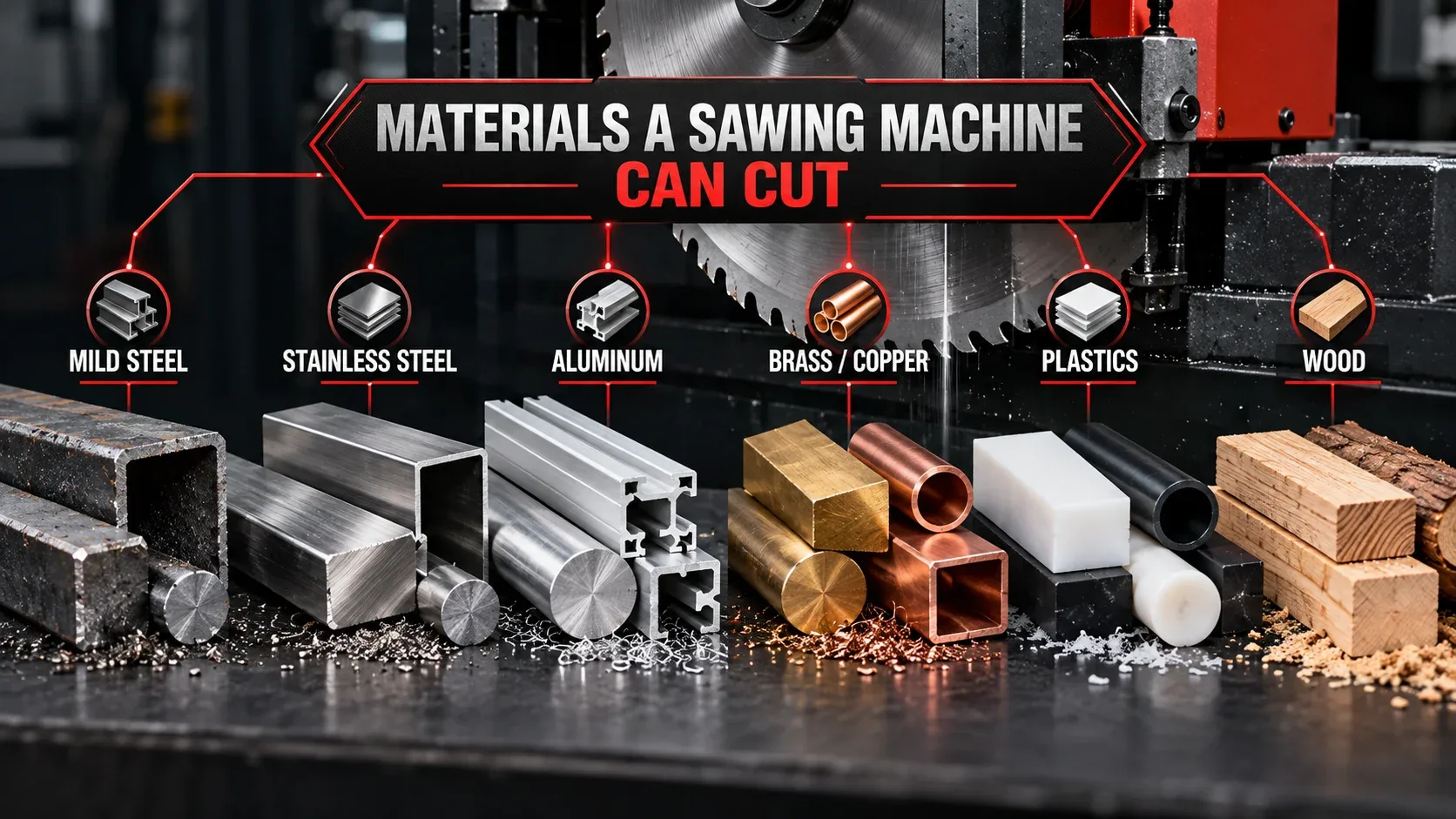
Mild Steel
One of the most commonly cut materials in fabrication and machine shops.
Stainless Steel
Requires suitable blades and carefully selected cutting conditions.
Aluminum
Can be cut efficiently with blades designed for non-ferrous metals.
Brass and Copper
Can be sawn when the correct blade geometry and settings are used.
Plastics
Plastic sheets, blocks, tubes, and profiles can be cut using suitable saw blades.
Wood
Band and circular saws are widely used for cutting timber, boards, and shaped wooden components.
Applications of Sawing Machines
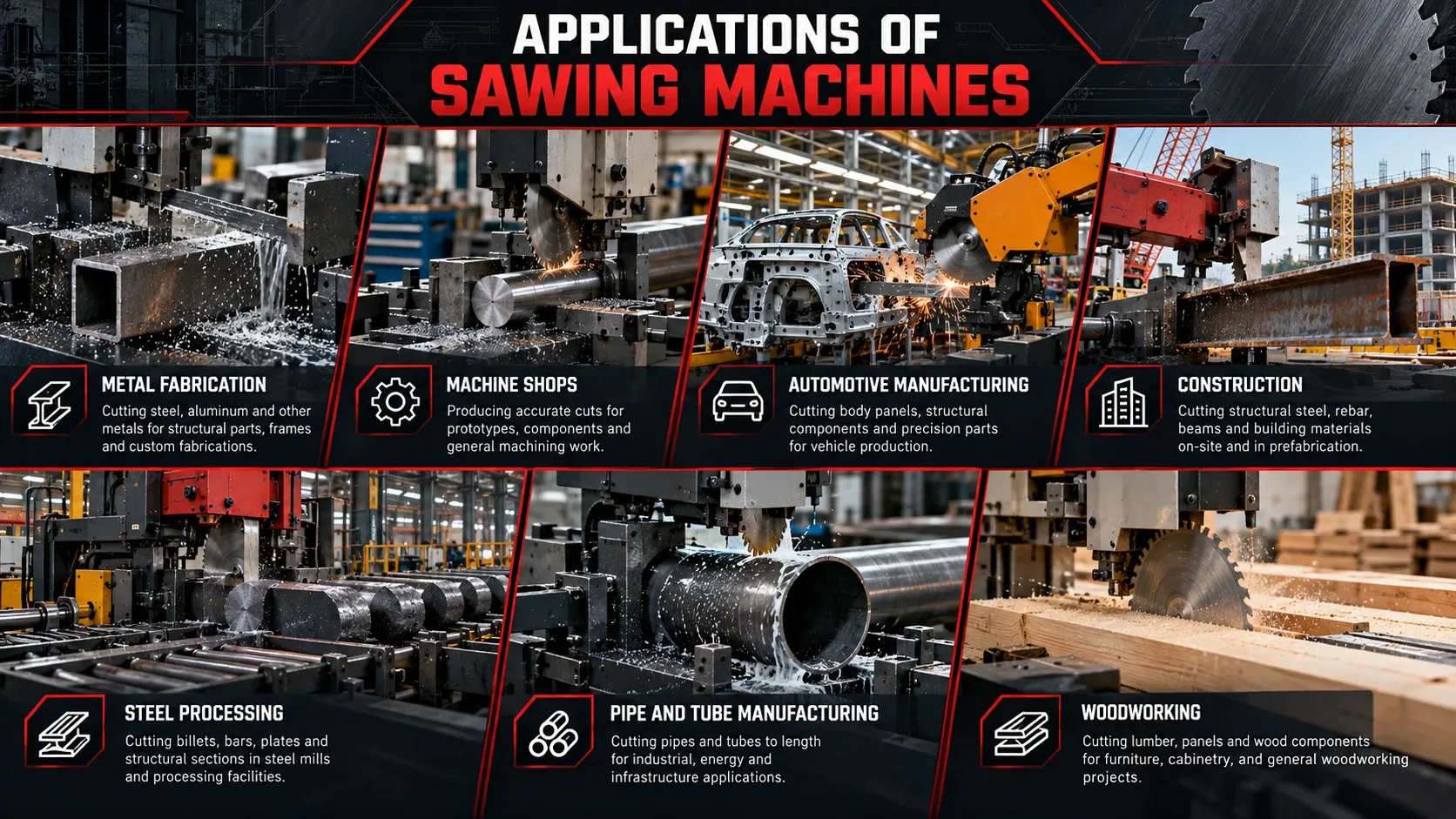
Metal Fabrication
Fabricators use sawing machines to prepare structural sections, pipes, tubes, bars, and profiles before welding or assembly.
Machine Shops
Raw metal stock is often cut into shorter blanks before machining on lathes, milling machines, or machining centers.
Automotive Manufacturing
Sawing can be used to prepare tubing, bar stock, profiles, and structural components.
Construction
Sawing machines can cut structural sections, reinforcement bars, tubing, and other construction materials.
Steel Processing
Industrial saws are used to cut beams, bars, billets, tubes, and profiles to required lengths.
Pipe and Tube Manufacturing
Automatic machines can produce repeatable pipe and tube lengths for industrial production.
Woodworking
Sawing machines are used to cut boards, timber, panels, curves, and shaped wooden components.
Advantages of Sawing Machines
- Fast material separation
- Suitable for many different materials
- Available for both small and large workpieces
- Band saws can produce a relatively narrow kerf
- Automatic machines support high-volume production
- Machines can perform straight, angled, or contour cuts
- Manual, semi-automatic, automatic, and CNC options are available
Limitations of Sawing Machines
- Saw blades wear during use.
- Incorrect blade selection can damage teeth.
- Band saw blades can wander if tension or guides are incorrect.
- Some cuts may require deburring.
- Excessive heat can shorten blade life.
- Vibration can affect accuracy.
- Regular machine maintenance is required.
Band Saw vs. Circular Saw
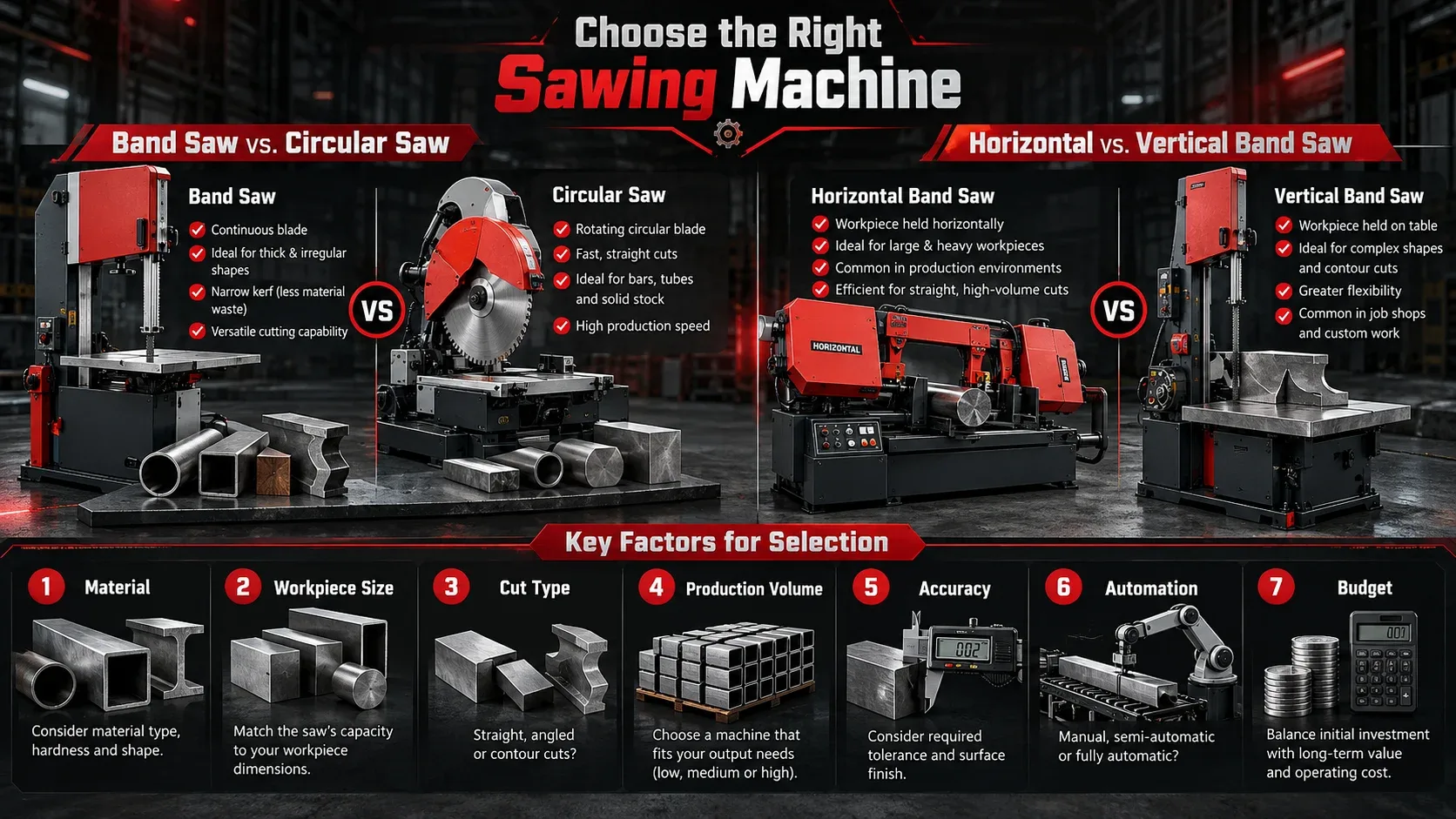
| Feature | Band Saw | Circular Saw |
|---|---|---|
| Blade | Continuous flexible blade | Rigid circular blade |
| Motion | Continuous loop | Rotary |
| Kerf | Often relatively narrow | Depends on blade thickness |
| Curved Cutting | Possible with vertical band saws | Generally limited |
| Production Speed | Good | Often very high |
Horizontal vs. Vertical Band Saw
Horizontal Band Saw
Horizontal band saws are designed mainly for cutting stock to length.
- Bars
- Tubes
- Pipes
- Beams
- Structural sections
Vertical Band Saw
Vertical band saws are useful for manual contour and profile cutting.
- Curves
- Irregular profiles
- Sheet material
- Toolroom work
How to Choose the Right Sawing Machine
The comparison image above also highlights the major factors that should be considered before choosing a machine.
Material Type
Identify whether the workpiece is steel, stainless steel, aluminum, wood, plastic, or another material.
Workpiece Size
Consider diameter, width, height, wall thickness, and cross-sectional area.
Type of Cut
Determine whether you need straight cuts, angled cuts, curved cuts, or repeated identical lengths.
Production Volume
Low-volume workshop cutting may only require a manual machine, while production environments may benefit from automatic or CNC equipment.
Accuracy Requirements
Consider cut length, squareness, repeatability, and required surface condition.
Operating Cost
Blade cost, coolant, maintenance, labor, energy use, and material waste should all be considered alongside the purchase price.
Basic Sawing Machine Safety
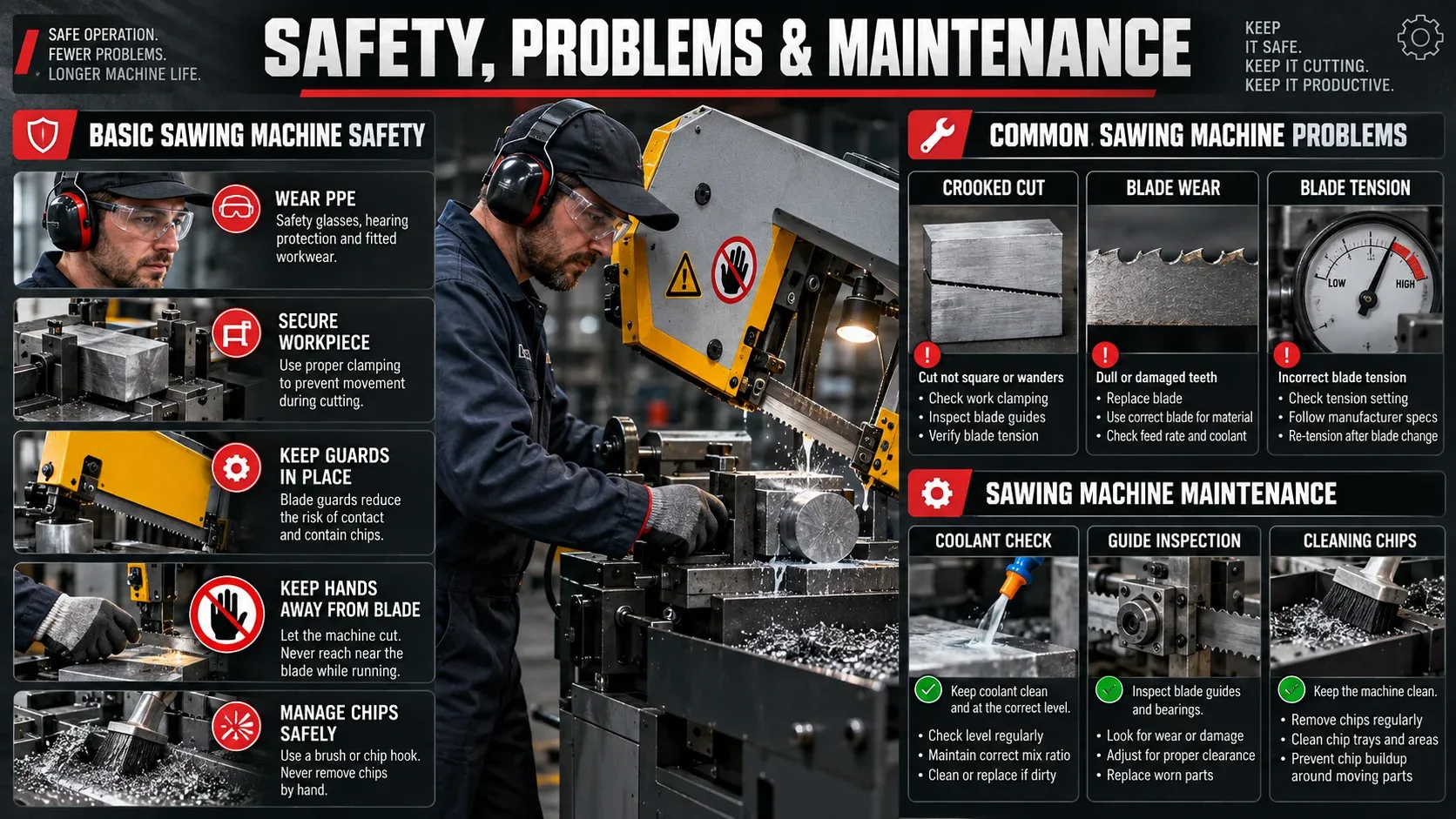
- Wear suitable eye protection.
- Use hearing protection where required.
- Keep machine guards in position.
- Clamp the workpiece securely.
- Keep hands away from moving blades.
- Do not remove chips by hand while the machine is running.
- Use a blade suitable for the material.
- Inspect the blade for visible damage before operation.
- Keep loose clothing, jewelry, and hair away from moving components.
- Follow required machine-isolation or lockout procedures before maintenance.
Common Sawing Machine Problems
| Problem | Possible Causes |
|---|---|
| Blade Breakage | Incorrect tension, excessive feed, blade fatigue, damaged guides, or mechanical problems. |
| Crooked Cuts | Worn blade, incorrect tension, excessive feed, poor guides, or poor clamping. |
| Rapid Tooth Wear | Wrong blade speed, wrong tooth pitch, inadequate coolant, or incorrect blade selection. |
| Excessive Vibration | Poor clamping, unsuitable tooth pitch, loose components, or worn blades. |
| Blade Wandering | Low tension, worn guides, excessive feed pressure, or a dull blade. |
Sawing Machine Maintenance
- Inspect blade condition regularly.
- Maintain correct blade tension.
- Clean chips from the machine.
- Inspect blade guides and bearings.
- Check blade tracking.
- Maintain coolant level and concentration.
- Inspect drive wheels.
- Check vise and clamping operation.
- Lubricate components according to manufacturer recommendations.
- Inspect emergency stops and safety controls.
Sawing Machine vs. Other Cutting Processes
| Process | Main Purpose | Typical Strength |
|---|---|---|
| Sawing | Separate raw stock | Efficient cutting to length |
| Milling | Machine surfaces and features | Precision shaping |
| Grinding | Finish surfaces | Fine surface finish |
| Plasma Cutting | Thermal metal cutting | Fast plate cutting |
| Laser Cutting | Precision profile cutting | Complex shapes and accuracy |
| Waterjet Cutting | Cold material cutting | Wide material compatibility |
Frequently Asked Questions
What is a sawing machine used for?
A sawing machine is used to cut materials into required lengths, sections, or shapes. Common workpieces include bars, tubes, pipes, beams, wood, and plastics.
What are the main types of sawing machines?
Common types include horizontal and vertical band saws, circular saws, cold saws, power hacksaws, abrasive cut-off saws, automatic saws, and CNC sawing machines.
What are the main parts of a sawing machine?
Important parts include the blade, motor, machine frame, bed, vise, blade guides, feed mechanism, coolant system, and control panel.
How does a sawing machine work?
The machine moves a cutting blade or wheel against a securely held workpiece. The cutting teeth remove chips until the material is completely separated.
Which sawing machine is best for metal?
Horizontal band saws are commonly used for general metal stock cutting, while cold saws are often selected where clean and repeatable cuts are important.
What is the difference between a band saw and a circular saw?
A band saw uses a continuous flexible blade, while a circular saw uses a rigid rotating blade. Band saws are highly versatile, while circular saws can provide very fast repetitive cuts.
Can a sawing machine cut stainless steel?
Yes. Stainless steel can be cut when the correct blade, speed, feed rate, and coolant are selected for the machine and material.
Why does a band saw cut crooked?
Common causes include worn teeth, inadequate blade tension, damaged guides, excessive feed pressure, or poor workpiece clamping.
Final Summary
A sawing machine is an essential machine tool used to separate materials into required lengths or shapes. Band saws, circular saws, cold saws, power hacksaws, abrasive saws, and CNC systems all use different cutting methods for different applications.
Correct blade selection, cutting speed, feed rate, blade tension, workpiece clamping, and coolant use can significantly affect cutting performance and blade life.
The best machine depends on the material, workpiece dimensions, required cut, accuracy, production volume, and level of automation needed.