
A comprehensive breakdown of car AC repair costs, from simple recharges to complex compressor replacements. Learn what’s fair to pay and how to avoid being overcharged.
Quick Answer
Most car AC repairs cost between $150 – $1,000, with the average repair running about $450. However, costs vary significantly based on what component is broken. A simple refrigerant recharge might cost $150-$300, while a full compressor replacement can reach $1,200+.
Understanding Your AC Repair Bill
When your car’s air conditioning stops working, the first instinct is to panic about the repair bill. But here’s what every car owner should know: AC repair costs are predictable and transparent when you understand what you’re paying for.
The total cost breaks down into two main categories: parts and labor. Understanding this distinction helps you:
- Negotiate more effectively with mechanics
- Know when a quote is fair or inflated
- Make informed decisions about repairs vs. replacement
- Plan your budget accordingly

Parts vs. Labor: Where Your Money Goes
The typical car AC repair splits costs almost evenly between parts and labor, though this varies by repair type:
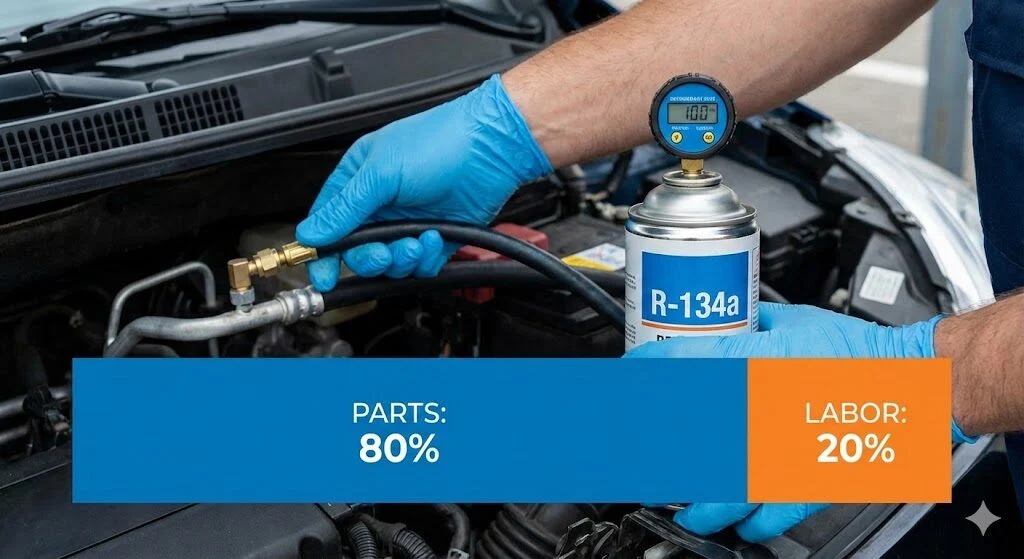
- Simple recharge: 80% parts, 20% labor (quick service)
A simple recharge is a quick service, so the majority of your bill pays for the refrigerant itself.
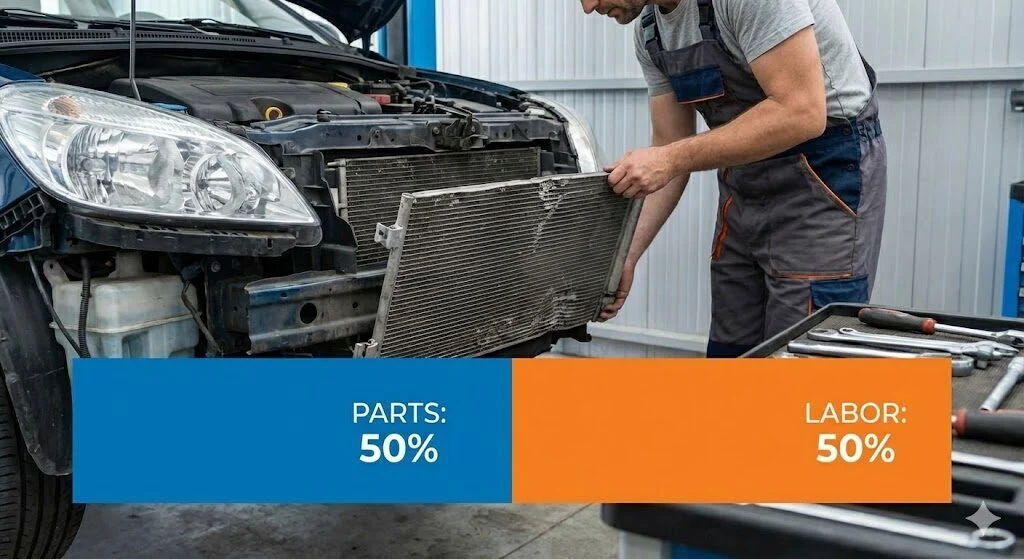
- Component replacement: 50/50 split (more involved work)
For more involved repairs like replacing a condenser, the cost is often split evenly. The work is more complex than a recharge but doesn’t require extensive disassembly.
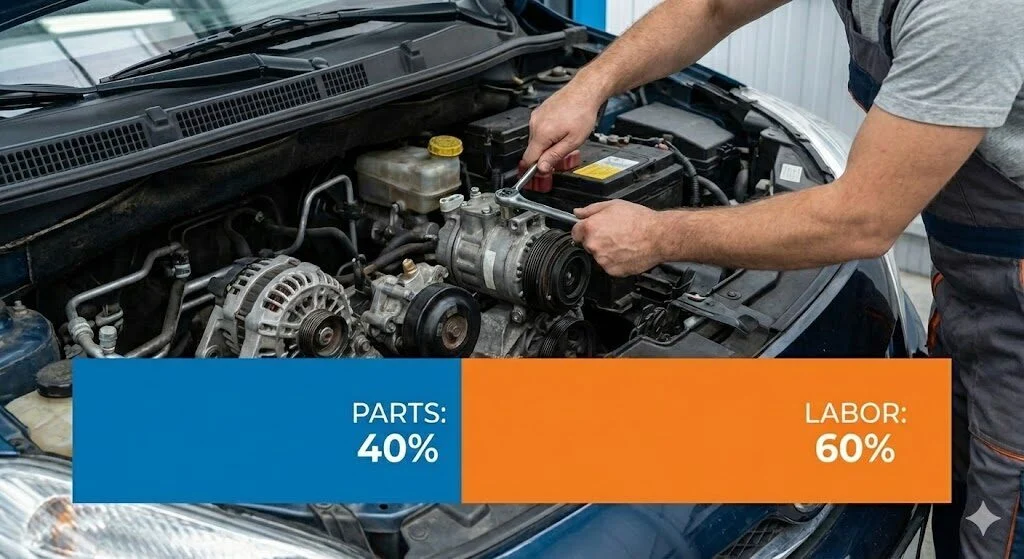
- Compressor replacement: 40% parts, 60% labor (extensive disassembly)
A compressor replacement is a major repair that requires significant labor to access and replace the part, making it the most labor-intensive job of the three.
Common AC Repairs & What They Cost
Different AC problems have different price tags. Here’s what you can expect for the most common repairs:
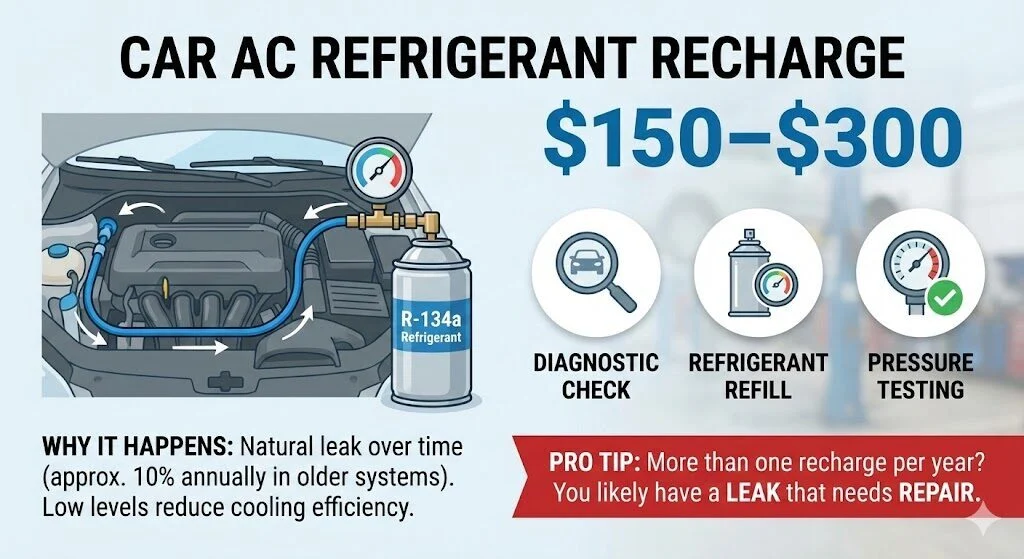
1. Refrigerant Recharge: $150–$300
Why it happens: Refrigerant naturally leaks from AC systems over time (about 10% annually in older systems). When levels drop, your AC can’t cool effectively.
What’s included: Diagnostic check, refrigerant refill, pressure testing
Pro tip: If you need a recharge more than once per year, you likely have a leak that needs repair.
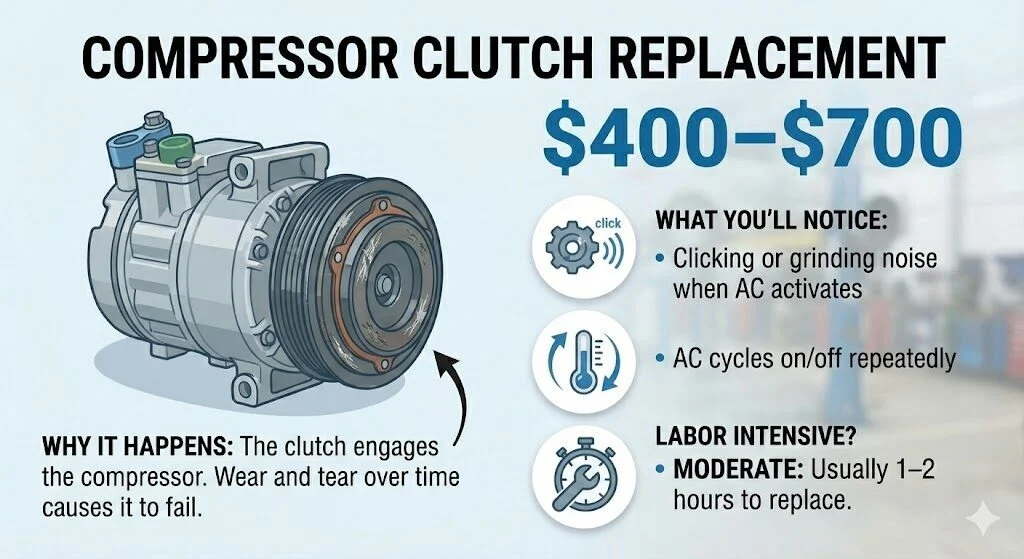
2. Compressor Clutch Replacement: $400–$700
Why it happens: The clutch is what engages the compressor when you turn on the AC. Wear and tear causes it to fail.
What you’ll notice: Clicking or grinding noise when AC activates; AC cycles on/off repeatedly
Labor intensive? Moderate—usually 1–2 hours to replace
3. Condenser Replacement: $450–$900
Why it happens: Condensers are exposed to road debris and can develop leaks or blockages.
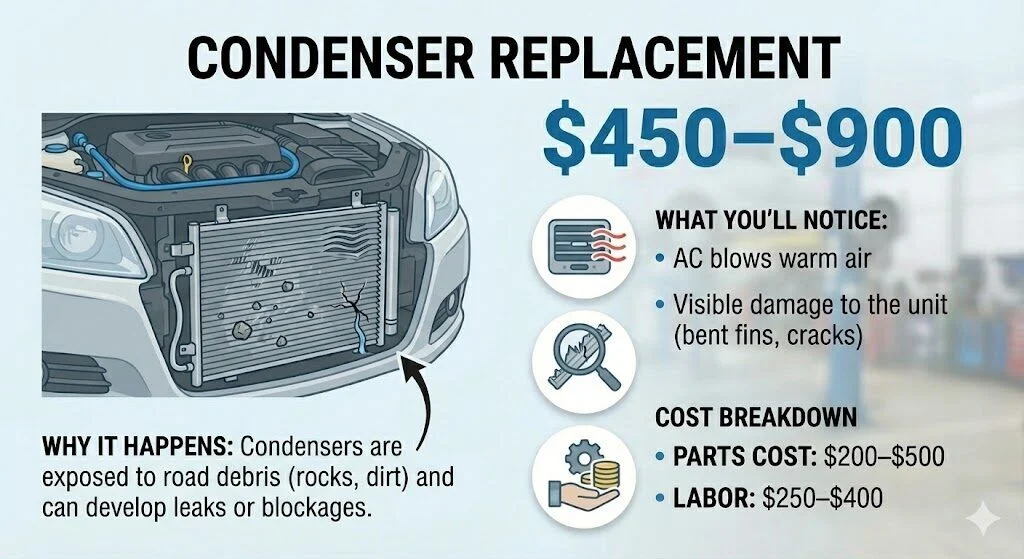
What you’ll notice: AC blows warm air; visible damage to the unit (bent fins, cracks)
Parts cost: $200–$500; Labor: $250–$400
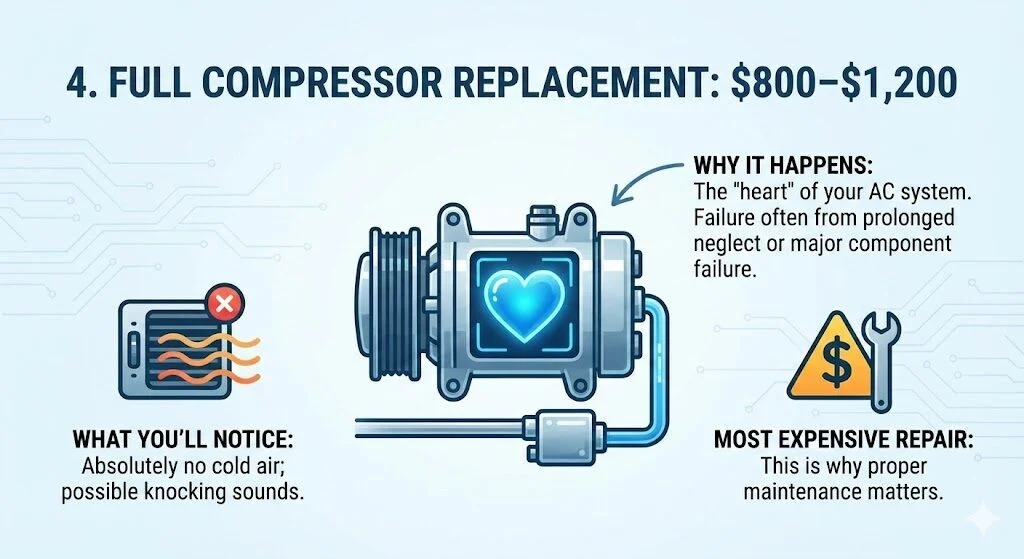
4. Full Compressor Replacement: $800–$1,200
Why it happens: The compressor is the “heart” of your AC system. Failure is often the result of prolonged neglect or major component failure.
What you’ll notice: Absolutely no cold air; possible knocking sounds
Most expensive repair: This is why proper maintenance matters
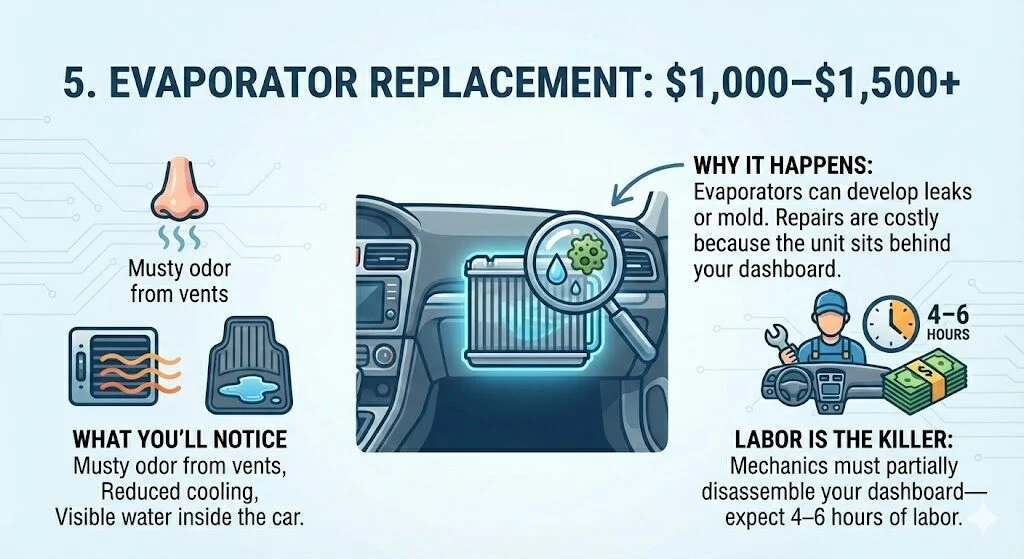
5. Evaporator Replacement: $1,000–$1,500+
Why it happens: Evaporators can develop leaks or mold. Repairs are costly because the unit sits behind your dashboard.
What you’ll notice: Musty odor from vents; reduced cooling; visible water inside the car
Labor is the killer: Mechanics must partially disassemble your dashboard—expect 4–6 hours of labor
Parts vs. Labor Breakdown
Parts Cost
40–60% of total bill
- Refrigerant (R-134a)$50–$150
- AC Compressor$200–$600
- Condenser$150–$400
- Evaporator$200–$500
- Expansion Valve$50–$150
Labor Cost
40–60% of total bill
- Diagnostic Fee$50–$150
- Recharge Service$100–$200
- Compressor Replace$200–$400
- Evaporator Replace$300–$600
- Leak Detection$100–$200
Money-Saving Tips & Best Practices
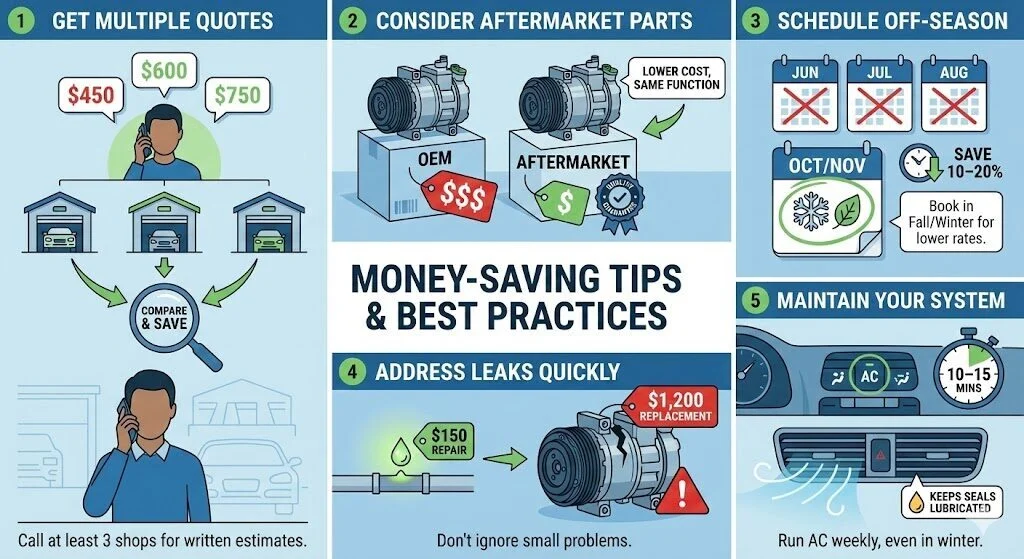
1. Get Multiple Quotes Before Committing
This is the single most effective way to ensure you’re not overpaying. Prices can vary by 50% or more between shops for identical repairs. Why? Different overhead costs, technician experience levels, and shop mark-ups all factor in.
Action: Call at least 3 shops, describe your symptoms, and compare written estimates.
2. Consider Aftermarket Parts
OEM (Original Equipment Manufacturer) parts can cost 2–3 times more than quality aftermarket alternatives. In many cases, aftermarket parts are made by the same manufacturers and carry identical warranties.
When OEM makes sense: Warranty requirements, luxury vehicles, or complex systems where compatibility is critical.
3. Schedule Off-Season
AC shops are slammed in the summer months. If your AC breaks in June, you’ll pay peak prices. Booking in fall or winter can save you 10–20%.
4. Address Leaks Quickly
A small leak that costs $150 to fix today can become a $1,200 compressor replacement in a year. Don’t ignore warning signs.
5. Maintain Your System
Running your AC for 10–15 minutes every week, even in winter, keeps seals lubricated and working. This simple habit extends AC system life.
Don’t Ignore These Warning Signs
- Warm air blowing from vents
- Unusual clicking or grinding sounds
- Musty or foul odors
- Water pooling inside the car
- AC cycles on and off rapidly
- Visible refrigerant leaks (oily residue)
Expert Advice: How to Approach Your AC Repair
After years of working on vehicles, here’s my advice when facing an AC repair:
- Ask questions. A good mechanic will explain what’s wrong and why it matters. If they won’t, find someone else.
- Request a written estimate. Never authorize work without knowing the cost in advance.
- Ask about warranties. Reputable shops warranty their repairs (typically 12 months or 12,000 miles).
- Don’t defer major repairs. A $500 repair today prevents a $2,000 engine replacement later.
- Know your vehicle’s history. If your AC has never needed service, sudden failure suggests a significant problem that needs diagnosis, not just parts replacement.
The Bottom Line
Car AC repairs don’t have to be a mystery. By understanding what goes into the bill, getting multiple quotes, and acting on warning signs early, you’ll spend less and avoid surprises at the shop. Most important: don’t put off AC repairs. A small problem addressed quickly saves money compared to driving on a failing system.
Keep your cool—and your budget intact—by being an informed customer.
Disclaimer
Prices are estimates based on national averages for the USA (2024). Actual costs vary by location, vehicle make/model, shop rates, and regional market conditions. Always get a written estimate before authorizing repairs. This article is for informational purposes and should not replace professional mechanical advice.