
Suspecting water in gas tank can be stressful, especially when your vehicle starts running differently. Water contamination can affect fuel quality and engine performance, but understanding the symptoms can help you find the right solution.
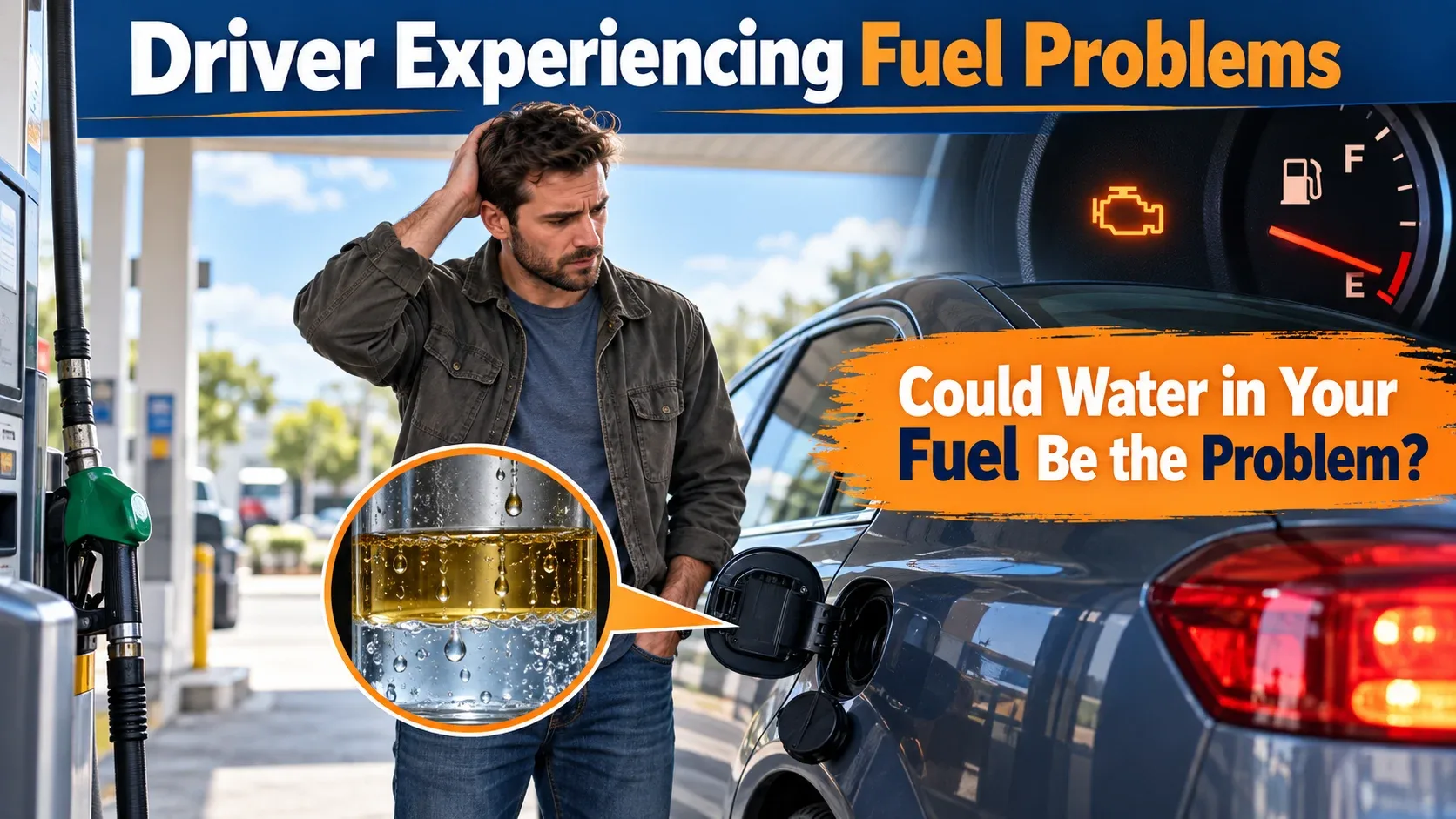
How Does Water Get Into a Gas Tank?
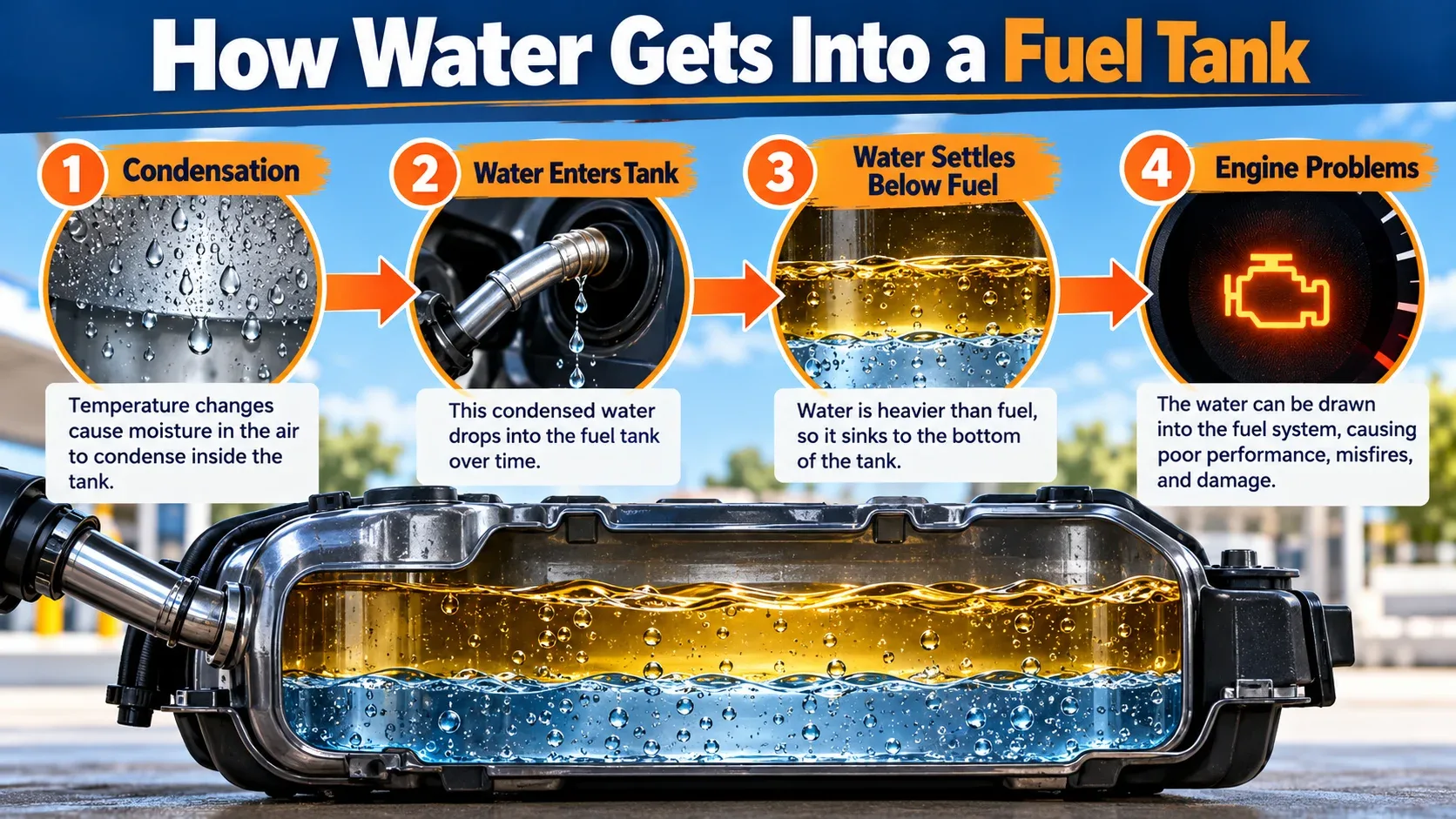
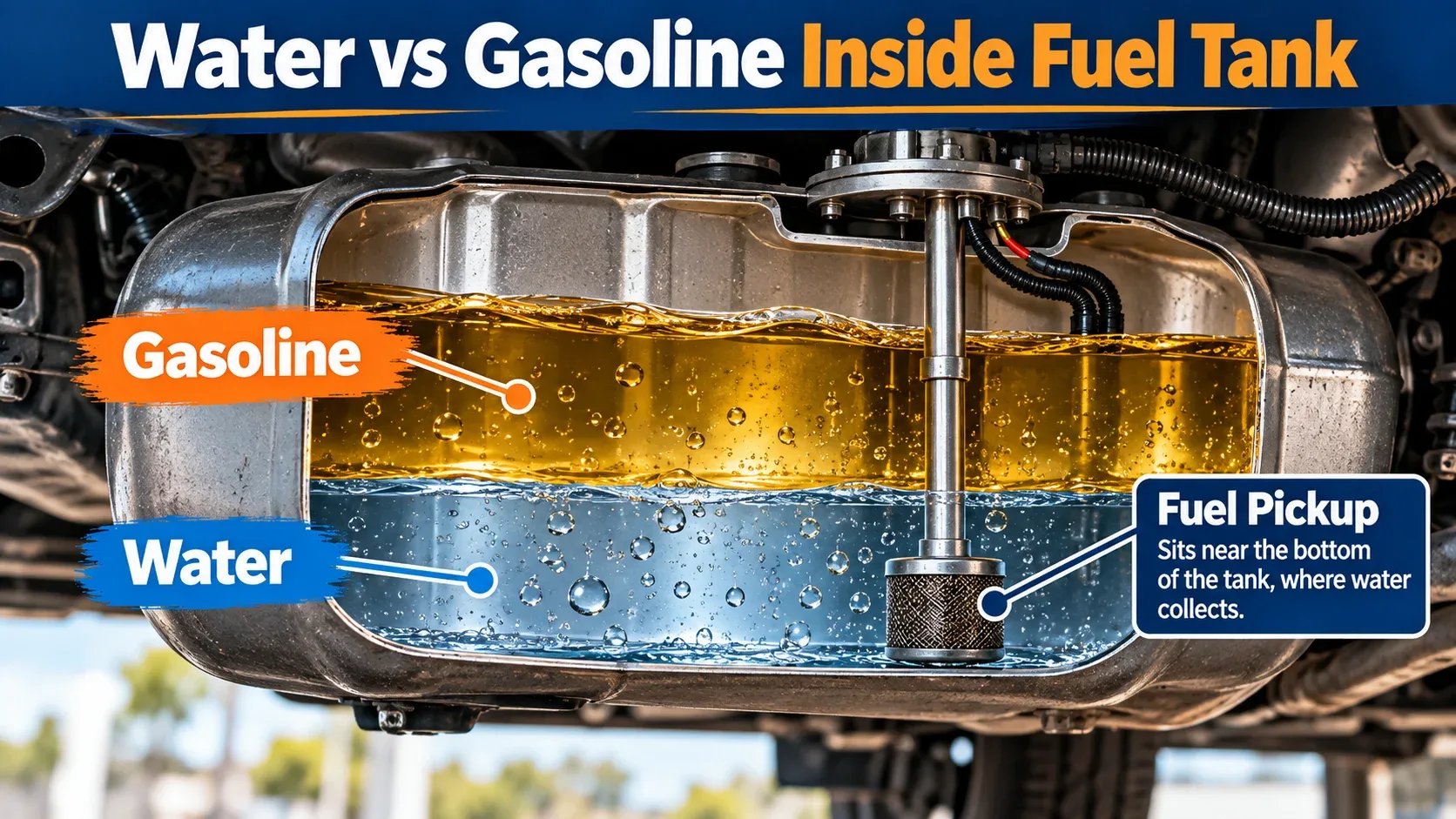
Water can enter a fuel tank through condensation, contaminated fuel, damaged fuel caps, poor storage conditions, or water exposure. Because water does not mix with gasoline easily, it can settle at the bottom of the tank.
- Condensation inside a partially empty fuel tank
- Contaminated fuel from storage or supply issues
- Loose or damaged fuel cap
- Flooding or moisture exposure
Water in Gas Tank Symptoms
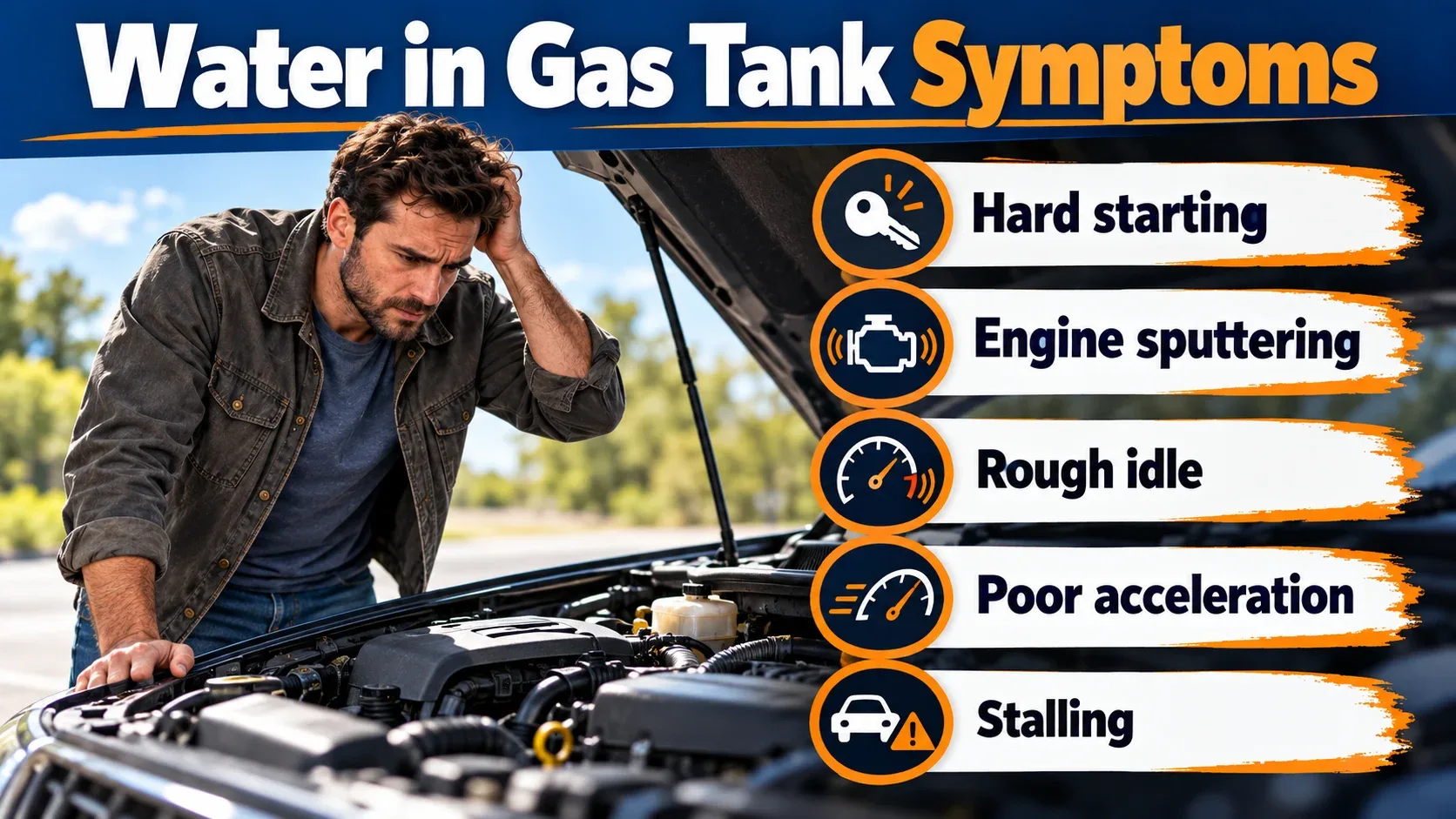
| Symptom | What You May Notice |
|---|---|
| Engine hesitation | The vehicle struggles during acceleration. |
| Rough idle | The engine shakes or runs unevenly. |
| Hard starting | The engine takes longer to start. |
| Poor acceleration | The vehicle feels weak or slow. |
| Stalling | The engine may shut off unexpectedly. |
How Water Affects Your Engine
Gasoline burns to create energy, but water does not burn like fuel. When water enters the fuel system, it can interrupt proper combustion and affect fuel delivery.
How to Check If You Have Water in Your Gas Tank
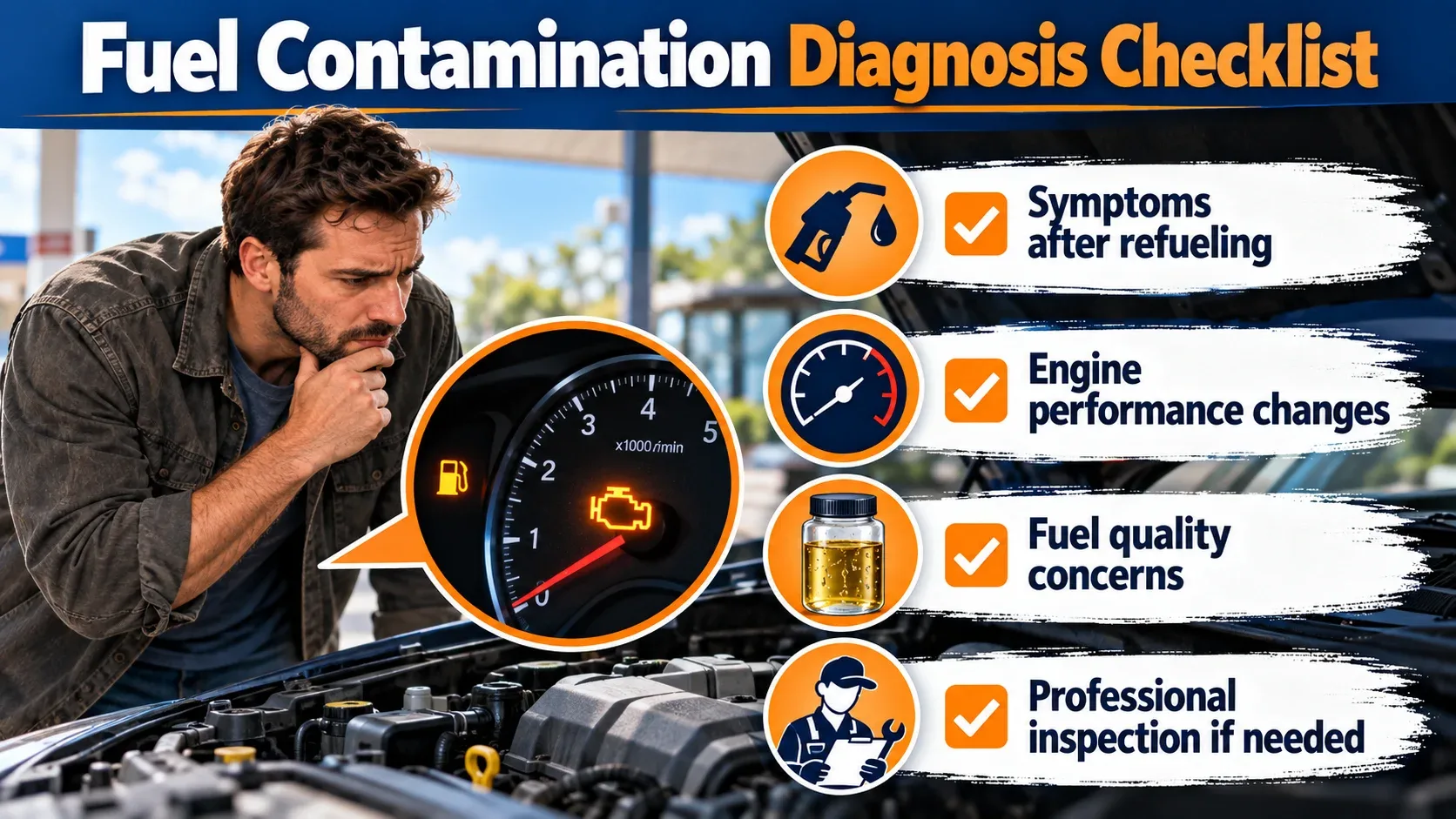
- Check if problems started after refueling.
- Look for hesitation, sputtering, or stalling.
- Consider other possible causes like fuel pumps or injectors.
- Seek professional diagnosis for severe symptoms.
How to Remove Water From a Gas Tank
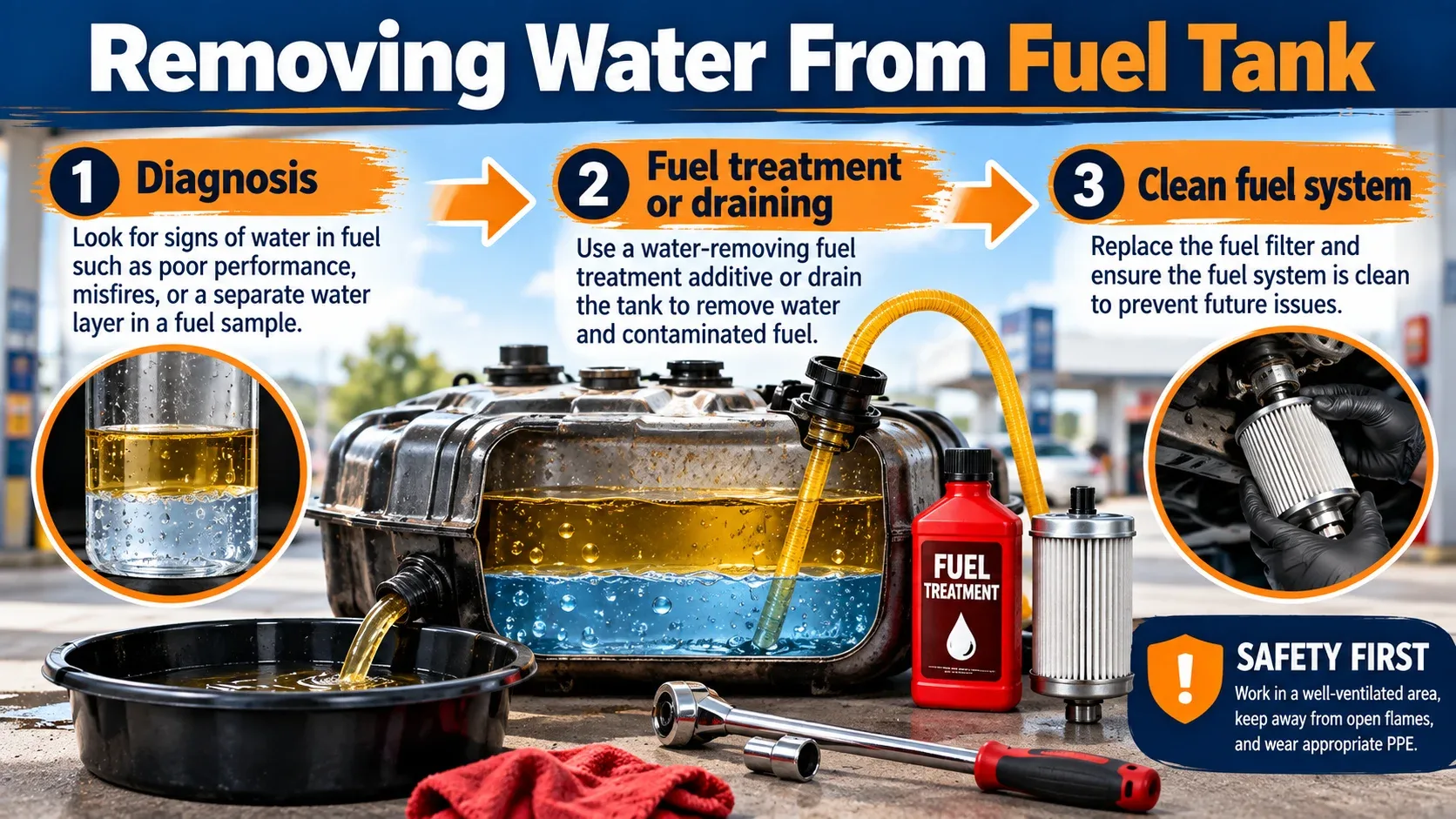
The removal method depends on the amount of contamination. Small amounts may require different treatment than a tank containing significant water.
- Fuel system treatment may help in some situations.
- Larger contamination may require fuel draining.
- Severe cases may need professional fuel system cleaning.
Can You Drive With Water in Your Gas Tank?
Driving depends on the severity of the symptoms. Avoid continuing to drive if the vehicle is stalling, losing power, or running poorly.

How to Prevent Water in a Gas Tank
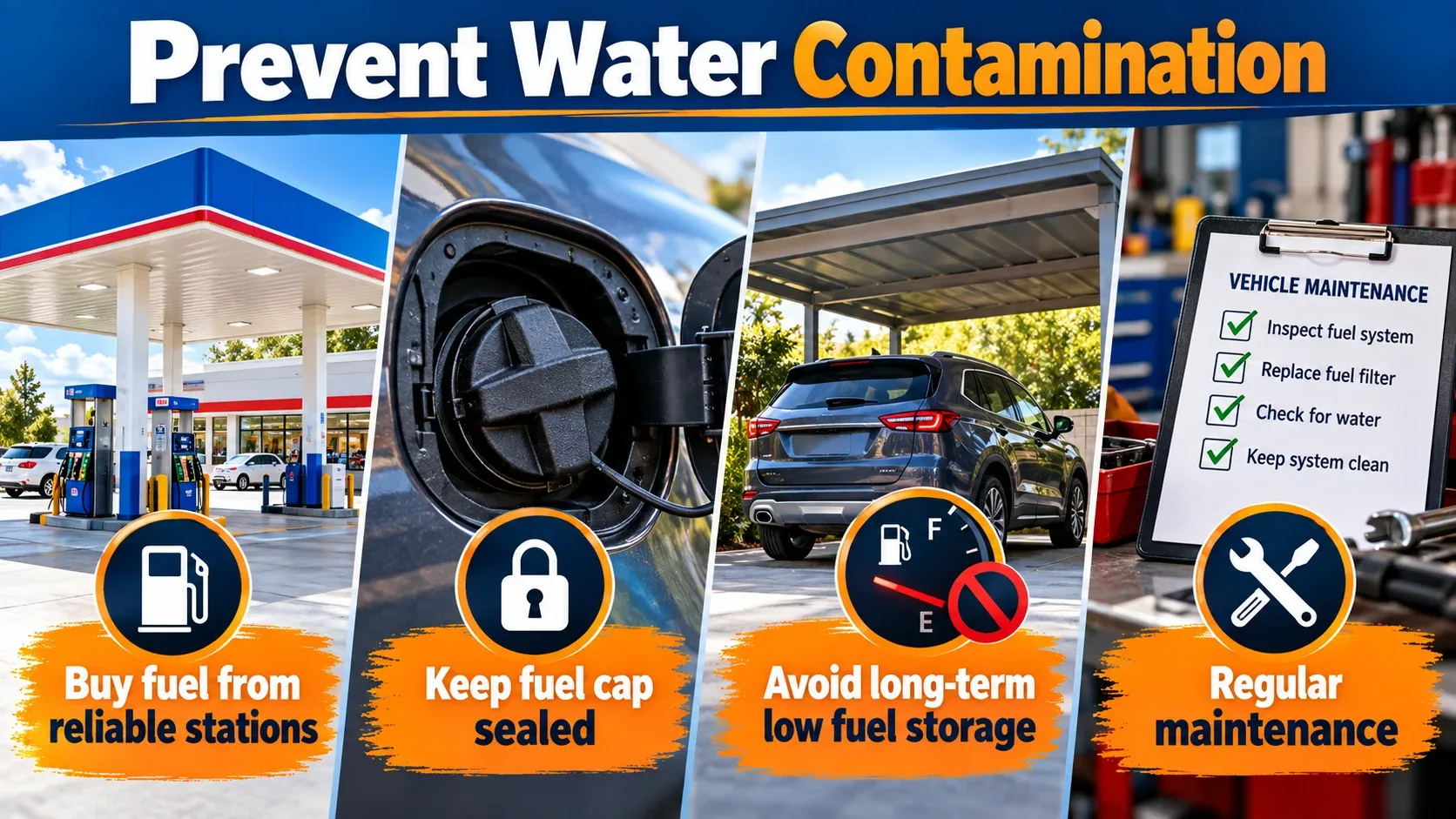
- Buy fuel from reliable stations.
- Keep the fuel cap properly sealed.
- Avoid leaving vehicles unused with very low fuel levels.
- Maintain the fuel system regularly.
- Protect vehicles from water exposure.
Common Mistakes
- Assuming every engine problem is caused by water contamination.
- Adding random products without diagnosis.
- Ignoring serious engine symptoms.
- Continuing to drive when the vehicle runs badly.
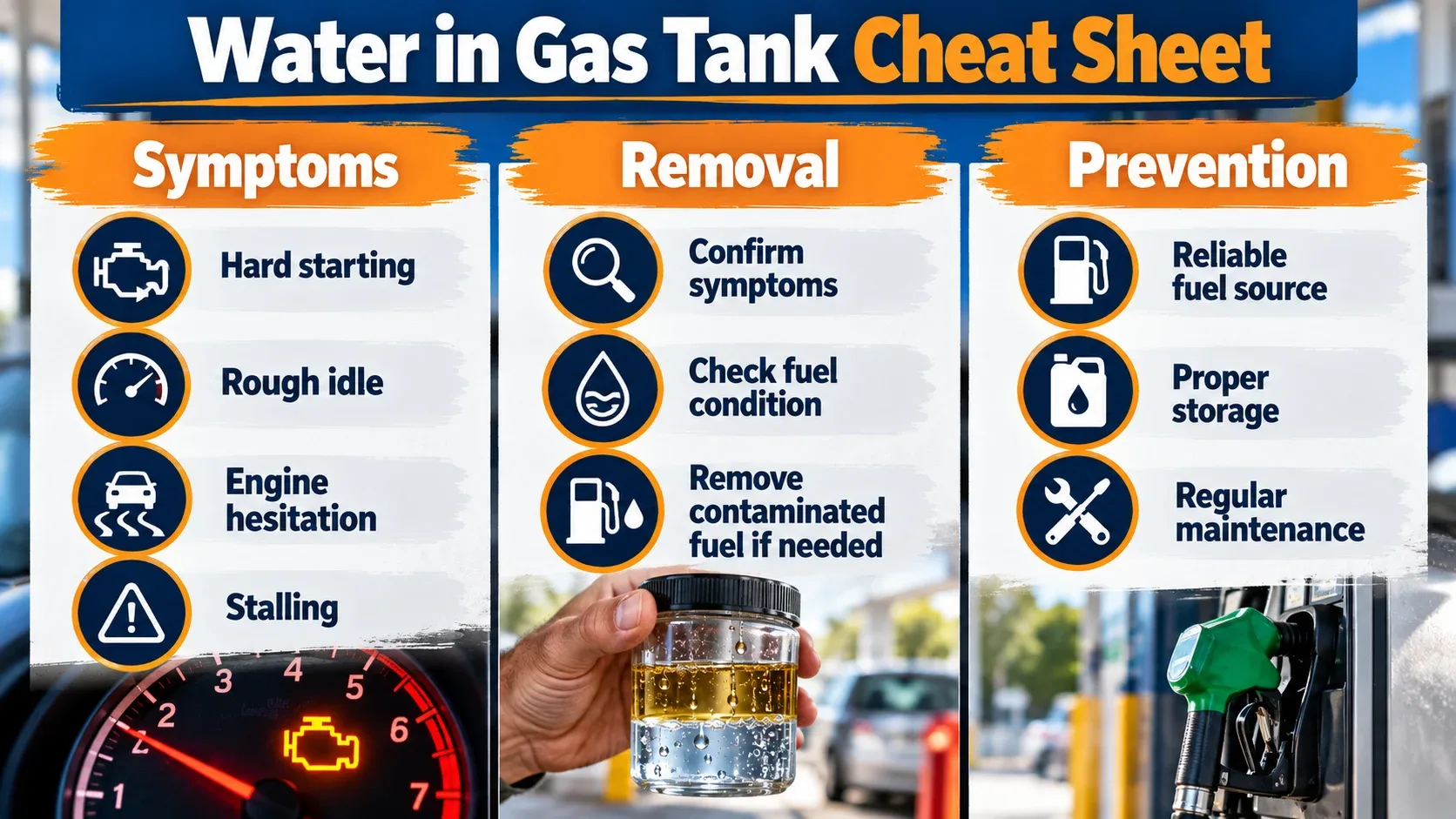
Water in Gas Tank Quick Checklist
| Possible Symptoms | Possible Actions |
|---|---|
|
Hard starting Rough idle Hesitation Stalling |
Check fuel condition Diagnose the cause Remove contaminated fuel if needed |
Frequently Asked Questions
What are the symptoms of water in a gas tank?
Common symptoms include hesitation, rough idling, hard starting, poor acceleration, and stalling.
How does water get into a gas tank?
Water can enter through condensation, contaminated fuel, damaged seals, or moisture exposure.
How do you remove water from a gas tank?
The correct method depends on the amount of water present and may involve treatment, draining, or professional cleaning.
Can you drive with water in your gas tank?
If the engine is stalling, losing power, or running poorly, inspection is recommended before continued driving.