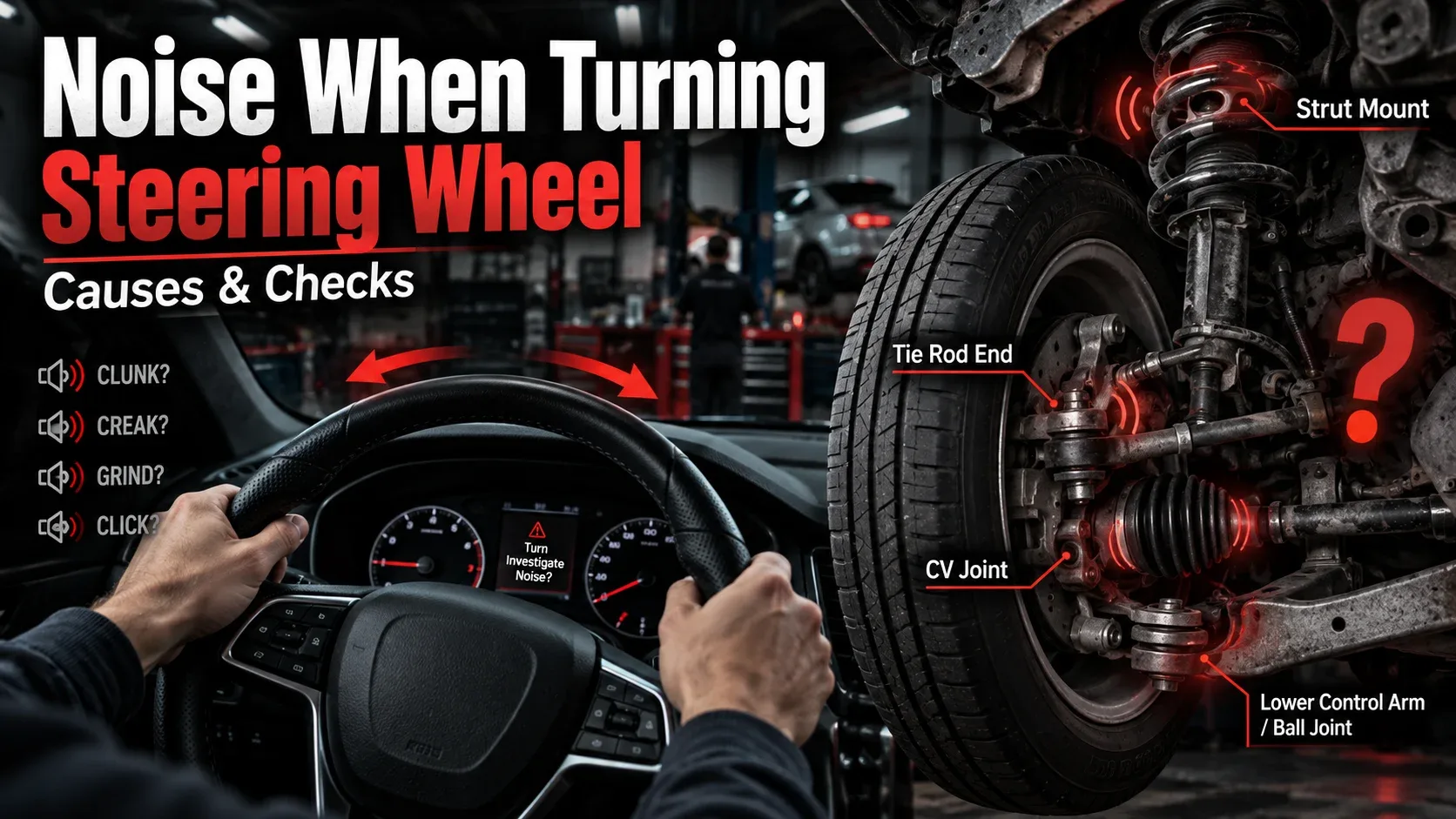
Noise on steering when I turn the steering wheel can come from the steering system, suspension, CV joints, tires, or nearby parts. The sound itself—and when it happens—is the clue that helps you decide what to check next.
Quick answer: treat the noise as a clue, not a diagnosis
A sound while turning the steering wheel may be as simple as a tire rubbing a loose wheel-well liner, or it may involve a worn steering, suspension, or drive-axle component. Whining and groaning can fit hydraulic power-steering concerns on vehicles that use fluid; clicks, clunks, and pops often need a closer look at joints, mounts, or suspension components.
What does the steering noise sound like?
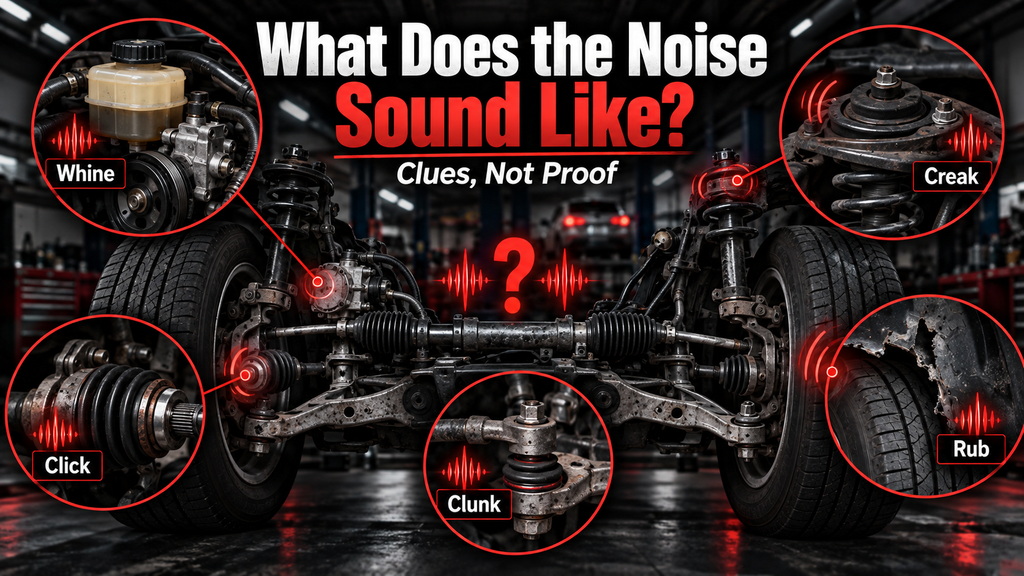
A noise when turning the steering wheel does not automatically identify one failed part. A clicking sound during a tight low-speed turn tells you something different from a groan heard while turning the wheel with the vehicle stationary. Use the pattern below as a starting point for inspection—not confirmation.
| Sound | Possible area to inspect |
| Whine / groan | Hydraulic power-steering fluid level, pump load, belt condition, or resistance elsewhere in the steering system. |
| Click / pop | Outer CV joint, steering or suspension joint, especially if it repeats in a tight turn while moving. |
| Clunk / knock | Tie rod end, ball joint, sway-bar link, control-arm bushing, strut mount, or another loose component. |
| Squeak / creak | Strut mount bearing, bushings, ball joints, or steering-column and suspension components that move under load. |
| Rub / scrape | Tire contact, displaced wheel-well liner, bent brake shield, loose splash guard, or another nearby part touching. |
A possible cause is not a confirmed fault.
Several faults can create similar steering noise when turning wheel. Avoid replacing a pump, CV axle, rack, or suspension part based only on a sound description. A visual inspection and vehicle-specific diagnosis are the safer route when the source is unclear.
The driving condition changes the likely suspects
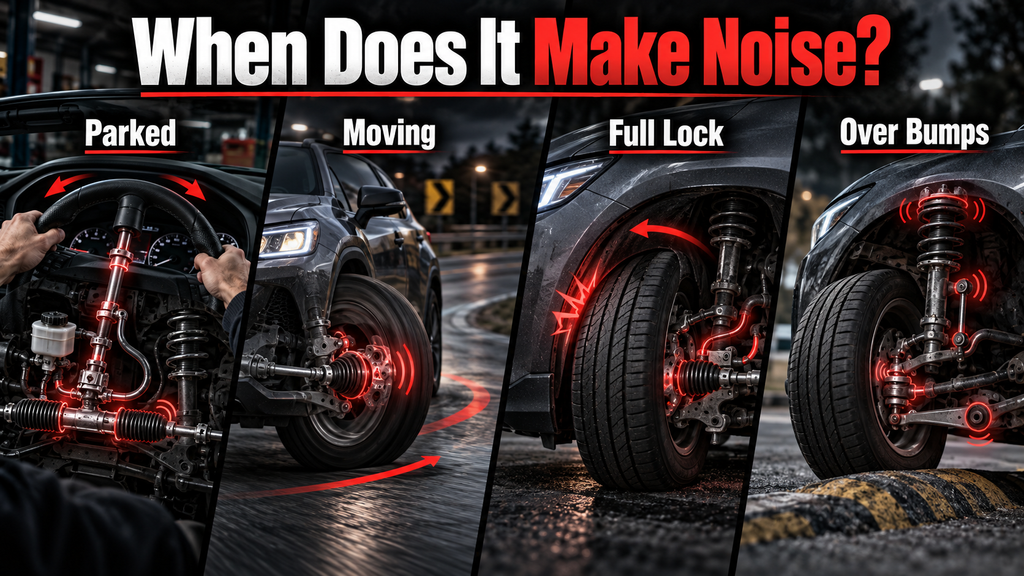
When the sound appears can be more useful than how loud it is. Make a note of whether the vehicle is parked, rolling, at full lock, or crossing a bump while turning. That record gives a technician a more useful starting point too.
Noise while parked
If the sound happens with the engine running but the vehicle stationary, the steering-assist system, steering column, or front suspension movement may deserve attention. A groan on a hydraulic system can be associated with low or aerated fluid, but newer electric power steering systems usually do not have a conventional fluid reservoir.
Noise over bumps while turning
A clunk, creak, or knock that combines steering input with a bump often points away from the steering wheel itself and toward a mount, bushing, ball joint, tie rod, sway-bar link, or other suspension connection. This pattern is worth arranging for inspection soon.
Noise near full lock
Steering reaches its highest load near full lock. A brief sound can reveal tire or liner contact, but holding any steering system against full lock for extended periods is not a useful test. On hydraulic systems, it can increase pump load and fluid temperature.
Noise only while moving
A repeated click or pop on a slow, tight turn can fit an outer CV joint—the joint that transfers drive to the wheel while it moves through steering and suspension travel. Tire contact, wheel bearings, and suspension joints may also make noise only once the vehicle is rolling.
What you can check before booking a mechanic
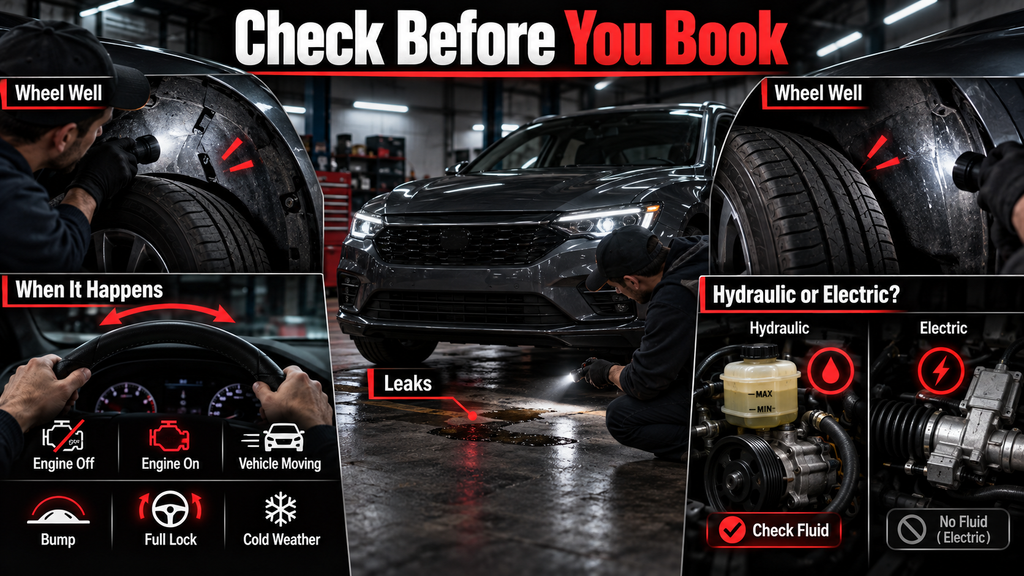
You do not need to dismantle the steering or suspension system to gather useful clues. Park on level ground, use good lighting, and do not place any part of your body under a vehicle that is supported only by a jack.
Four useful observations to make
- Look inside both front wheel wells for loose liners, splash guards, rubbed plastic, or shiny contact marks on the tire sidewall.
- With the vehicle parked, note whether the noise occurs with the engine off, engine on, or only while rolling.
- Check for obvious fluid leaks beneath the front of the vehicle and inspect the owner’s manual for the correct steering-assist system information.
- Write down whether the noise is worse turning left or right, near full lock, over bumps, or after rain and cold weather.
Does power-steering fluid apply to your car?
Only check power-steering fluid if your vehicle has a hydraulic power-steering system and the owner’s manual identifies a reservoir and approved fluid. Many newer cars use electric power steering, which does not use conventional power-steering fluid. Do not add fluid or use a stop-leak product unless it is specified for your exact vehicle.
When a professional steering or suspension inspection makes sense
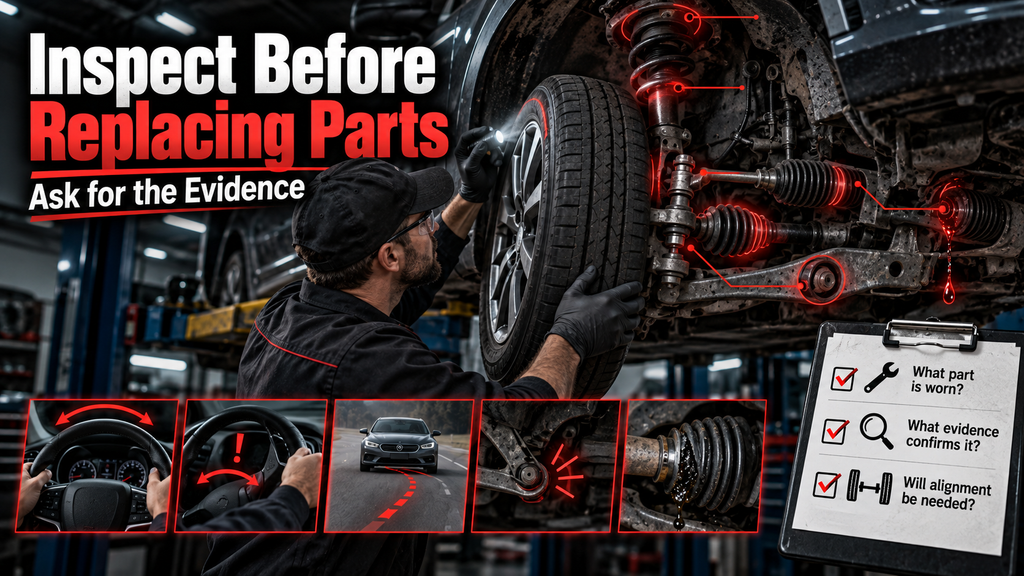
A qualified inspection is appropriate when the source is not obvious, the noise repeats, or steering feel has changed. Steering and suspension parts work together, and a technician may need the vehicle lifted to check for play, damaged boots, leaking components, worn joints, and tire-contact evidence.
What to ask the repair shop
Ask the shop to explain what component was found loose, worn, leaking, or rubbing; what evidence supports that conclusion; and whether the repair affects wheel alignment. Use manufacturer service information for vehicle-specific procedures and torque specifications. A clear explanation is more useful than a parts list alone.
Steering noise FAQ
Why do I hear a noise while turning the steering wheel when parked?
A noise while stationary can point toward steering-assist load, a steering-column concern, or front suspension movement. On a hydraulic system, fluid level, fluid condition, pump behavior, and belt condition may be relevant. On an electric system, there may be no fluid to inspect. The vehicle’s manual helps identify the system fitted to your car.
What does clicking when turning usually mean?
Repeated clicking during a tight turn while moving can be associated with an outer CV joint, but it is not proof by itself. The outer CV joint allows power to reach the wheel while the wheel turns and moves with the suspension. A technician should inspect the joint boot, surrounding components, and the exact noise pattern before recommending a repair.
Can low power-steering fluid cause a whining sound?
It can on a vehicle with hydraulic power steering, especially if fluid is low or air has entered the system. But a whine may also reflect pump wear, a belt issue, or higher steering resistance. Check the manual before inspecting or adding fluid, because many vehicles use electric steering and have no conventional power-steering reservoir.
Is steering noise when turning wheel safe to drive with?
It depends on the cause and accompanying symptoms. A minor rub from a displaced liner may be less urgent than a clunk combined with loose steering or wheel instability. If steering feel changes, the vehicle pulls, binds, becomes heavy, or has visible damage, avoid continued driving and arrange prompt professional advice.