

A flat tire is one of those situations every driver hopes to avoid, but nearly everyone encounters. Whether you’re dealing with a punctured tire from road debris or a slow leak, knowing how to change a flat tire gives you independence, saves money, and keeps you safe on the roadside.
This comprehensive guide will walk you through how to change a tire step-by-step, addressing common concerns from new drivers and providing expert tips from someone who’s helped thousands of people through this exact situation. The process typically takes 15-30 minutes and requires just basic tools you likely have in your vehicle already.
Safety Considerations First
Before learning how to change a flat tire, it’s essential to understand that your safety is the top priority. The following steps should be your first actions after discovering a flat tire:
Critical Safety Steps
- Pull completely off the road onto a flat, stable surface (parking lot, driveway, or as far as possible from traffic)
- Turn on hazard lights immediately to alert other drivers
- Apply the parking brake firmly — this is crucial for preventing the vehicle from rolling
- Turn off the engine and place the vehicle in Park (or 1st gear for manual transmissions)
- If on a highway, exit at the next safe location if possible, or move the vehicle as far right as you can from traffic
According to the National Highway Traffic Safety Administration (NHTSA), hundreds of roadside accidents occur annually when drivers are dealing with flat tires. Taking extra time for safety is never wasted time.
Tools You Need to Change a Tire
Before you begin learning how to change your tire, gather all necessary tools. Most vehicles come equipped with these items, typically stored under the trunk floor mat or behind a panel.
Spare Tire
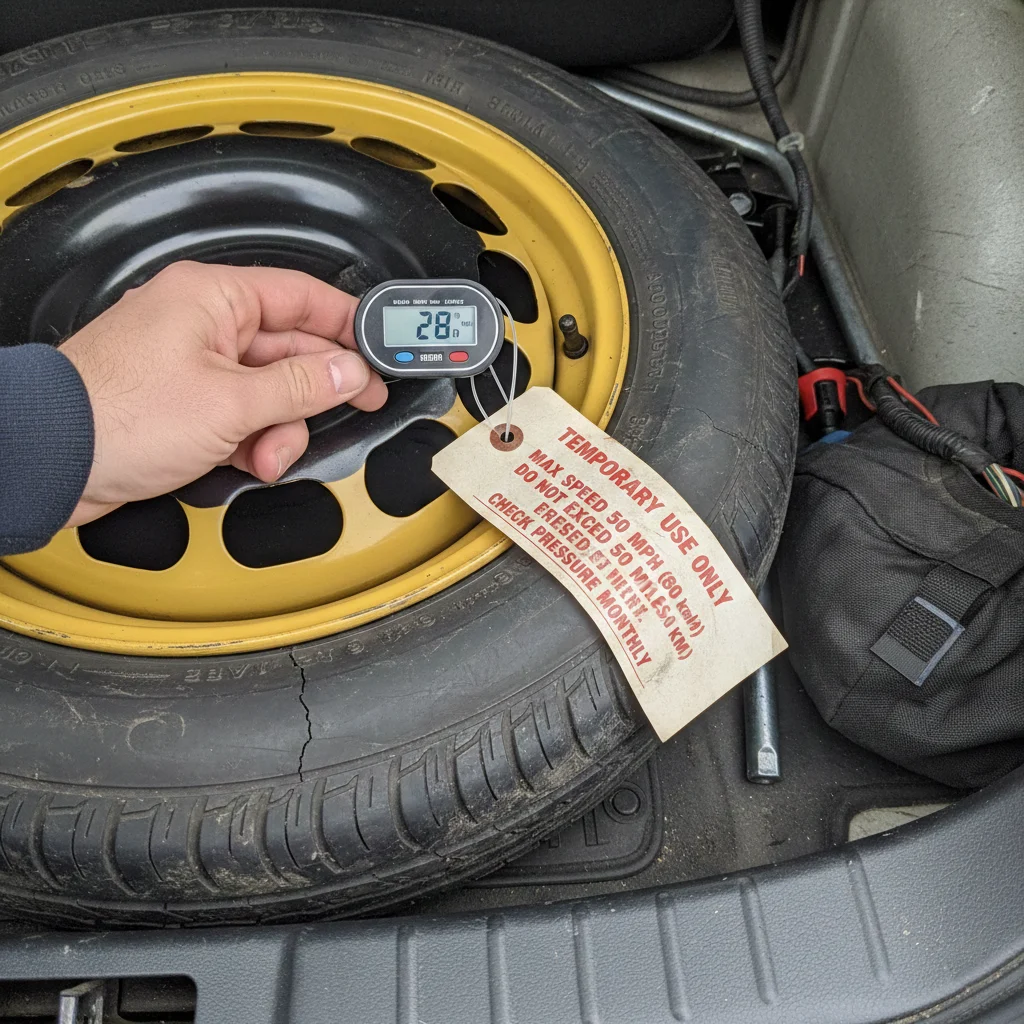
Check the condition and air pressure. Most spare tires are temporary and shouldn’t be used for long distances.
Lug Wrench
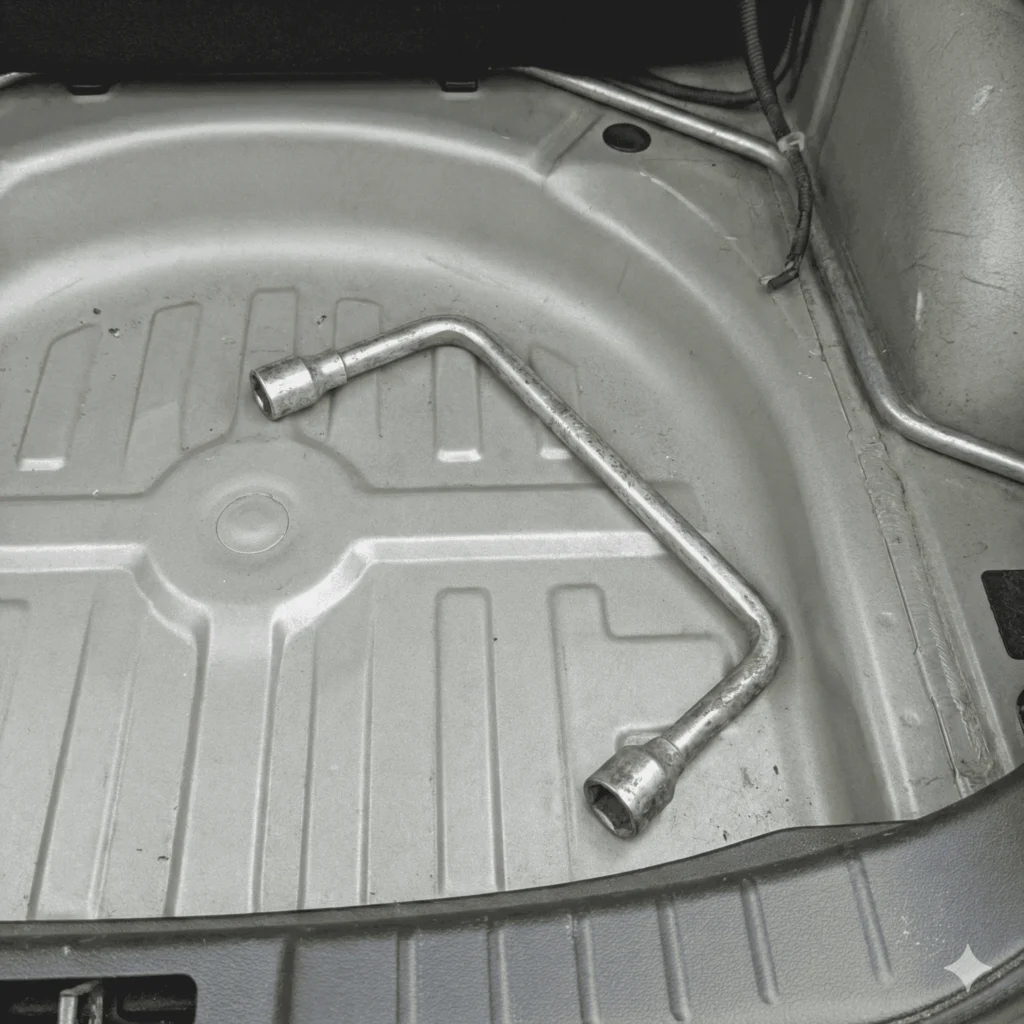
Usually X-shaped or L-shaped. This removes and tightens the lug nuts holding your wheel.
Car Jack
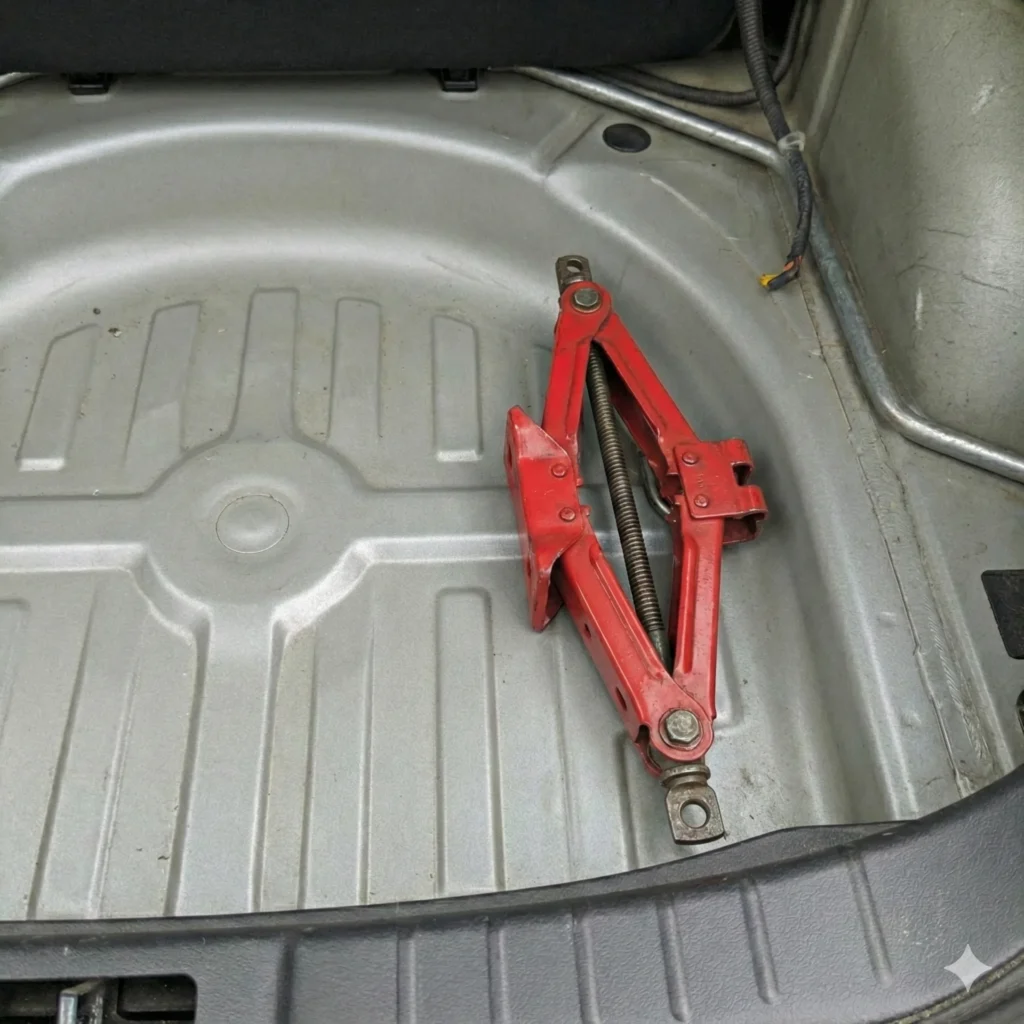
Safely lifts your vehicle. Modern cars typically use scissor jacks.
Owner’s Manual
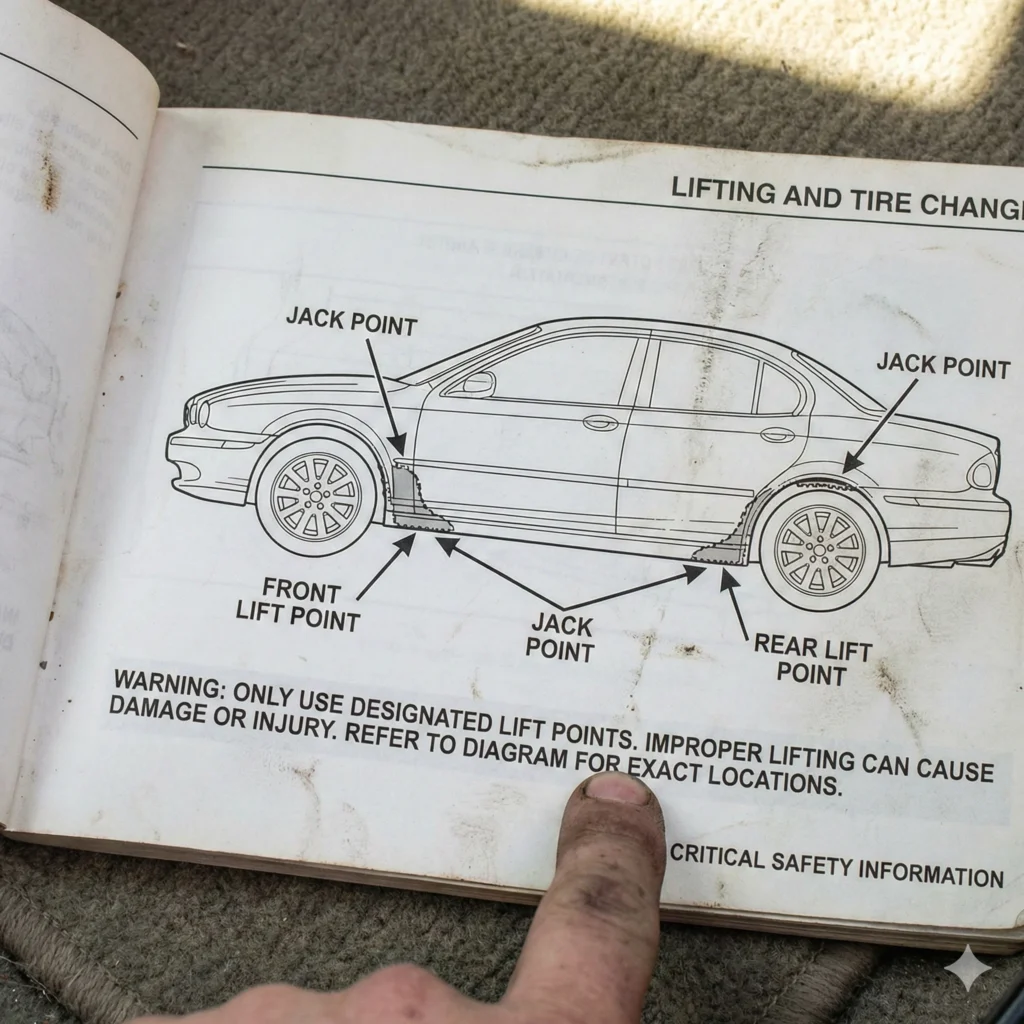
Shows the exact jack point for your vehicle model — this is critical for safety.
💡 Pro Tip: Before you get a flat tire, locate these tools and familiarize yourself with them. Open your trunk, find the spare tire, and understand where everything is stored.
How to Change a Tire: Step-by-Step Instructions
Follow these steps carefully when learning how to change a car tire. Take your time with each step—rushing can lead to mistakes or safety issues.
Secure Your Vehicle Completely
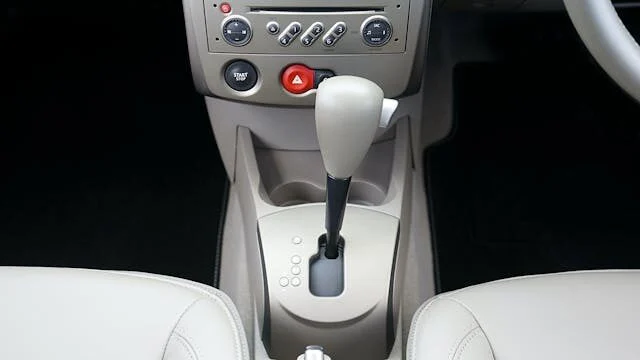
This is your foundation for safe tire changing. A rolling vehicle can cause serious injury or death.
- Park on level ground: Choose the flattest, most stable surface available
- Engage parking brake: Pull it firmly and ensure it’s fully engaged
- Place in Park: (Automatic) or 1st gear (Manual)
- Turn off the engine: This prevents accidental movement
Locate Your Spare Tire and Tools
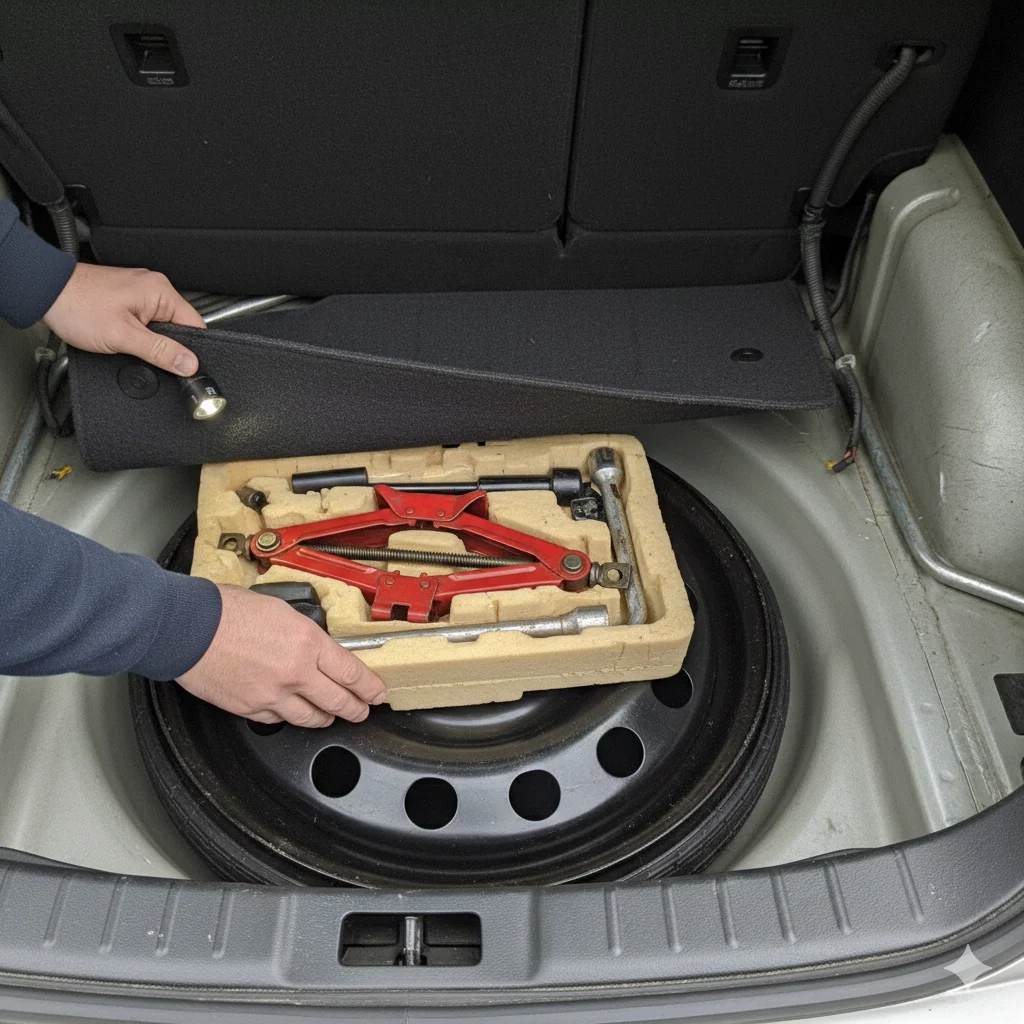
Many drivers struggle with this step because tools aren’t always obvious. Check these locations:
- Under the trunk floor: Most common location for spare tire and equipment
- Underneath the vehicle: Some SUVs and trucks mount the spare tire externally
- Behind seat panels: Check the back seat area
- Mounted on the back: Some vehicles attach the spare to the rear bumper
Check your owner’s manual if you’re unsure. It will show the exact location for your vehicle model.
Loosen the Lug Nuts (Don’t Remove Yet!)
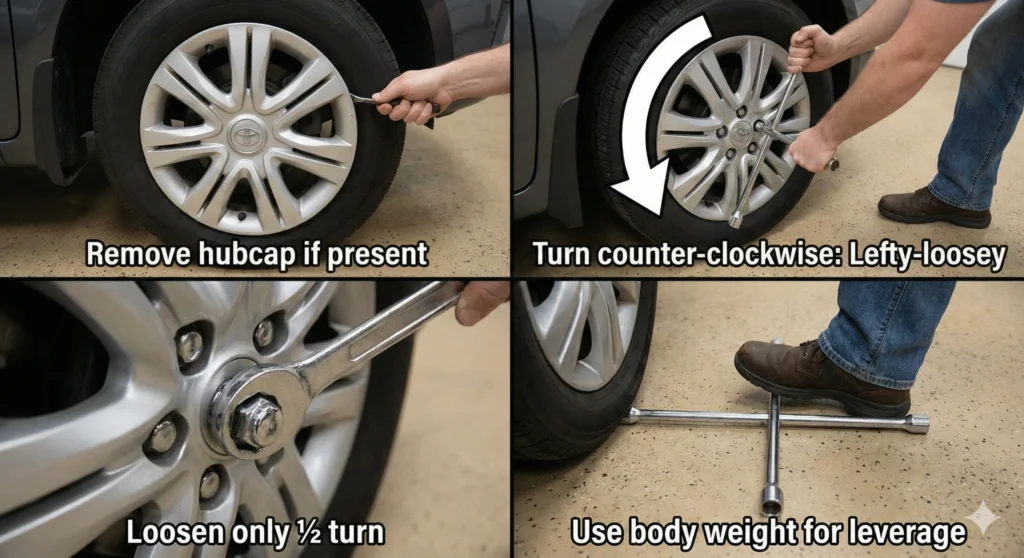
This is where many people struggle, but there’s a technique that makes it much easier:
- Remove hubcap if present: Gently pry it off first
- Turn counter-clockwise: Remember “lefty-loosey, righty-tighty”
- Loosen only ½ turn: Don’t remove them completely yet—this is just initial loosening
- Use body weight for leverage: If they’re tight, stand on the wrench or bounce gently. This distributes your weight effectively
💡 Can’t Loosen Them? Apply some penetrating oil (WD-40) and wait a few minutes. Sometimes lug nuts seize, especially in winter or humid climates. Using your body weight is completely acceptable and actually preferred to forcing with arms alone.
Position the Jack Correctly
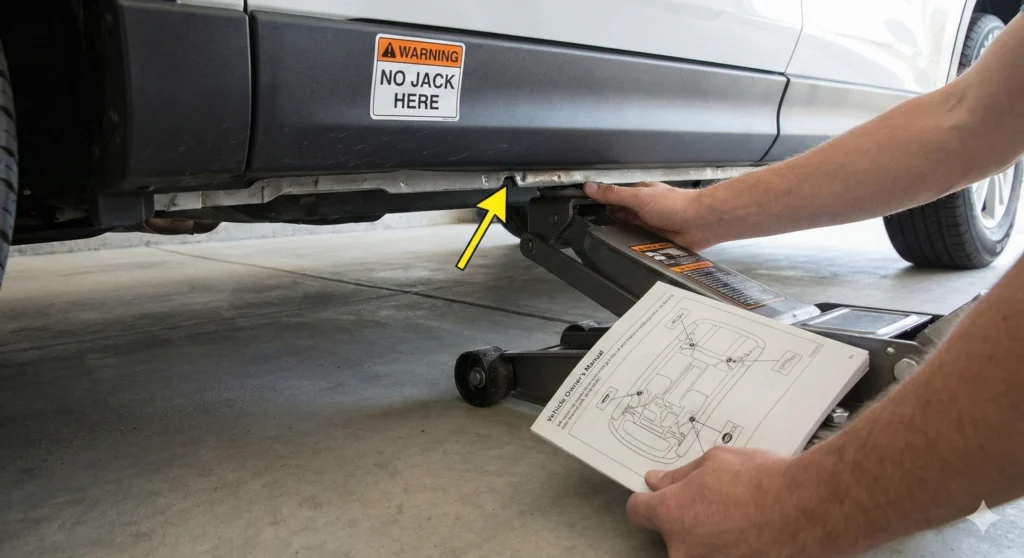
This is critical for safety. Improper jack placement can damage your vehicle or cause it to fall.
- Consult your manual: Find the jack point diagram—this is vehicle-specific
- Look for the notch: Most vehicles have a small indentation that marks the jack point
- Position on metal frame: Never place the jack under plastic bumpers or body panels
- Level ground rule: Always place the jack on level, solid ground
⚠️ Warning: Using the wrong jack point is the primary cause of vehicle damage during tire changes. Never guess. If you don’t have your manual, look it up on your phone before proceeding.
Raise the Vehicle with the Car Jack
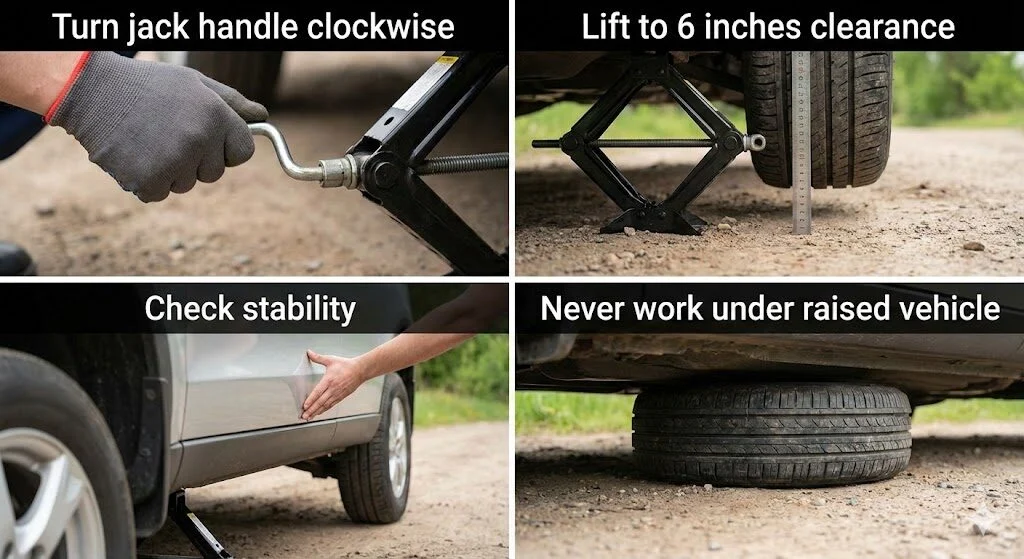
Lift the vehicle slowly and carefully, watching for any signs of instability.
- Turn jack handle clockwise: Lift slowly and steadily
- Lift to 6 inches clearance: The flat tire needs enough clearance for the spare
- Check stability: Make sure the vehicle feels stable before continuing
- Never work under raised vehicle: Place the flat tire under the car as a backup safety measure
Remove the Lug Nuts and Flat Tire
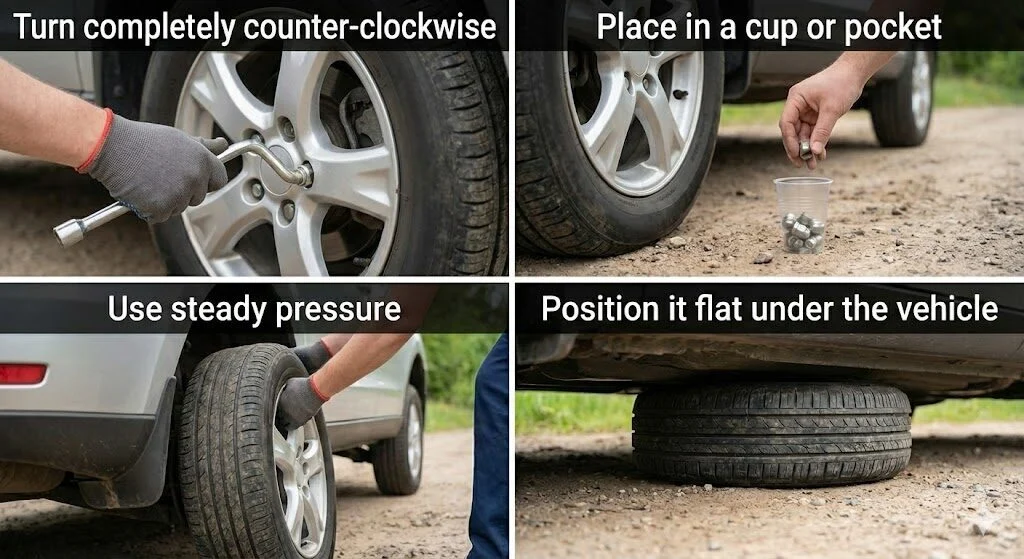
Now you can completely remove the lug nuts that you loosened earlier.
- Remove all lug nuts: Turn completely counter-clockwise
- Keep them safe: Place in a cup or pocket—don’t lose them in grass
- Pull tire straight toward you: Use steady pressure
- Lay flat tire down: Position it flat under the vehicle as a safety backup
Mount the Spare Tire
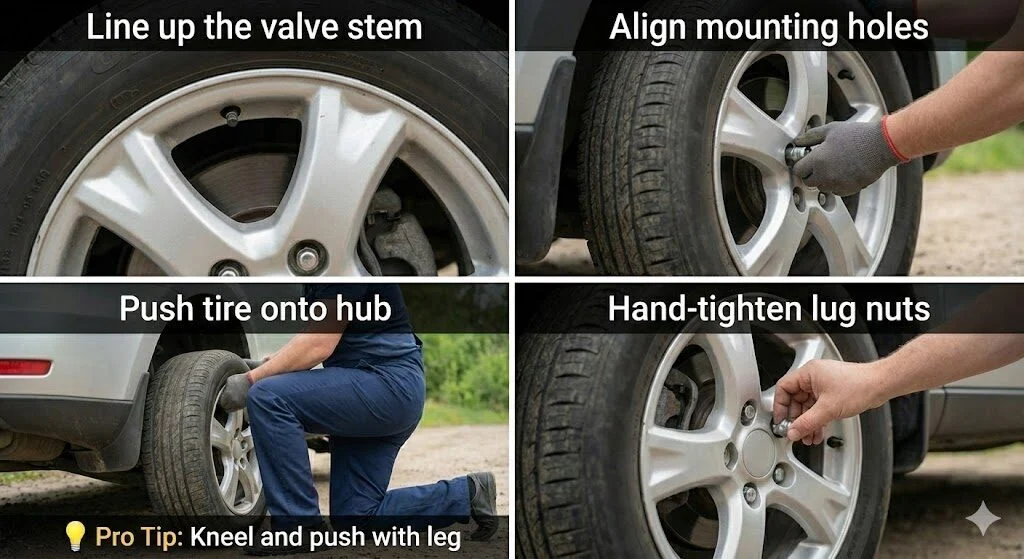
This is where you install your replacement. Focus on alignment to avoid cross-threading the holes.
- Line up the valve stem: This helps with alignment
- Align mounting holes: Match the holes on the spare to the lug bolts
- Push tire onto hub: Use steady, even pressure
- Hand-tighten lug nuts: Get them snug by hand before using the wrench
💡 Pro Tip: The spare tire might feel heavier than you expect. It’s okay to kneel down and push with your leg for extra leverage rather than just using arm strength.
Tighten Lug Nuts in Star Pattern
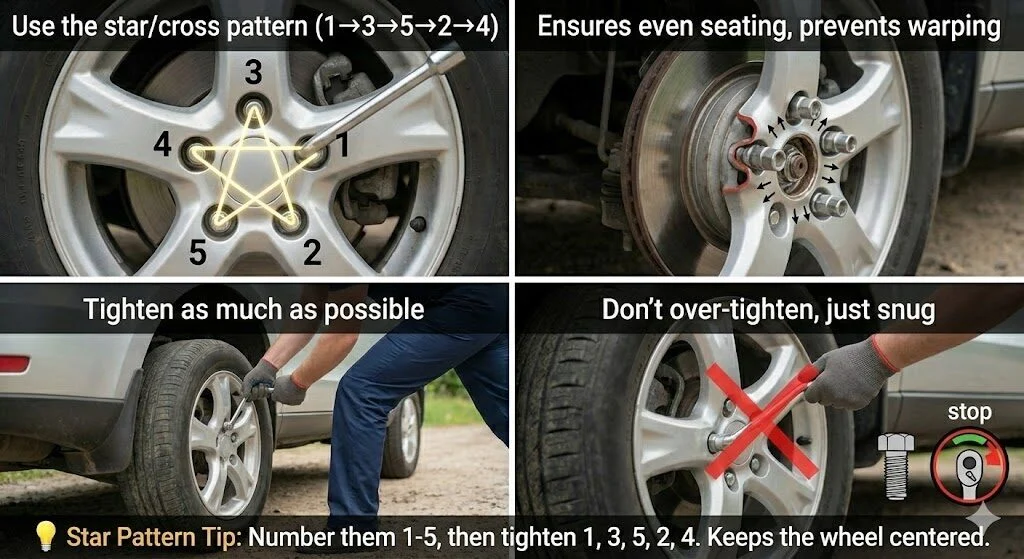
This is critical to ensure even pressure on the wheel. Don’t just tighten them randomly.
- Use the star/cross pattern: Tighten opposite nuts (imagine a star: 1→3→5→2→4)
- This ensures even seating: Prevents the wheel from warping or being unbalanced
- Tighten as much as possible: Use your body weight on the wrench if needed
- Don’t over-tighten: The goal is snug, not stripped bolts
💡 Star Pattern Tip: If you have 5 lug nuts, number them 1-5 going around. Then tighten in this order: 1, 3, 5, 2, 4. This keeps the wheel centered as you tighten.
Lower the Vehicle
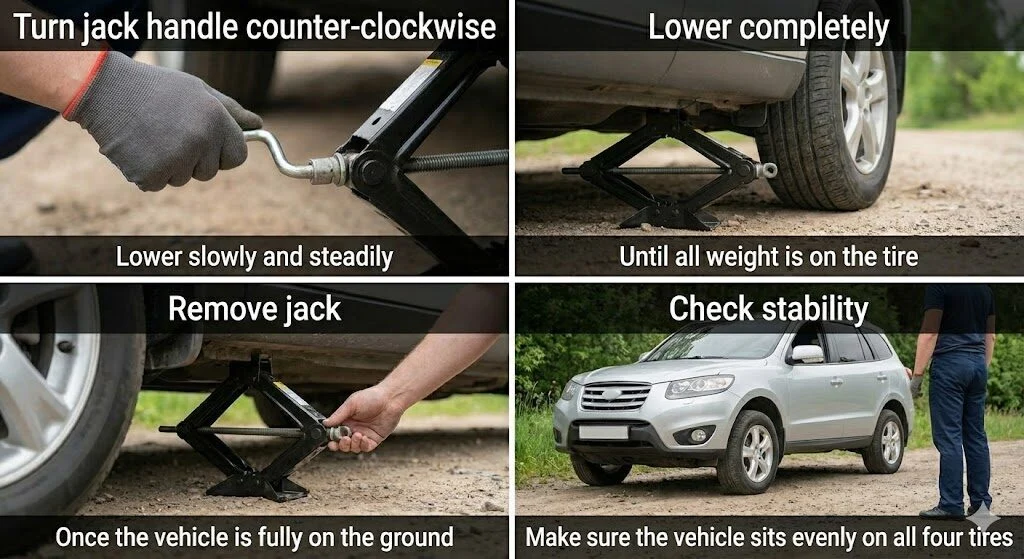
Carefully release pressure from the jack to lower the vehicle back down.
- Turn jack handle counter-clockwise: Lower slowly and steadily
- Lower completely: Until all weight is on the tire
- Remove jack: Once the vehicle is fully on the ground
- Check stability: Make sure the vehicle sits evenly on all four tires
Final Tightening and Cleanup
Now that the vehicle is on the ground, do a final tightening of the lug nuts.
- Re-tighten in star pattern: The weight of the vehicle helps them settle
- Replace hubcap: If applicable
- Store flat tire: Place in your trunk or securely in the vehicle
- Put away the jack and tools: Organize your emergency kit
What to Do After Replacing a Tyre
Congratulations on successfully changing your tire! But there are important steps after the tire changing process:
Important Post-Replacement Actions
- Drive at reduced speed: Most spare tires have a maximum speed of 50 mph. Check your spare tire for the recommended speed limit.
- Schedule tire replacement soon: Plan to replace the damaged tire within 50-70 miles of driving. A temporary spare is just that—temporary.
- Check tire pressure: Visit a gas station within the next hour to check the spare tire’s air pressure.
- Re-check lug nuts: After driving 25 miles, pull over and verify the lug nuts are still tight. Sometimes they settle slightly as the tire adjusts.
- Avoid highways if possible: While not forbidden, try to use back roads and local streets to get to a tire shop.
💡 Remember: When you get a car tire replacement at a shop, ask them to inspect your other tires while you’re there. This is a good time for preventive maintenance.
Common Concerns When Changing a Tire
Many people worry about specific situations. Here are common concerns and how to address them:
🦾 “I’m Not Strong Enough to Loosen the Bolts”
This is one of the most common concerns, and it’s completely valid. The solution: Use your body weight. Stand on the wrench, position it horizontally, and gently bounce. You can also try the penetrating oil trick (WD-40) to loosen corrosion. If you’re still unable to break them loose after several attempts, call for roadside assistance.
🔗 “I Tightened the Bolts in the Wrong Order and Now I’m Worried”
If you didn’t use the star pattern, don’t panic. Drive carefully to a tire shop and have them re-tighten the bolts properly. The star pattern prevents the wheel from warping, but it’s not permanently damaged if you only did it once.
🌙 “I Got a Flat Tire at Night and Can’t See”
Use your phone’s flashlight. Point it at your work area. If possible, maneuver the car to be in headlight glow of your vehicle or pull into a well-lit area like a gas station. Never work on the roadside at night in poor lighting—safety is more important than speed.
🛣️ “I Got Stuck on a Highway with Heavy Traffic”
Call for roadside assistance immediately. Consider AAA membership if you don’t have it. While you wait, stay in your vehicle with hazard lights on. Do not attempt to change your tire in heavy traffic—your safety is worth $100 for a tow truck.
⚠️ “The Car Feels Unstable When I Lift It”
STOP. Lower the vehicle immediately. The ground is uneven or the jack is positioned incorrectly. Find a different, level location to place your vehicle, or call for assistance. Never proceed if the vehicle feels unstable.
What to Do With Your Flat Tire.
Once the spare is on and you’re safely home, your next step is learning [how to fix a flat tubeless tire] so you can get your main wheel back on the car.
Frequently Asked Questions
How long does it take to change a tire?
For your first time, expect 15-30 minutes. As you gain experience, you can reduce this to 10-15 minutes. It’s better to take extra time and do it safely than to rush and make mistakes. Time pressures should never compromise your safety or the security of your vehicle.
How much does it cost to have a professional change a tire?
A tire mounting and balancing service typically costs $15-$45 per tire. A roadside tow truck to get your car to a service center can cost $75-$150 or more. Learning to change your own tire can save hundreds over your driving lifetime. Plus, you have the peace of mind of independence.
What should I do if I get a flat tire while driving on the highway?
Do not slam on the brakes. Gently ease off the accelerator and steer to the right shoulder of the road. Slow down gradually. Turn on hazard lights. If you can safely exit, do so. Never attempt to change a tire in active highway traffic. Call for roadside assistance if you don’t feel safe.
Can I drive on a temporary spare tire for long distances?
No. Temporary (or “donut”) spare tires are designed for short-distance emergency use only. They typically have a maximum speed of 50 mph and shouldn’t be used for more than 50-70 miles. Plan to get a permanent tire replacement as soon as possible. Extended use can damage your transmission or other drivetrain components.
What if the lug nuts are stuck or corroded?
Apply penetrating oil (like WD-40 or similar product) generously to the stuck lug nuts and let it soak for 5-10 minutes. Try again with your body weight on the wrench. If still stuck after multiple attempts, this is a valid reason to call for roadside assistance. Don’t damage the lug nuts by applying too much force.
Where is my spare tire located?
Check your owner’s manual for the exact location specific to your vehicle model. Common locations include: under the trunk floor mat, mounted underneath the vehicle, attached to the back bumper, or behind a rear seat panel. Every vehicle is different, so don’t guess.
Is it dangerous to drive on a punctured tire if I’m going slowly?
Yes, avoid this. Driving on a flat tire, even slowly, can damage the sidewall and rim, turning a $150 repair into a $400 replacement. Additionally, you risk losing control, especially in wet conditions. Pull over immediately and change the tire or call for assistance.
What if I don’t have a spare tire?
Some modern vehicles don’t include spare tires due to weight and fuel economy considerations. If yours doesn’t, call roadside assistance immediately or contact a nearby tire shop. Consider purchasing a portable tire plug kit or emergency repair kit as backup. Many tire shops offer mobile service that can come to your location.