

Got a nail, screw or slow leak? Here’s the quick answer on how much does a tire patch cost, how it compares to a new tire, and how to find reliable tire repair near you today.
The short answer: patching a tire usually costs about $10 to $40 at a shop — far cheaper than buying a new tire.
If you searched how much to patch a tire, how much does it cost to patch a tire, or simply tire patch cost, you want a fast, honest number before you visit a shop. Most drivers pay a tire repair cost of $10 to $40 for a proper plug-patch on a small tread puncture — and many shops will even do it free if you bought the tire from them. Below we break the cost to patch a tire down by method, explain what affects the price, compare a patch vs a plug, cover when a tire can and can’t be repaired, how long it takes, and how to find trustworthy tire repair near you.
How Much Does a Tire Patch Cost? Price by Method
Here’s what to expect for the cost to patch a tire depending on where and how it’s done — from a quick DIY plug to a full shop repair.
Shop Repair: $10–$40
At most tire shops, a standard patch or plug-patch runs about $10 to $40. This is the most common answer to how much is it to patch a tire — a technician removes the tire, patches it from the inside, and reseals it properly.
DIY Plug Kit: $5–$20
A tire plug kit from an auto-parts store costs just $5 to $20 and fixes a tread puncture in minutes. It’s the cheapest option, but a plug alone is a temporary fix — a shop patch is safer for the long term.
Plug-Patch Combo: $20–$45
The gold-standard repair combines a plug and an internal patch. Expect a tire patch cost of $20 to $45. It seals the puncture and the inner liner, and is what most reputable shops recommend.
Mobile / Roadside: $50–$120
Stranded with a flat? A mobile tire repair service that comes to you costs more — usually $50 to $120 — because you’re paying for the call-out. Handy in an emergency, but pricier than driving to a shop.
vs a New Tire: $100–$350+
Replacing a single tire costs $100 to $350 or more once you add mounting, balancing and disposal. That’s why patching is almost always the smarter, cheaper choice when the puncture is repairable.
Sometimes Free
Many big tire chains repair punctures free if you bought the tire there or paid for a road-hazard warranty. Always ask — you may not have to pay any tire repair cost at all.
What Affects the Cost to Patch a Tire
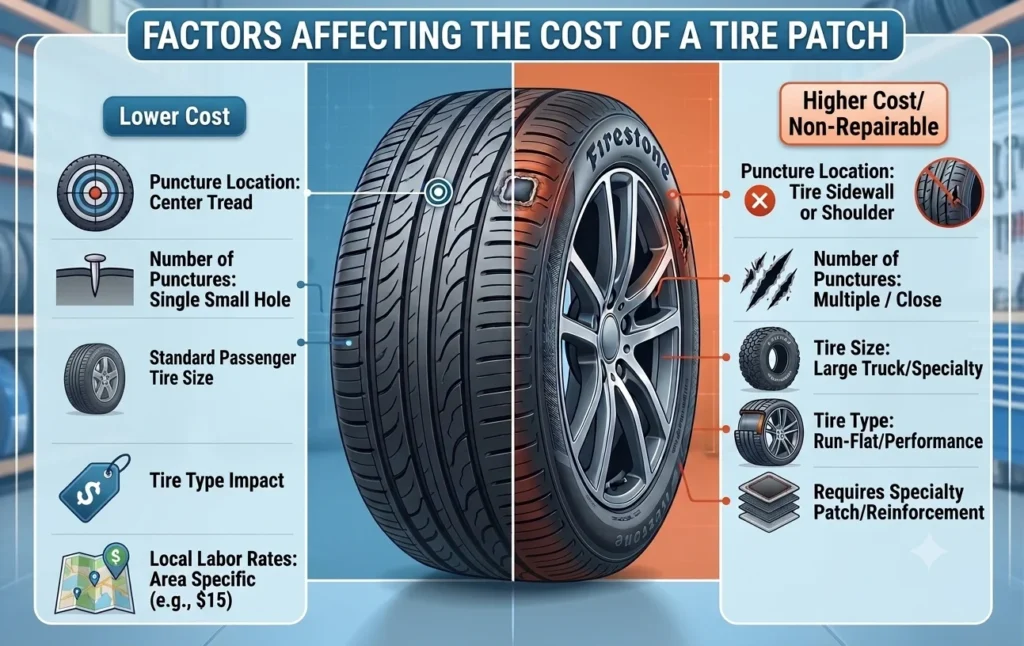
Wondering why quotes vary? These six factors explain why one shop charges $15 and another charges $40 for the same job.
Puncture Location
A puncture in the center tread is easy and cheap to repair. A hole in or near the sidewall usually can’t be patched safely at any price — that tire needs replacing.
Tire Size
Bigger truck, SUV and low-profile tires take more labor to dismount and remount, so how much is patching a tire on them can sit at the higher end of the range.
Local Labor Rates
Shop rates differ by area. Comparing two or three places when you search repair tires near me helps you avoid overpaying for a simple job.
Warranty Coverage
If your tire has a road-hazard warranty or was bought at that shop, the repair may be discounted or free. Bring your receipt to be sure.
Tire Type
Run-flat and performance tires can cost more to repair — or may not be repairable at all — which affects the final tire repair cost.
Number of Punctures
One small hole is a routine fix. Multiple punctures, or holes too close together, raise the price — or mean the tire should be replaced instead.
From Puncture to Patched
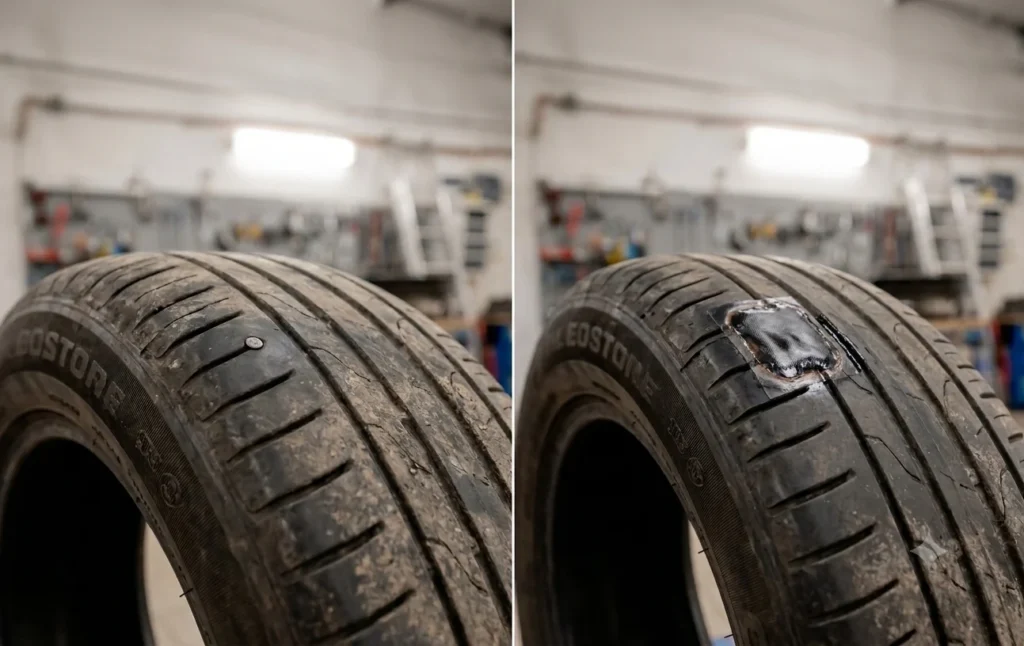
A nail or screw in the tread is usually repairable. A proper plug-patch seals the hole from the inside. Most local shops finish the job in under an hour.
Patch vs Plug: Which Is Better?
Both are cheap ways to fix a puncture, but they work differently. Here’s how a plug, a patch and the combo compare.
Internal Patch
A patch is applied to the inside of the tire after it’s removed from the wheel. It seals the inner liner well but doesn’t fill the hole on its own. Costs a little more in labor.
Plug
A plug pushes into the hole from the outside — fast and cheap, even DIY. It’s fine as a temporary fix but can leak over time, so it’s best treated as a get-you-home solution.
Plug-Patch Combo
The combo fills the hole and seals the liner — the safest, longest-lasting repair. It’s what tire pros recommend and the option most worth the slightly higher tire patch cost.
When Can a Tire Be Patched — and When to Replace It
Patching is safe and cheap in most cases, but not always. Use these quick rules so you don’t overpay for a new tire — or drive on one that isn’t safe.
When a tire CAN be patched
If the puncture is in the tread area, smaller than about 1/4 inch, and the tire still has decent tread, it can almost always be safely repaired for a low tire patch cost.
When a tire should NOT be repaired
Sidewall damage, large holes, tears, or a tire that was driven flat can’t be safely patched. If a shop says replace, ask them to show you why — a good shop won’t upsell you.
How long does patching take?
A standard tire patch takes about 20 to 45 minutes once you’re in the bay. Many shops handle it same-day as a walk-in, so you’re back on the road fast.
Can I drive with a slow leak?
Only for short, low-speed trips to reach a shop. Keep the tire inflated and get it checked soon — driving on a low or flat tire can ruin it and turn a cheap patch into a costly replacement.
Tire Patch Cost FAQs
How much does a tire patch cost?
Most shops charge about $10 to $40 to patch a tire. A DIY plug kit is cheaper at $5 to $20, while a mobile repair that comes to you runs $50 to $120.
How much is it to patch a tire at a shop?
At a typical tire shop, a proper plug-patch repair costs $20 to $45. Some big chains do it free if you bought the tire there or have a road-hazard warranty.
Is patching cheaper than replacing a tire?
Yes — by a lot. A patch costs $10 to $45, while a single new tire runs $100 to $350+ installed. When the puncture is repairable, patching is almost always the smarter choice.
Patch vs plug — which is better?
A plug is a quick, cheap temporary fix. An internal patch seals better. The best repair is a plug-patch combo done from inside the tire, which is safe and long-lasting.
How much is patching a tire I fix myself?
A DIY plug kit costs $5 to $20 and works on small tread punctures. It’s a great emergency fix, but have a shop do a proper patch soon for safety.
How do I find reliable tire repair near me?
Search repair tires near me, then check reviews, ask for an upfront quote, and confirm whether they do a plug-patch combo. Compare two or three shops to avoid hidden fees.
Ready to Get Your Tire Fixed?
Now you know how much to patch a tire and when it’s worth it. Grab a quote, confirm the repair method, and get back on the road — usually for under $40.
💲 Most patches cost $10–$40⏱️ Done in under an hour
About This Guide
We’re a team of everyday drivers and repair researchers helping you avoid overpaying at the tire shop. Prices are typical U.S. ranges — always get a local quote before you commit.