
The best Makita impact driver is not simply the one with the largest torque claim. It is the model that fits your battery platform, reaches your fasteners, controls the bit cleanly, and keeps pace with the work you actually do.
Makita makes several excellent ¼-inch hex impact drivers, but the model numbers can obscure the meaningful differences. This guide narrows the choice by platform, working size, speed control, and likely job—not by treating every published torque number as a direct measure of real fastening performance.
Quick verdict: the best Makita impact drivers to shortlist
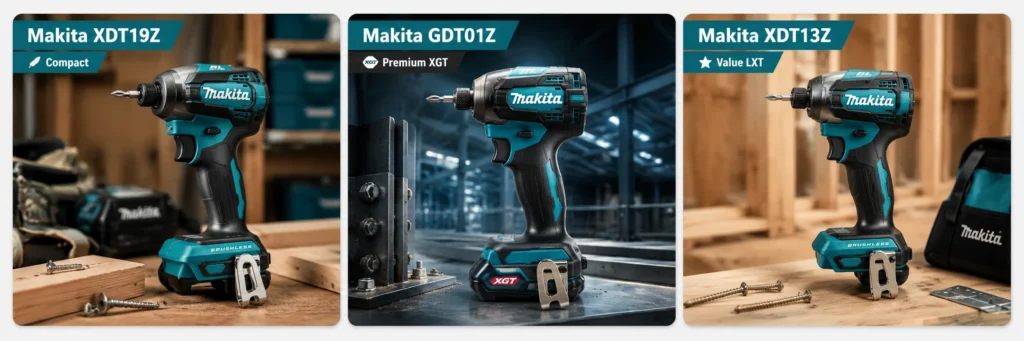
Makita XDT19Z
A strong starting point for established 18V LXT users who want a compact brushless driver with multiple assist modes and broad everyday jobsite usefulness.Best XGT option
Makita GDT01Z
A logical premium option for professionals already committed to 40V max XGT and looking for a modern, high-output impact driver without starting a second battery platform.Value LXT route
Makita XDT13Z
A straightforward brushless LXT choice for users who want dependable screw-driving capability and already own compatible batteries, without paying for every premium control mode.
Top ten impact drivers: Makita comparison table
This is a Makita-focused shortlist, not a universal brand ranking. Use it to identify the driver family that matches your batteries and workload, then check the current product page for the exact specifications and kit contents available in your region.
| Model | Platform | Best fit | Check before buying |
|---|---|---|---|
| XDT19Z | 18V LXT | Best all-round choice for many LXT users | Exact assist modes and regional kit naming |
| XDT16Z | 18V LXT | Premium control for cabinetry and varied fastening | Availability may vary by market |
| XDT15Z | 18V LXT | Compact everyday trade and remodeling work | Compare against newer LXT generations |
| XDT14Z | 18V LXT | High-control fastening for existing LXT owners | Confirm model age and local stock |
| XDT13Z | 18V LXT | Value-focused brushless driver | Fewer premium modes than top models |
| XDT11Z | 18V LXT | Basic general fastening on LXT | Brushed motor and kit-value comparison |
| GDT01Z | 40V max XGT | Demanding work within an XGT system | XGT batteries do not fit LXT tools |
| GDT02Z | 40V max XGT | XGT users wanting a compact alternative | Verify regional specification sheet |
| DT04Z | 12V max CXT | Light work, access, and reduced working weight | Not a substitute for heavy structural fastening |
| DTP141Z | 18V LXT | Specialist hybrid drill / impact applications | Different tool concept from a standard driver |
Torque ratings are useful reference points, but they do not fully predict how a driver will feel with long structural screws, short cabinet screws, self-tappers, a dull bit, or a particular battery. For a purchase decision, platform and control usually matter as much as the headline figure.
Individual recommendations
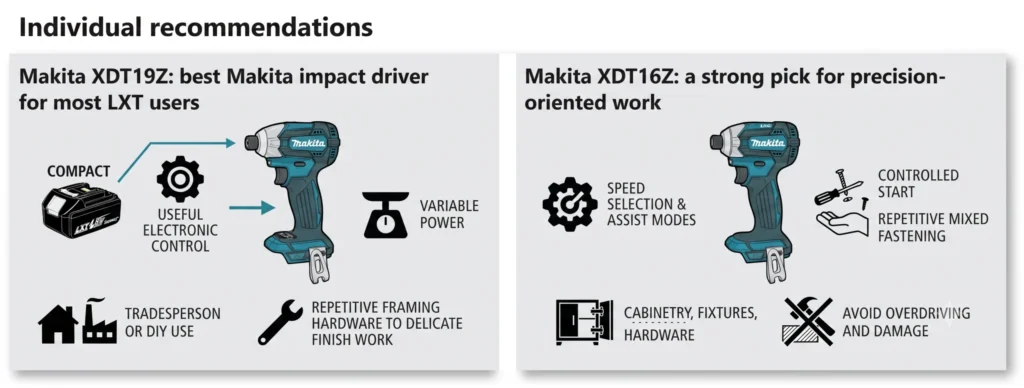
Makita XDT19Z: best Makita impact driver for most LXT users
The XDT19Z makes the most sense for a tradesperson or serious DIY user who already owns LXT batteries and wants a compact brushless impact driver with useful electronic control. The practical appeal is not merely output: its appeal is the ability to move from repetitive framing hardware to more delicate finish work without treating every trigger pull as full power.
Makita GDT01Z: the platform-first XGT recommendation
For a professional already running Makita 40V max XGT packs, the GDT01Z is usually the more coherent purchase than adding another battery family. It brings the current XGT ecosystem into the impact-driver slot. The important buying question is whether you already benefit from XGT elsewhere, because LXT and XGT batteries are not interchangeable.
Makita DT04Z: best for lighter, tighter-access work
A 12V max CXT impact driver can be the right answer for furniture assembly, electrical hardware, service work, and overhead tasks where the total working weight matters. It should not be selected on the assumption that a smaller battery platform will replace a full-size LXT or XGT driver for repeated heavy structural screws.
Makita XDT16Z: a strong pick for precision-oriented work
The XDT16Z is commonly shortlisted by users who value speed selection and assist modes for cabinetry, fixtures, hardware, and repetitive mixed fastening. Those modes can help when a fastener needs a controlled start or when overdriving a screw would damage finished material. Their value depends on the fastener, material, bit quality, and operator technique.
Makita XDT13Z: practical brushless value for LXT owners
The XDT13Z is the kind of model worth considering when you need a dependable brushless impact driver for decking, hardware, repairs, and day-to-day installation but do not require the deepest menu of specialty modes. A good bit and appropriate speed matter more than feature count for many routine fastening jobs.
Makita XDT11Z: basic LXT utility for occasional fastening
The XDT11Z is a basic LXT option that can appeal where upfront tool cost matters most. Compare it against brushless alternatives carefully, especially if you expect all-day use, repetitive overhead fastening, or a future upgrade path. A less expensive tool can still be good value when the job is occasional and the battery platform is already in place.
Makita LXT vs. XGT vs. CXT explained
Battery platform is a long-term ownership decision. The right driver can be a poor value if it forces you to buy chargers and packs that do not support the rest of your tool kit.
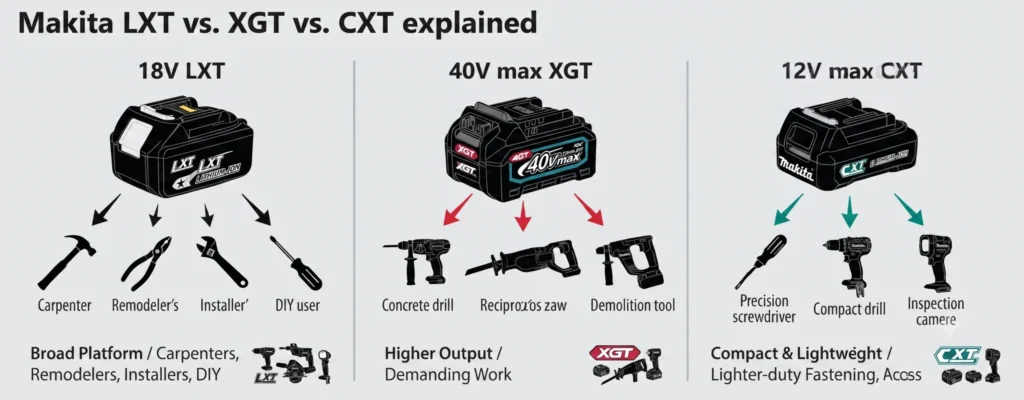
18V LXT
Makita’s broad 18V platform. It remains the natural first place to look for many carpenters, remodelers, installers, and DIY users who already own LXT batteries.
40V max XGT
A separate higher-output platform aimed at demanding cordless work. Choose it because your wider kit benefits from XGT, not because more voltage automatically makes every impact-driver job better.
12V max CXT
The compact route for lighter-duty fastening, access, and lower working weight. It is useful when a large driver is awkward, but it has a different workload target from LXT or XGT.
How Mister Worker evaluates impact-driver claims
We do not label a model as physically tested unless we have used that specific tool and documented the setup. A meaningful hands-on comparison would record model number, battery capacity, bit type, screw dimensions, material, repeated drives, timing, battery level, heat, working weight, control, noise, vibration, and collet behavior. This page is an editorial buying guide based on official specifications and practical selection criteria, not a claim of original laboratory testing for every model listed.
What a credible hands-on comparison should measure
Fastening consistency with short cabinet screws, long structural screws, and appropriate self-tapping screws in representative materials.
Trigger response, low-speed control, assist-mode usefulness, and the tendency to cam-out, strip, or overdrive a fastener.
Bare-tool and working weight, head length, access near corners, grip comfort, LED coverage, and collet retention.
Battery and housing heat after repeated work, practical balance with compact versus larger packs, and complete kit cost.
What matters before you buy a Makita impact driver
Choose control before maximum torque
Impact drivers are easy to overestimate by torque alone. For cabinetry, electrical hardware, sheet metal, and finished surfaces, trigger modulation and lower-speed settings can prevent snapped screws, damaged workpieces, and stripped heads. For long structural fasteners, speed under load and repeatability matter more than a single peak number.
Battery size changes the tool in your hand
A compact pack can make an impact driver easier to carry, fit between studs, and use overhead. A larger battery can increase runtime but also changes balance and wrist fatigue. Where the work allows it, compare the driver with the same battery capacity you expect to use most often.
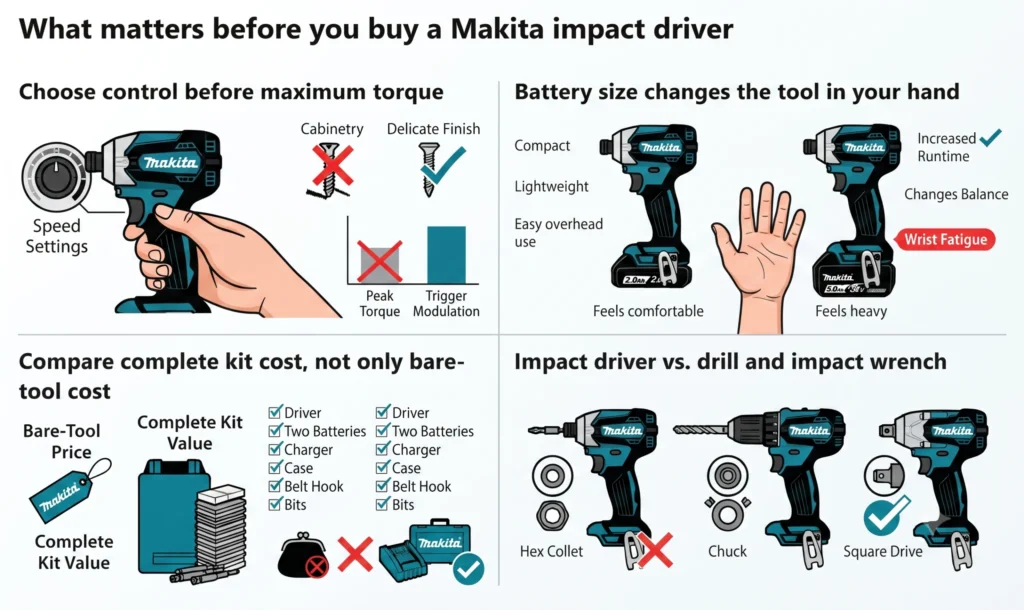
Compare complete kit cost, not only bare-tool cost
A bare tool can be the best value if you already own healthy, compatible Makita batteries and a charger. If you are entering a platform, price the driver, two batteries where appropriate, charger, case or bag, belt hook, and bits. Retail listings often vary in included battery capacity and accessories.
Impact driver vs. drill and impact wrench
An impact driver generally uses a ¼-inch hex collet for bits and screw-driving accessories. A drill-driver uses a chuck and is better suited to drilling and controlled clutch work. An impact wrench normally uses a square drive for sockets and higher-load fastening. Do not buy an impact driver expecting it to be the correct primary tool for frequent wheel-lug removal.
Makita impact driver questions buyers ask
What is the best Makita impact driver overall?
For many existing 18V LXT users, the XDT19Z is a sensible all-round starting point because it combines a compact brushless format with advanced control features. The best choice changes if you are already invested in XGT, prioritize low working weight, or need a simpler value-focused model.
Are Makita LXT and XGT batteries interchangeable?
No. Makita 18V LXT and 40V max XGT are separate battery systems with different packs and tools. Check the platform printed on the tool and battery before ordering; do not assume similar-looking Makita packs will fit.
Which impact driver is best for structural screws?
Use an appropriately powerful 18V LXT or XGT model with a quality impact-rated bit and the screw manufacturer’s recommended pilot-hole guidance. For repeated heavy structural work, prioritize a stable battery platform, speed under load, trigger control, and a comfortable working weight rather than relying on a single torque figure.