Is your car heater not working when you need it most? Whether the vents blow cold air, airflow feels weak, or the heater only works while driving, several mechanical and electrical problems could be responsible.
Fortunately, a few simple observations can help narrow down the cause. This guide explains why car heaters fail, how to fix car heater problems safely, and when a professional inspection is necessary.
QUICK ANSWER
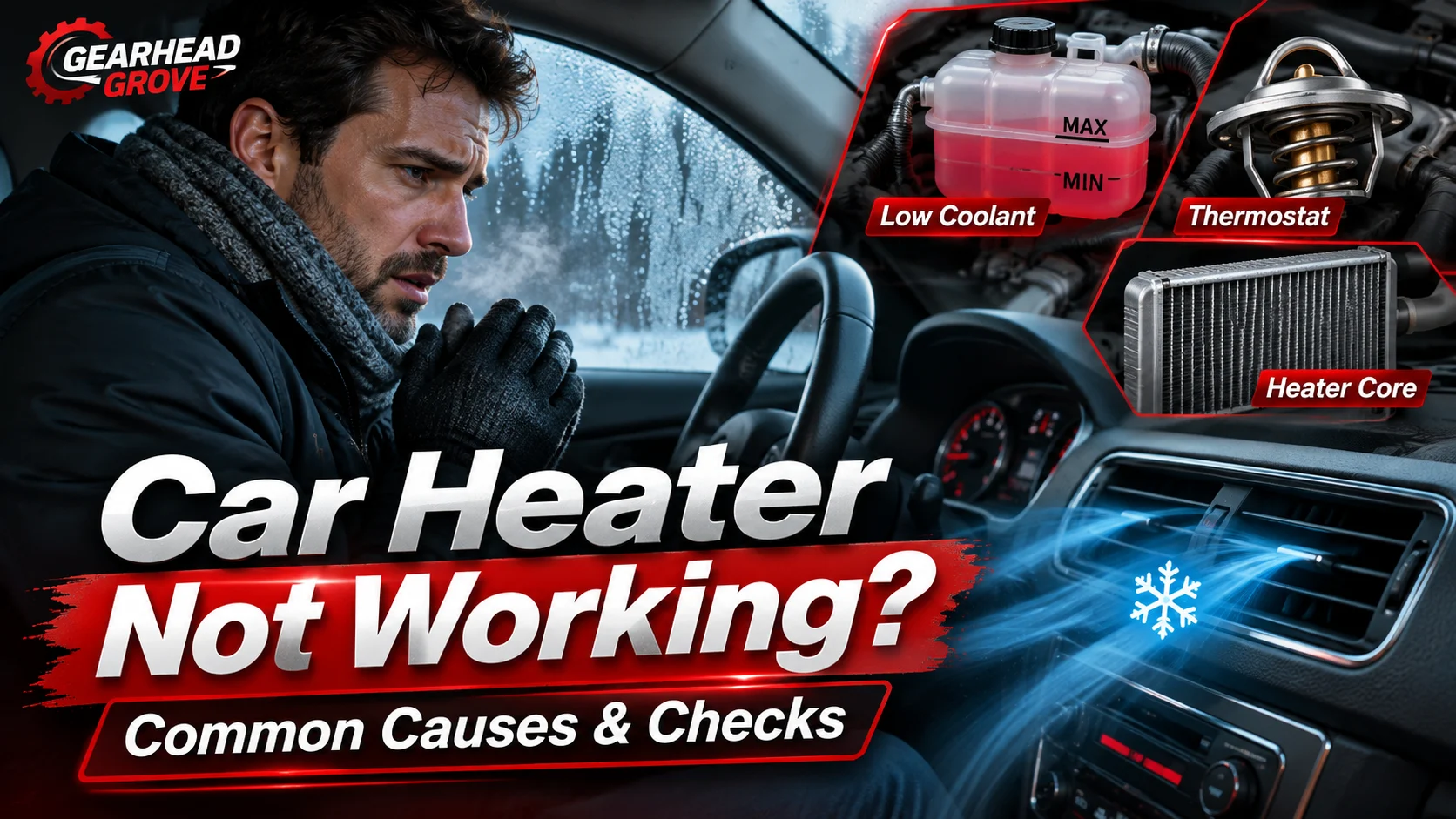
Common causes of a car heater not working include low coolant, a faulty thermostat, a clogged heater core, a malfunctioning blend door actuator, and blower motor problems. The first clue is whether your vents blow cold air, weak air, or no air at all.
How Does a Car Heater Work?
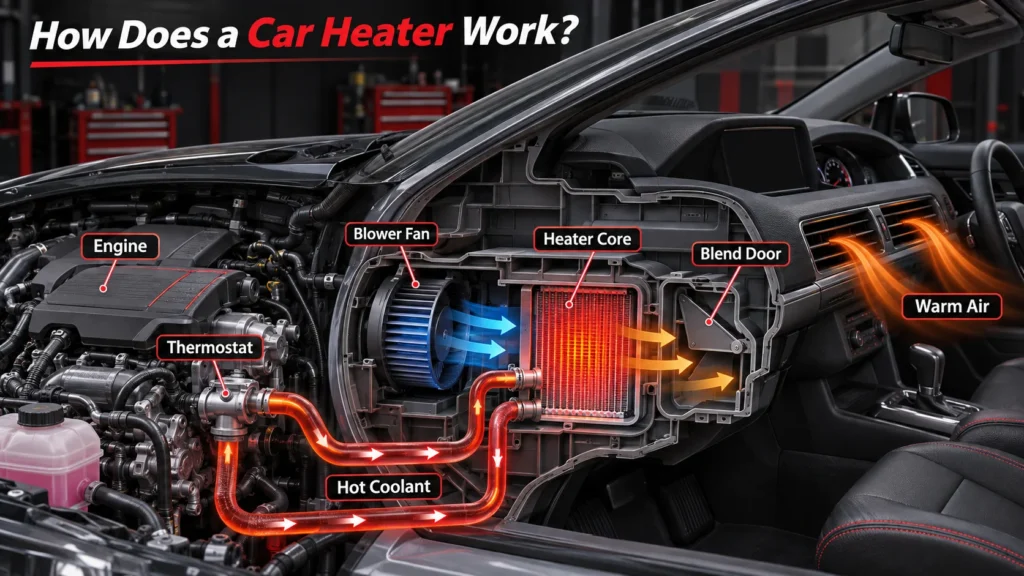
In most gasoline-powered vehicles, the heating system uses heat produced by the engine. Hot coolant travels through a small radiator-like component called the heater core. A blower fan moves air across it, and the HVAC system directs that warmed air into the cabin.
A thermostat helps regulate engine operating temperature, while temperature blend doors control how much air passes through or around the heater core.
Important: Electric vehicles and some hybrids use electric heating elements or heat-pump systems. Their heating problems may require different diagnostic procedures.
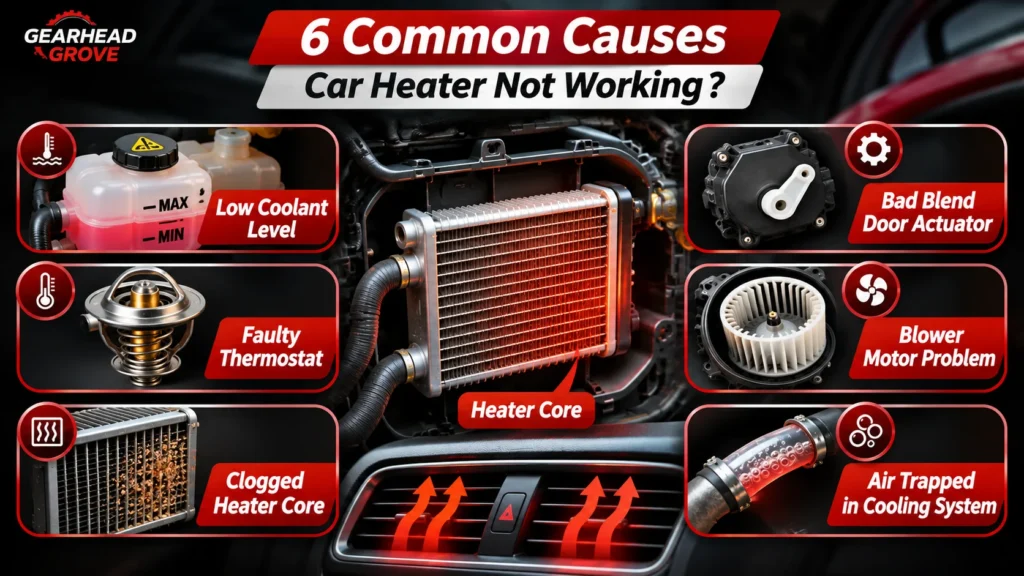
6 Common Reasons Your Car Heater Is Not Working
Understanding these common failures can help you avoid replacing the wrong component.
1. Low Coolant Level
If there isn’t enough coolant circulating through the engine, the heater core may not receive sufficient hot coolant. Leaks or trapped air may contribute to the problem.
Clue: Weak heat, fluctuating heat, or an overheating warning.
2. Faulty Thermostat
A thermostat stuck open can prevent the engine from reaching its normal operating temperature, particularly in cold weather. The heater may then produce lukewarm air.
Clue: Slow engine warm-up or temperature staying unusually low.
3. Clogged Heater Core
Sediment or corrosion can restrict coolant flow through the heater core. Internal leaks can also cause heating problems and may allow coolant into the cabin.
Clue: Poor heating, sweet coolant odor, or damp carpeting.
4. Bad Blend Door Actuator
The blend door controls how air is routed through the HVAC housing. A stuck door or failed actuator can prevent warm air from reaching the vents.
Clue: Temperature does not change when you adjust the controls.
5. Blower Motor Problems
A faulty blower motor, fuse, fan controller, resistor, or electrical connection may cause weak airflow or no airflow. A severely clogged cabin filter can also restrict airflow.
Clue: No air, weak air, or a fan that works at only some speeds.
6. Air Trapped in the Cooling System
Air pockets can interrupt coolant circulation after cooling system service or because of a leak. Some vehicles may also have heater valve or coolant circulation problems.
Clue: Intermittent heat, especially after coolant repairs.
Car Heater Symptoms and Possible Causes
Start with the symptom you can actually observe. These clues can guide diagnosis, but they do not confirm a failed part.
| Symptom | Possible Causes | First Check |
|---|---|---|
| Blows cold air | Low coolant, thermostat, blend door | Check engine temperature and cold coolant level |
| No air from vents | Blower motor, fuse, control circuit | Try each fan speed |
| Weak airflow | Cabin filter, blower, airflow restriction | Inspect cabin filter if accessible |
| Heat only while driving | Low coolant, trapped air, circulation problem | Observe temperature and coolant warnings |
| Clicking behind dashboard | HVAC door or actuator problem | Change temperature and vent settings |
| Sweet smell or damp floor | Possible heater core coolant leak | Look for moisture and arrange an inspection |
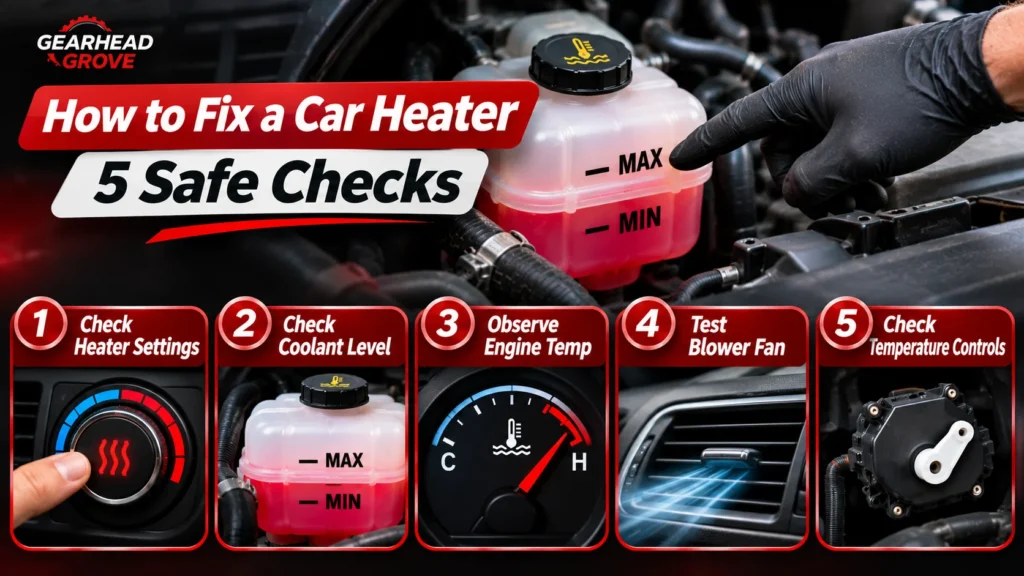
How to Fix a Car Heater: 5 Safe Checks
Before purchasing replacement parts, follow these basic troubleshooting steps. Use your owner’s manual for vehicle-specific instructions.
Check the Heater Settings
Set the temperature to warm or maximum heat. Turn on the fan and select a vent position. If your vehicle has dual-zone climate control, verify both temperature settings. Allow the engine to warm up normally.
Check the Coolant Level When Cold
With the engine completely cold, inspect the coolant reservoir using its level markings. If the level is below the specified mark, investigate why. Only add the manufacturer-approved coolant using the prescribed procedure.
Observe the Engine Temperature
Watch the temperature gauge or warning display during normal operation. An engine that struggles to warm up may have a thermostat problem. Overheating or unusually high temperatures require immediate attention.
Test the Blower Fan
Try the available fan speeds. If airflow is completely absent, check the relevant fuse using the owner’s manual. If the fan runs but airflow remains weak, inspect the cabin air filter where accessible.
Check the Temperature Controls
Move the temperature setting from cold to hot and listen for unusual clicking behind the dashboard. If air temperature never changes despite a normally warmed engine, the blend door system may need professional diagnosis.
Safety Warning: Never remove a radiator cap or open a pressurized cooling system when hot. Escaping coolant or steam can cause serious burns. If the engine overheats, steam appears, or a coolant warning is displayed, stop in a safe location, shut off the engine, and arrange appropriate assistance.
Why Does My Car Heater Work Only While Driving?
If the heater blows warm air at highway speeds but becomes cold while idling, coolant circulation may be insufficient at low engine speeds. Low coolant, air trapped in the system, or a circulation fault can contribute to this behavior.
A thermostat problem is another possibility in some conditions. However, replacing the thermostat without checking the cooling system could waste money and leave the actual problem unresolved.
Quick diagnostic clue: If heat changes with engine speed, have coolant level, leaks, air pockets, and circulation checked before assuming the heater core is bad.
How Much Does It Cost to Fix a Car Heater?
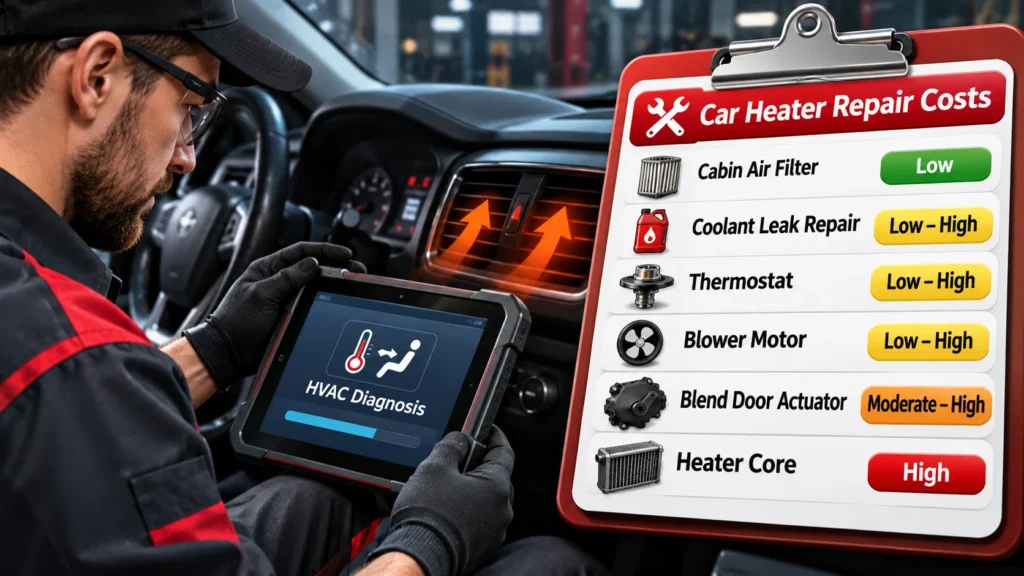
Repair costs vary substantially by vehicle, location, parts availability, and labor requirements. A simple fuse or cabin filter issue may be inexpensive, while replacing a heater core can require extensive dashboard disassembly.
| Repair | Typical Complexity |
|---|---|
| Cabin air filter replacement | Usually low |
| Coolant leak repair | Low to high, depending on leak location |
| Thermostat replacement | Low to high, depending on engine access |
| Blower motor repair | Low to high, depending on access |
| Blend door actuator replacement | Moderate to high |
| Heater core replacement | Often high labor complexity |
Ask the repair shop for a written estimate separating diagnosis, labor, parts, coolant, and applicable fees. Confirm the cause before approving major repairs.
When Should You Visit a Mechanic?
Some heater issues are straightforward, but problems involving the engine cooling system deserve particular attention. Arrange professional diagnosis if you notice:
- Coolant level repeatedly dropping or visible coolant leaks.
- Unusual engine temperature readings or overheating warnings.
- A sweet coolant smell, persistent interior film, or wet carpeting.
- Heat disappearing after recent cooling system repairs.
- Unusual dashboard clicking or inconsistent temperature controls.
- Heater problems that remain after basic checks.
Visibility matters: If your windshield defroster cannot clear fog, frost, or condensation sufficiently for safe visibility, do not continue driving until the problem is addressed.
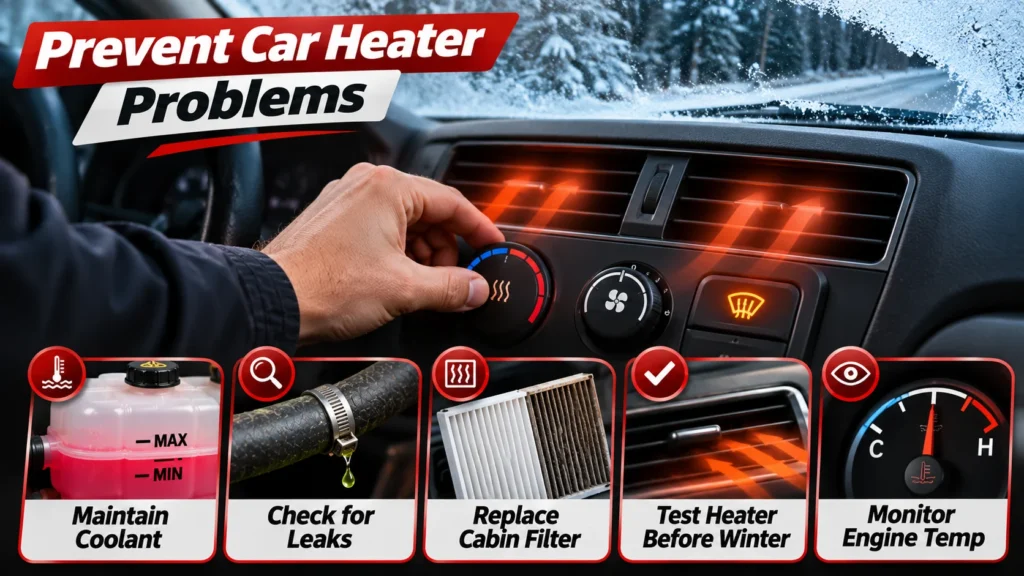
How to Prevent Car Heater Problems
Regular vehicle maintenance can reduce the chances of unexpected heating problems, especially before winter.
- Maintain coolant properly: Follow the manufacturer’s coolant type and service intervals.
- Inspect for leaks: Address coolant loss rather than repeatedly topping it off.
- Replace dirty cabin filters: Follow the recommended filter inspection and replacement schedule.
- Test your heater before winter: Check warm airflow, fan speeds, and windshield defrosting.
- Monitor engine temperature: Investigate abnormal readings promptly.
Frequently Asked Questions
Why is my car heater blowing cold air?
Low coolant, a thermostat stuck open, restricted heater core flow, or a malfunctioning blend door can prevent warm air from reaching the cabin. Check the symptoms before replacing components.
Can low coolant cause the car heater to stop working?
Yes. Low coolant may reduce or interrupt the hot coolant flowing through the heater core. It can also indicate a leak and increase the risk of engine overheating.
Why is my car heater not blowing any air?
Possible causes include a failed blower motor, blown fuse, damaged electrical connection, or fan control failure. A severely blocked cabin air filter may also restrict airflow.
Can I drive with a broken car heater?
It depends on the cause. A minor HVAC control issue may not affect engine operation, but overheating and coolant loss are serious. Do not drive if the windshield cannot remain sufficiently clear or the engine is overheating.
Will adding coolant fix my car heater?
Correcting a low coolant level may restore heat temporarily, but it does not fix an underlying leak, air pocket, or mechanical fault. Always determine why the coolant was low and use the correct coolant and filling procedure.
Why does my heater take so long to get warm?
Some warm-up delay is normal in cold weather. If the engine takes unusually long to reach operating temperature, a thermostat stuck open is one possibility. Vehicle design, outside temperature, and driving conditions also matter.
Final Thoughts
A car heater that stops working does not automatically need an expensive repair. Start by identifying whether the problem involves air temperature or airflow, then check the controls, cold coolant level, engine temperature, and fan operation. Remember that symptoms are clues, not proof. If you notice coolant loss, overheating, or unsafe windshield visibility, prioritize safety and have the vehicle inspected.