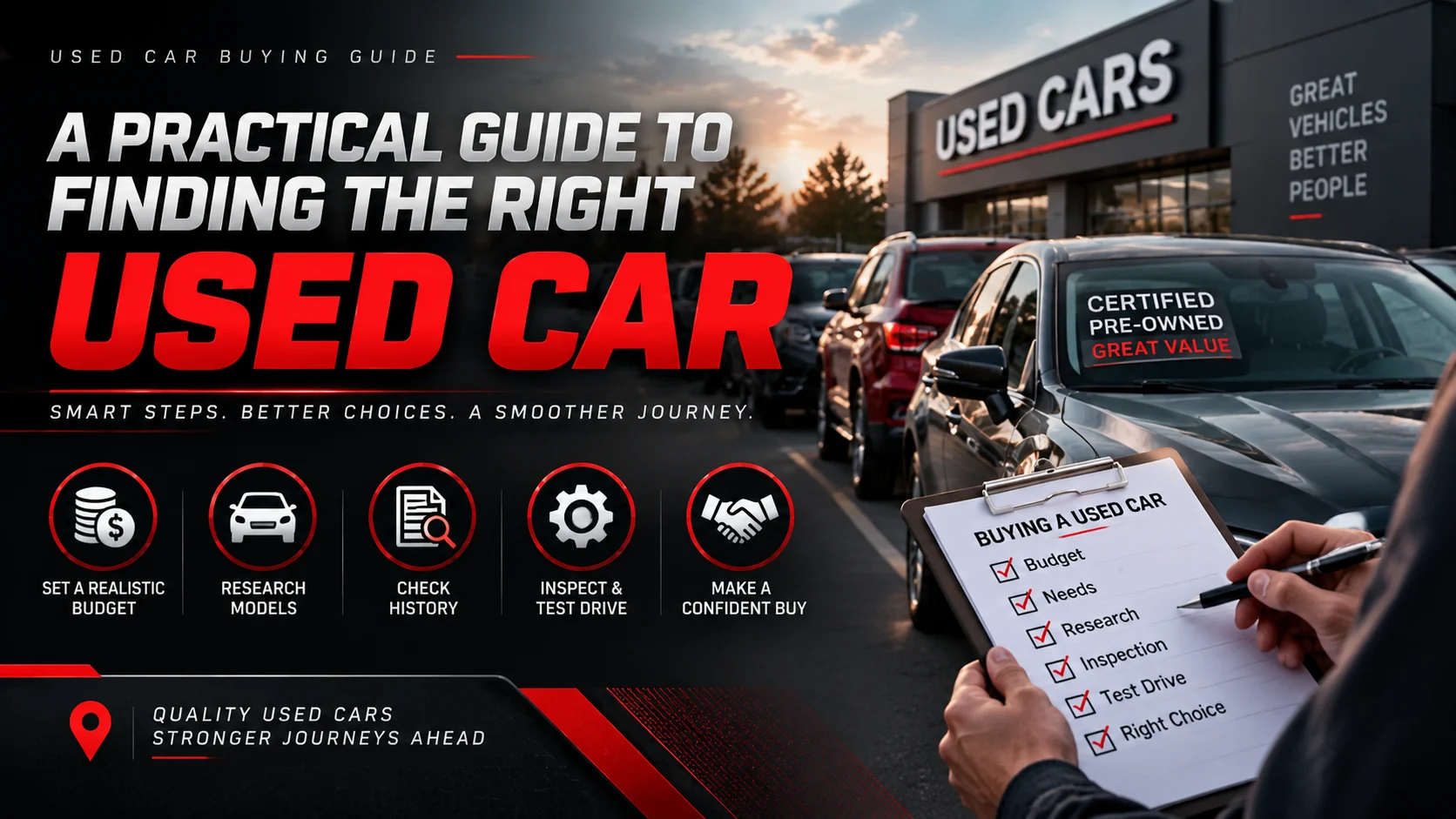

Buying a pre-owned vehicle can give drivers access to a wider selection of models and features while potentially fitting different budgets. However, choosing the right used vehicle requires more than finding an attractive price or a low mileage number. Buyers should consider the vehicle’s history, mechanical condition, ownership costs, pricing, and available documentation before making a decision. Whether you are researching used cars Tiffin Ohio online or visiting dealerships in person, taking a methodical approach can make the process easier. These five tips can help Tiffin-area shoppers evaluate their options and make a more informed pre-owned vehicle purchase.
Start With Your Driving Needs and Budget
Before looking at specific vehicles, determine what you actually need from your next car. Think about your typical commute, the number of passengers you carry, cargo requirements, fuel preferences, and the types of roads you regularly drive.
A compact sedan may work well for someone who primarily commutes alone, while a crossover or SUV may make more sense for a family that needs additional passenger and cargo space. If you frequently travel longer distances, fuel economy and seating comfort may deserve additional attention.
Your budget should include more than the vehicle’s advertised price. Account for taxes, registration, insurance, fuel, maintenance, and possible repairs. If you plan to finance the purchase, consider the total amount you will pay over the life of the loan rather than concentrating only on the monthly payment.
The Ohio Attorney General recommends considering the total price of a vehicle and understanding the interest rate and payment terms before completing a purchase.
Research the Vehicle’s History
A used vehicle’s appearance does not tell the complete story. Two vehicles of the same year and model can have very different histories depending on how they were driven, maintained, and previously used.
Ask for the vehicle identification number, commonly known as the VIN, and use it to research the vehicle’s history. A history search may provide information about previous ownership, reported mileage, title records, accidents, and other important events.
The Ohio Attorney General recommends using the VIN to research a used vehicle’s history and checking for issues such as potential flood damage. It also recommends reviewing available service records and checking for safety recalls.
Do not automatically reject a vehicle because it has had previous repairs. Instead, determine what happened, how extensive the damage was, and whether the repairs were properly completed. A documented maintenance history can also provide useful evidence that the vehicle received appropriate care.
Inspect the Vehicle Inside and Out
A thorough physical inspection can reveal issues that are not obvious from photographs or a quick walk-around. Start with the exterior and examine the paint, body panels, bumpers, glass, lights, wheels, and tires.
Look for differences in paint color or texture that could indicate previous body repairs. Check for rust, dents, scratches, and uneven panel gaps. Examine the tires for sufficient tread and signs of uneven wear.
Inside the vehicle, inspect the seats, carpets, dashboard, controls, and storage areas. Test features such as the air conditioning, heating system, windows, locks, lights, infotainment system, backup camera, and other electronic equipment.
The condition of the interior can also provide clues about how the vehicle was used. Excessive wear on the driver’s seat, pedals, steering wheel, or other frequently touched areas may be worth investigating alongside the vehicle’s mileage.
The Ohio Attorney General recommends carefully inspecting both the exterior and interior before purchasing a used vehicle.
Take a Thorough Test Drive and Get an Independent Inspection
A test drive should be more than a quick trip around the dealership. Try to experience the vehicle under different conditions when possible. Pay attention to how it accelerates, brakes, steers, shifts gears, and handles different road surfaces.
Listen for unusual sounds such as grinding, knocking, rattling, squealing, or excessive vibration. Notice whether the vehicle pulls to one side, whether the steering feels consistent, and whether the transmission shifts smoothly.
The Ohio Attorney General specifically recommends an extended test drive that includes different driving conditions, such as highways and stop-and-go traffic.
An independent mechanical inspection is another important step. A qualified mechanic can examine components that may be difficult for an ordinary buyer to evaluate, including the engine, transmission, suspension, brakes, steering, exhaust system, and signs of leaks.
If the seller is unwilling to allow an independent inspection, consider why. A professional inspection can identify potential repair costs and give you more information before you commit to the purchase.
Compare Prices, Terms, and Warranty Coverage
Once you have found a vehicle that meets your needs and passes your inspection, determine whether the asking price is reasonable. Compare similar vehicles based on year, mileage, trim level, condition, equipment, history, and location rather than comparing prices alone.
Pricing guides can provide useful reference points, but local listings can also show what similar vehicles are being advertised for in the current market.
Be careful when evaluating financing. A low monthly payment does not necessarily mean a lower overall cost. The loan term, interest rate, down payment, fees, and total amount financed all affect what you ultimately pay.
Warranty coverage is another factor to understand. Find out whether the vehicle is being sold with a warranty or “as is.” Under an “as is” arrangement, the buyer may generally become responsible for repairs after taking possession. The Ohio Attorney General advises consumers to understand who is responsible for repairs and maintenance before completing the transaction.
If a dealer makes promises about repairs, warranty coverage, accessories, or other terms, make sure those promises appear in the written agreement. Do not rely solely on verbal assurances.
Look Beyond Mileage
Mileage is one of the most visible numbers on a used-car listing, but it should not be treated as the only measure of quality. A well-maintained vehicle with higher mileage may have a more documented service history than a lower-mileage vehicle that received little maintenance.
Consider mileage alongside age, service records, ownership history, vehicle condition, and the type of driving it experienced. Regular maintenance can be especially important when evaluating older vehicles.
Ask whether major maintenance items have already been completed. Depending on the model, this could include services involving brakes, tires, belts, fluids, batteries, or other components.
Consider Future Ownership Costs
The purchase price is only one part of owning a used vehicle. Before making a final decision, consider expected fuel economy, insurance costs, maintenance requirements, tire expenses, and the availability and cost of replacement parts.
A vehicle that costs slightly more initially may have different ownership expenses from another model with a lower purchase price. Researching these factors can help you avoid choosing a vehicle based solely on its initial cost.
It is also useful to think about how long you plan to keep the vehicle. If you expect to own it for several years, reliability, comfort, maintenance history, and practicality may matter more than small differences in purchase price.
Review All Documents Before Signing
Before completing the purchase, carefully review the sales agreement and other documents. Make sure the vehicle’s price, financing terms, fees, warranty information, and any agreed-upon repairs or accessories are accurately represented.
Do not sign documents containing blank spaces or terms you do not understand. Ask questions before signing and request copies of the completed paperwork for your records.
Ohio’s Attorney General advises buyers to get agreements and promises in writing and to obtain a copy of the written contract.
Ohio also generally does not provide consumers with a broad right to cancel a vehicle purchase after completing the transaction, making it particularly important to perform your research and inspection before signing.
Conclusion
Choosing a pre-owned vehicle in Tiffin does not have to be complicated, but it does require careful research. Start by identifying your driving needs and establishing a realistic budget. Then investigate the vehicle’s history, inspect its condition, take an extended test drive, and arrange an independent mechanical inspection.
Once you are satisfied with the vehicle itself, compare its price, financing terms, warranty coverage, and expected ownership costs. Finally, review every document carefully and make sure important promises are included in writing.
A thoughtful buying process can help you look beyond the initial price and evaluate the vehicle as a complete package. By taking these steps before purchasing, Tiffin-area drivers can make more informed decisions and choose a pre-owned vehicle that fits their needs and budget.